Get Full Government Meeting Transcripts, Videos, & Alerts Forever!
Get email alerts on the Homeless Department topic
No spam. Unsubscribe anytime.
New Homelessness Department Debuts as BLA Audit Urges Needs Assessment, Better Data
Summary
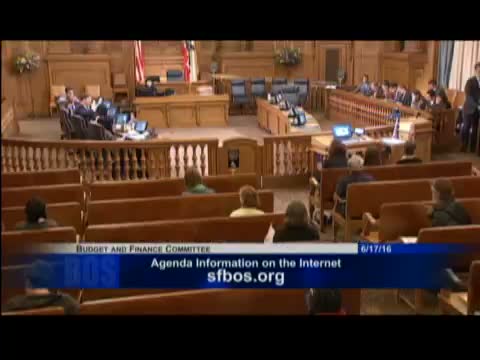
The Board’s Budget & Finance Committee heard a presentation June 17 on the proposed Department of Homelessness & Supportive Housing and reviewed a Budget & Legislative Analyst performance audit that recommended a citywide needs assessment, stronger data systems, more coordinated housing placement and use of rental assistance where appropriate.
The newly proposed Department of Homelessness & Supportive Housing outlined its first‑year priorities to the Budget & Finance Committee on June 17, calling for a coordinated entry system, a focus on highest‑acuity cases, a strategy for encampments, and a budget that directs most of its funds to community providers. The Budget & Legislative Analyst’s performance audit filed the same day recommended a formal needs assessment, improved use of existing data systems, and broader use of rapid rehousing and rental assistance where appropriate.
Director Jeff Kositzky described a proposed FY16‑17 budget of roughly $220.5 million, with approximately $175 million earmarked for contracts and grants to nonprofits and about 110 staff to administer programs. Kositzky told the committee the department will focus on three lanes: prevention, street outreach/shelter services, and exits into permanent housing, with special attention to people with the highest acuity and those who have been homeless longest.
The BLA audit: Amanda Guma and Severn Campbell of the Budget & Legislative Analyst’s Office briefed supervisors on five main findings: the city lacks a current, formal needs assessment to align services; existing data systems are underused (notably DPH’s Coordinated Care Management System) and the RFP for the homeless management information system (HMIS) misses some required functionality for coordinated entry; outreach and access are uneven; shelter wait lists and placement procedures create bottlenecks; and the city should expand cost‑effective tools such as short‑term rental assistance.
Key recommendations included commissioning an updated needs assessment to identify gaps and prioritize populations, integrating or replacing disparate data systems to support coordinated entry and performance tracking, expanding housing placement options beyond permanent supportive housing where appropriate, and clarifying contracting and monitoring for nonprofits that receive city funding.
Why it matters: Supervisors said the audit’s recommendations could improve how close to a quarter of a billion dollars in annual homeless services funding is spent and how those investments are targeted. Several supervisors urged faster, more transparent data on who is homeless in the city and better measurement of outcomes. Director Kositzky agreed broadly with the audit and emphasized improved outcomes rather than immediate cost savings; he said better targeting could reduce inappropriate placements into expensive permanent supportive housing.
What the committee decided: Item 12 (creation of the new department) was forwarded as a committee report for the full Board; items 13 and 14 (related property purchase and expenditure plan) were forwarded to the Board with the BLA’s recommended amendments (including added documentation and a proposed reserve for tenant improvements). The BLA’s audit (item 16) was filed by the committee.
Ending: Supervisors directed the new department to work with the BLA and existing agencies (HSA, DPH) to reconcile budget details and implementation steps and to return to the committee with further information before full Board budget action.