Get Full Government Meeting Transcripts, Videos, & Alerts Forever!
Get email alerts on the City Budget topic
No spam. Unsubscribe anytime.
Mayor's budget frames priorities around homelessness, public safety and one‑time investments
Summary
The mayor's two‑year budget for FY16‑17 and FY17‑18 projects roughly $9.6 billion and $9.7 billion, assumes a 0.75% sales‑tax ballot measure and sets aside a $60 million reserve while prioritizing homelessness services, public‑safety investments and quality‑of‑life programs such as street cleaning and pit stops.
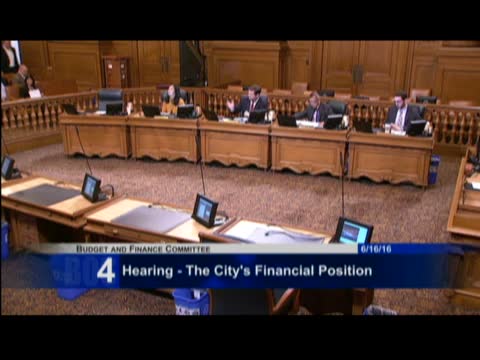
The San Francisco mayor's office on Thursday told the Board of Supervisors Budget & Finance Committee the city faces constrained revenues and must use one‑time funds strategically while advancing major priorities. Acting Budget Director Melissa Whitehouse said the two‑year budget totals about $9.6 billion in 2016‑17 and $9.7 billion in 2017‑18 and reflects a roughly 4 percent staffing growth tied largely to enterprise departments and full implementation of previous public‑safety hiring plans.
The mayor's office assumed passage of a 0.75 percentage‑point sales‑tax increase on the November ballot and set a $60 million reserve for unknown impacts. Whitehouse said the budget does not assume broad second‑year salary increases except for police and fire, where closed negotiations require separate treatment. The plan includes a 2.5 percent cost‑of‑living adjustment embedded in the first year of the two‑year cycle and fully funds capital equipment and IT priorities in year one.
Whitehouse told supervisors the mayor and his teams focused limited funds on three priorities: homelessness interventions, violence‑prevention and reforms tied to public‑safety, and neighborhood quality‑of‑life investments such as street cleaning and public restrooms. She also highlighted investments in the Children's Fund, expanded library hours, funding for nonprofit displacement mitigation ($6 million across two years), and support for legacy businesses.
The presentation emphasized the use of one‑time revenues for one‑time needs and conservative planning for year‑two growth. The committee did not take final action on the mayor's office budget pending public comment the following week; Whitehouse said departmental staff should flag any questions to budget offices during the hearings.
What happens next: The committee will take public comment on budget actions on Monday and continue department hearings before forwarding recommendations to the full Board for consideration in July.