Get Full Government Meeting Transcripts, Videos, & Alerts Forever!
Get email alerts on the Housing Bonds topic
No spam. Unsubscribe anytime.
Supervisors advance five inducement resolutions to seek CDLAC bonds for housing projects
Summary
The Budget & Finance Committee advanced five inducement resolutions authorizing sponsors to apply to the California Debt Limit Allocation Committee for residential mortgage revenue bonds to fund two new developments and three rehabilitation projects across San Francisco. Sponsors said the financing is conduit debt and does not pledge city funds.
The San Francisco Board of Supervisors Budget & Finance Committee advanced five inducement resolutions on Wednesday that would allow project sponsors to apply to the California Debt Limit Allocation Committee (CDLAC) for residential mortgage revenue bonds to finance two new developments and three rehabilitation projects.
Sophie Hayward, director of policy and legislative affairs at the Mayor’s Office of Housing and Community Development, presented the items and said the proposals use conduit financing, which will not obligate the city’s general fund. Hayward described the projects: a mixed‑use redevelopment at the so‑called Goodwill site at Mission Street and Van Ness (a commercial site with no residential displacement), a 100% affordable 101‑unit project at Block 3 East, 1150 Third Street serving low‑income families and formerly homeless veterans, and three rehabilitations — Bridal Court at 171 Lower Street, the Dorothy Day Community Project at 54 McAllister Street, and the Knox SRO at 241 Sixth Street.
Hayward told the committee that sponsors expect to submit CDLAC applications within four weeks and would return to the Board for bond approval if awards are made. Controller staff indicated the city would have no direct fiscal exposure from the conduit financings.
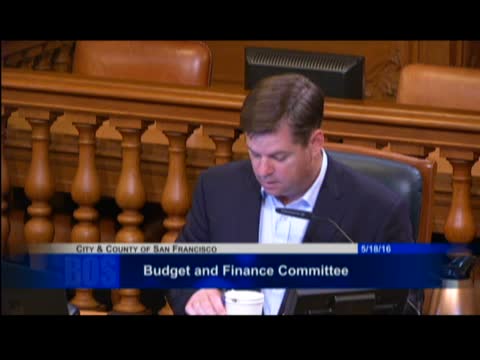
The committee initially moved to forward items 1 through 5 to the full Board with a positive recommendation. Because Supervisor Scott Weiner arrived after the first vote, Chair Mark Farrell rescinded that vote and the committee revoted with the clerk recording four ayes, one no and one absent; the motion carried. The items will appear on the supervisors’ May 24 agenda unless otherwise noted.
Why it matters: If CDLAC awards tax‑exempt bond allocations, the financing would allow sponsors to access lower‑cost capital for affordable and rehabilitative housing without pledging city dollars. The projects include both new affordable units and rehabilitation of existing SRO/affordable buildings that advocates and city staff have highlighted as priorities for maintaining housing for low‑income households.
What to watch: Sponsors’ CDLAC applications, the Board’s final bond approvals, and any changes in project scope or funding if bond allocations are not awarded.