Get Full Government Meeting Transcripts, Videos, & Alerts Forever!
Get email alerts on the Crime Data topic
No spam. Unsubscribe anytime.
Committee advances ordinance requiring SFPD to publish quarterly, de‑identified victim demographics
Summary
Supervisor Gordon Marr’s Crime Victim Data Disclosure Ordinance would require SFPD to publish quarterly, aggregated, de‑identified data on victim race, gender and age for specified crimes and the motivating factors for reported hate crimes. SFPD and the budget analyst raised technical and timing concerns related to upcoming state reporting standards; the committee accepted amendments and forwarded the measure to the full Board.
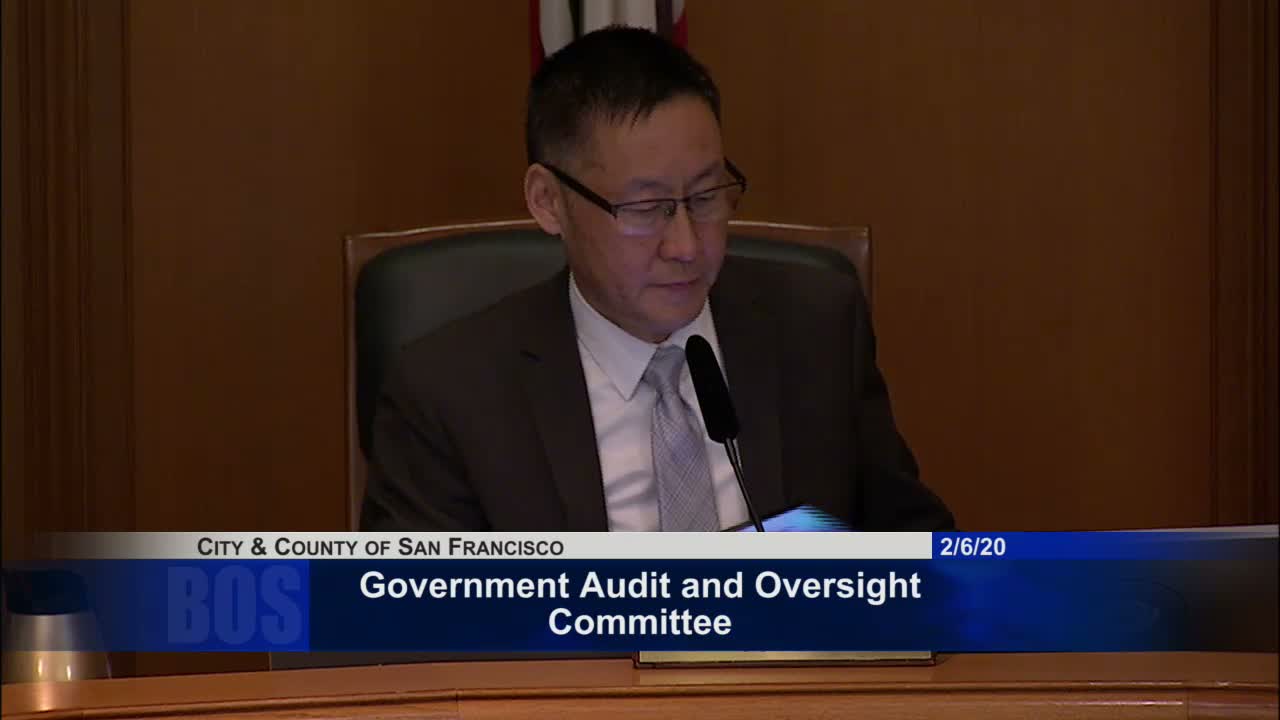
Supervisor Gordon Marr introduced the "Crime Victim Data Disclosure Ordinance," saying it would require the San Francisco Police Department to issue quarterly reports on aggregated, de‑identified victim demographic data and the motivating factors for reported hate crimes and urged transparency so communities can better understand disparities in victimization.
The ordinance, as described by Marr, would direct SFPD to regularly disclose aggregated demographic information — including race, gender and age — for victims of specified crimes such as aggravated assault, burglary, theft, motor vehicle theft, robbery, battery, vandalism, domestic violence and murder, and to report motivating factors for hate crimes (for example, race or ethnicity, sexual orientation, gender identity or religious preference). Marr said the measure does not require the collection of new victim information but instead asks the department to report data it already collects.
Severn Campbell of the Budget and Legislative Analyst’s Office told the committee the city’s current crime‑reporting system has limitations: when multiple crimes or victims are involved the system reports at the highest crime level and may not disaggregate victim demographics. Campbell said modifying the existing Oracle‑based system could require two full‑time Oracle consultants at about $235 per hour and produce a one‑time cost “over $900,000”; she noted an alternative would be manual counting, which would shift the expense to staff time rather than system modification.
Matt Dorsey of the San Francisco Police Department said the department applauds improved data collection but cautioned that the nation and state are transitioning their reporting systems (the National Incident Based Reporting System, NIBRS, and California’s incident‑based reporting) and that the state planned to issue standards in April 2020. Dorsey said that timing raises a policy question about whether the city should change local reporting now or align with incoming state requirements, warning the committee that “we’re right now flying blind” until the state standards are published.
Marr noted community outreach in drafting the ordinance and described proposed amendments to broaden tracked categories (for example, adding child and elder abuse, grand theft, manslaughter and additional burglary and domestic‑violence subcategories), require that reports be sent to the Office of Racial Equity and the Human Rights Commission, and ensure the reports include data analysis to promote equitable use.
Public testimony was broadly supportive. Resident Benjamin Chung (Ocean View) described a personal burglary and urged better reporting to protect Asian communities; Marlene Tran of the Visitation Valley Asian Alliance said quarterly demographic reporting would guide policing, staffing and prevention priorities; Pastor Megan Rohrer and other speakers urged survivors and vulnerable populations to report incidents and called for culturally accessible services. Several speakers urged bilingual outreach and clearer information about how and when to report crimes.
After discussion, Chair Marr moved to accept the amendments and, without objection, sent the amended ordinance with a positive recommendation to the full Board. The clerk noted that items acted upon today will appear on the Board of Supervisors agenda on 02/25/2020 unless otherwise stated.
Next steps: the item was forwarded to the full Board for further consideration and any formal vote there.