Get Full Government Meeting Transcripts, Videos, & Alerts Forever!
Get email alerts on the Sb50 topic
No spam. Unsubscribe anytime.
Supervisors advance amended resolution opposing SB 50 as public commenters and advocates clash
Summary
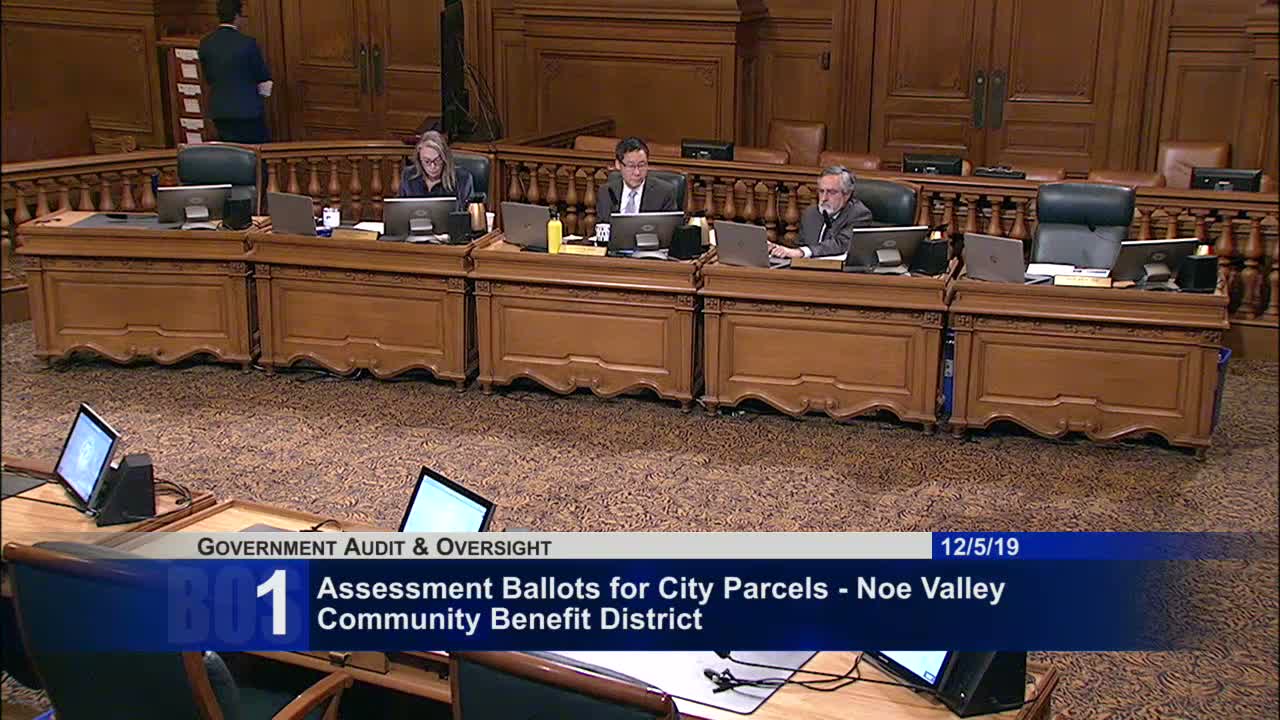
At a Dec. 5 Government Audit & Oversight Committee hearing, Supervisors advanced amendments to a resolution opposing Senate Bill 50 unless the bill includes stronger tenant protections, local community plan exemptions and value‑capture measures. Public testimony was sharply divided, with tenant groups urging outright opposition and planning advocates urging support for statewide action.
Supervisor Gordon Marr, chair of the Government Audit & Oversight Committee, presented a resolution and a set of amendments on Dec. 5 opposing California Senate Bill 50 — authored by Senator Scott Wiener — unless the state bill is revised to meet several San Francisco‑specific conditions. Marr said the amendments would protect local community plans, require stronger tenant protections and capture increased land value from any blanket up‑zoning for affordable housing and community benefits.
Marr told the committee the city's recent jobs‑housing fit report shows housing production is not keeping pace with job growth and that the city faces an 18,000‑unit shortfall of truly affordable housing over the next six years. "As written, SB 50 won't correct that imbalance. It'll exacerbate it," Marr said, arguing the city must be allowed to preserve community‑driven plans and capture value created by up‑zoning.
Board President Norman Yee and Supervisor Bally Brown supported Marr's approach to seek amendments. Yee said the West Side and other districts need resources and detailed planning before any up‑zoning. Brown said she planned to support the amendments but raised a feasibility concern about an example provision that would require SB 50 projects to make affordability contributions "substantially higher than existing local affordable housing standards," noting an earlier 25% inclusionary target had discouraged developers: "25% killed it. Absolutely killed the project," Brown said, warning overly high requirements could halt construction.
Public testimony spanned the spectrum. Tenant advocates and neighborhood coalitions uniformly warned SB 50 would accelerate displacement and that the bill's tenant protections were not enforceable. Susan Marsh of the San Francisco Tenants Union said, "The tenants union remains opposed outright to SB 50," arguing the bill's time‑limited and optional protections would allow speculators to wait out requirements and displace low‑income residents. Speakers representing neighborhood coalitions and displacement‑concerned groups urged the committee and board to oppose SB 50 outright.
On the other side, planning and housing advocates urged restraint. Susanna Parsons of SPUR said SB 50 "represents an important environmental effort to overcome barriers to the creation of infill homes in the right places" and urged the board not to align with exclusionary positions. Corey Smith of the San Francisco Housing Action Coalition and other pro‑housing groups said SB 50 would add housing supply near transit and urged the city to pair local planning with state action.
After several hours of public comment and member discussion, Marr said he and President Yee had met with Senator Wiener, who indicated he was considering significant amendments to address San Francisco's concerns. The committee voted to accept Marr's amendments and continue the item to a special GAO meeting on Dec. 11 to allow further review and public input.
Next steps: the GAO committee will revisit the resolution and the proposed amendments at its special meeting on Dec. 11; the Board of Supervisors will receive any committee recommendations and may act thereafter.