Get Full Government Meeting Transcripts, Videos, & Alerts Forever!
Get email alerts on the Finance Audit topic
No spam. Unsubscribe anytime.
Committee hears external audit: unmodified opinions, one significant deficiency tied to new financial system
Summary
The Government Audit and Oversight Committee heard external auditors report unmodified opinions on the city’s FY2017–18 financial statements and a single significant deficiency in internal controls tied to the PeopleSoft conversion; the committee filed the hearing without objection.
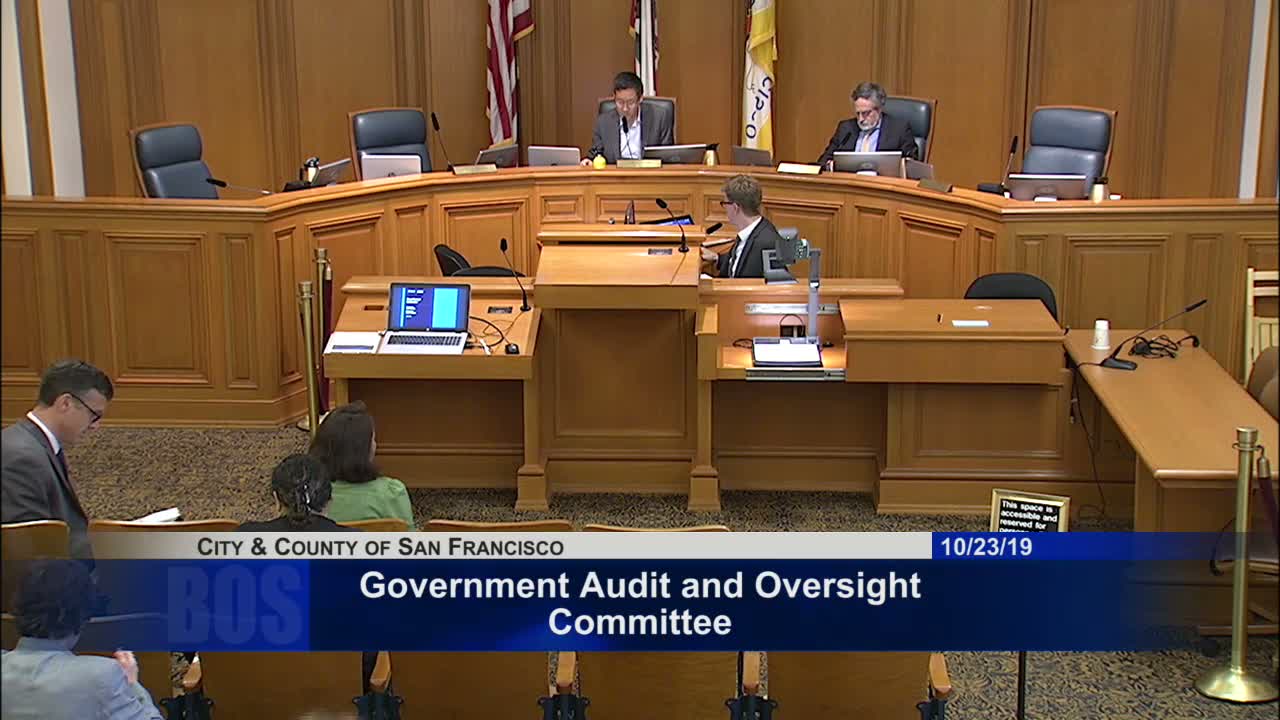
The Government Audit and Oversight Committee on Oct. 23 heard external auditors report unmodified opinions for San Francisco’s FY2017–18 financial statements and compliance audits, and were told of one significant deficiency in internal controls tied to the city’s recent financial system conversion.
Controller Ben Rosenfield framed the presentation, saying FY2017–18 was “a very challenging financial year” because the city closed its books for the first time after switching to PeopleSoft. Rosenfield said the conversion delayed the Comprehensive Annual Financial Report (CAFR), which was released in March, and complicated the budget baseline used for the next fiscal year.
Annie Louie, the external auditor, told the committee the auditors issued unmodified opinions on the financial statements and compliance work but reported one significant deficiency in internal controls for financial reporting, principally related to processes around the newly implemented system. Louie said auditors are working with the controller’s office to strengthen processes for the FY2018–19 close and outlined the audit schedule (interim testing in spring, final procedures in the fall and winter).
Committee members asked whether the delayed CAFR had practical impacts. Rosenfield and the auditor said it made the budget process more difficult and affected access to timely financial information during collective bargaining with more than 40 union groups. Rosenfield expressed confidence the city would return to a more typical December timeline for the CAFR after completing a second close in the new system.
There were no material weaknesses reported in the CAFR and no findings in the city’s single audit of federal grant compliance, which committee members noted as a positive outcome. The committee received the auditor presentation and, with no public comment, moved to file the hearing; the clerk reported no further board action was required and the filing was carried without objection.
Next steps: auditors continue work on the FY2018–19 plan and will report back as the audit procedures conclude; the controller’s office and auditors said they will follow up on improvements to internal control processes related to the PeopleSoft conversion.