Get Full Government Meeting Transcripts, Videos, & Alerts Forever!
Get email alerts on the Emergency Water topic
No spam. Unsubscribe anytime.
Civil grand jury urges fast AWSS expansion; SFPUC and supervisors set studies and timelines
Summary
The civil grand jury found large coverage gaps in San Francisco's auxiliary emergency firefighting water system and recommended a funded buildout in 15 years. SFPUC and Fire Department agreed on steps but proposed studies and a Dec. 30, 2021 plan timeline; the committee adopted amendments setting study and reporting deadlines and continued the item for follow‑up.
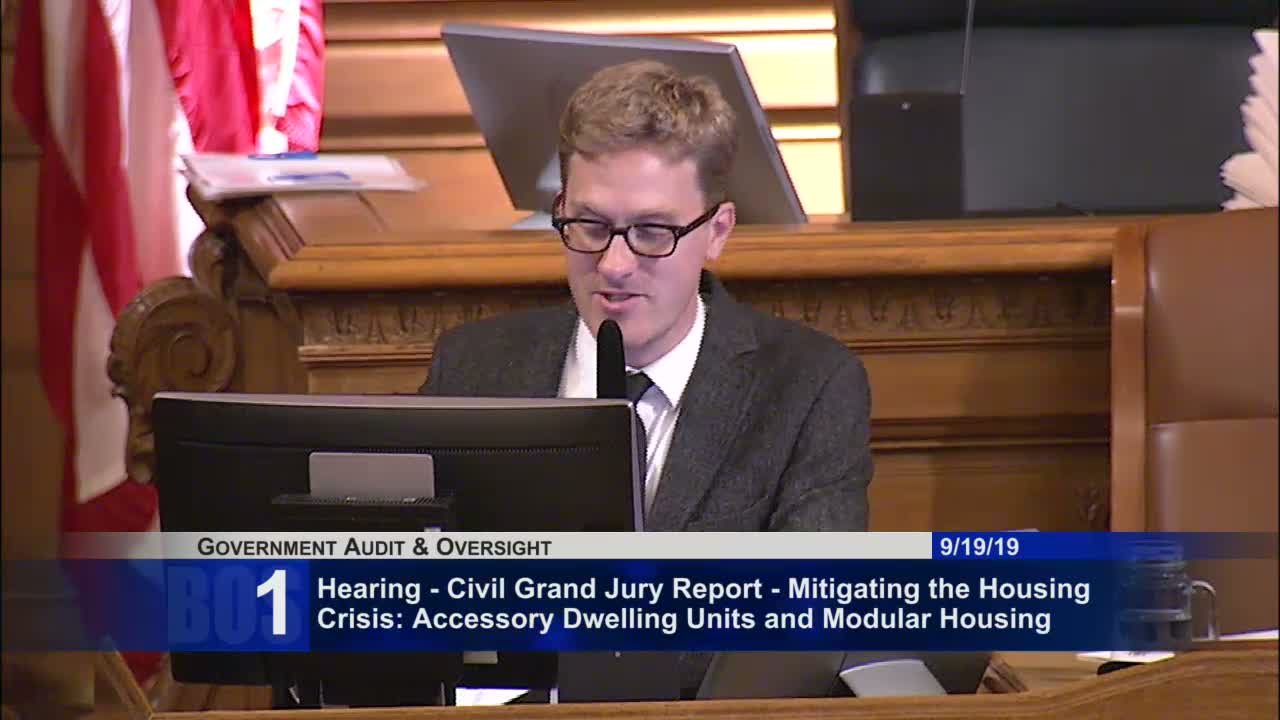
A civil grand jury report delivered to the Government Audit and Oversight Committee on Sept. 19 documented significant gaps in San Francisco’s auxiliary firefighting water system (AWSS), saying large parts of the city — especially western and southern neighborhoods — are not adequately protected in the event of a major earthquake.
Stephen Garber, chair of the civil grand jury committee that investigated emergency water supply, said the AWSS "does not cover large parts" of several supervisorial districts and concluded that, at then‑current funding rates, full buildout could take roughly 35 years. "The civil grand jury feels that 35 years to adequately protect large parts of the city is simply unacceptable and too long," Garber said, and recommended experts develop a funded plan to protect all neighborhoods within 15 years.
John Scarpulla of the San Francisco Public Utilities Commission (SFPUC) told the committee that the SFPUC has been conducting maintenance and capital projects since the agency assumed responsibilities for the system in 2010. Scarpulla highlighted capital work and maintenance achievements, including a reduction in leakage: "Due to our maintenance activities since 2010, we have significantly reduced the amount of water leakage. In fact, we've reduced leaks by over 700,000 gallons per day from this system," he said.
Scarpulla and Heather Green of the Office of Capital Planning said the agencies will complete two critical studies recommended by the grand jury — a seawater pump‑station study and a neighborhood‑level, more‑refined firefighting water analysis — with due dates of June 30, 2021. The departments proposed presenting a final, funded plan on Dec. 30, 2021 (one year later than the grand jury’s requested Dec. 31, 2020 deadline) to align with the city’s capital‑plan schedule and to allow study results to shape the plan.
When asked whether the upcoming voter bond (the ESER/first‑responder bond) would include AWSS work, Heather Green said the capital‑plan schedule anticipates the next ESER bond in 2027 but confirmed AWSS remains a high priority for future bond funding. Scarpulla estimated that over 40 conceptual projects (excluding a separate West Side potable AWSS project) are in early planning and said "those projects are estimated not including the Westside project… at over $500,000,000" at current levels of refinement.
Public commenters including retired Assistant Deputy Chief Thomas Douthier and neighborhood advocates urged the board to accept all grand jury findings and accelerate implementation. The committee adopted amendments to the draft board response that (1) state agreement with a set of findings, (2) set interim deadlines for studies (06/30/2021), (3) set a target to present a funded plan by 12/30/2021, and (4) requested an analysis by 06/30/2022 on whether a dedicated bond is warranted, with a construction target date of no later than 06/30/2034 for the parts of the system not yet built.
The amendments were adopted and the committee filed the resolution as amended and continued the hearing to the call of the chair for future follow‑up on implementation progress.