Get Full Government Meeting Transcripts, Videos, & Alerts Forever!
Get email alerts on the Campaign Financing topic
No spam. Unsubscribe anytime.
Committee advances ordinance to boost public campaign matching to favor small donors
Summary
The Government Audit and Oversight Committee on Sept. 5 recommended sending an ordinance to the full Board that would raise San Francisco—s public campaign match substantially (to 6:1 for many candidates) while capping the matchable portion of donations at $150 to amplify small-dollar contributors.
The Government Audit and Oversight Committee on Sept. 5 approved, without objection, a positive recommendation to the full Board of Supervisors for an ordinance that would raise the city—s public campaign matching rates and increase the public funds available to participating candidates.
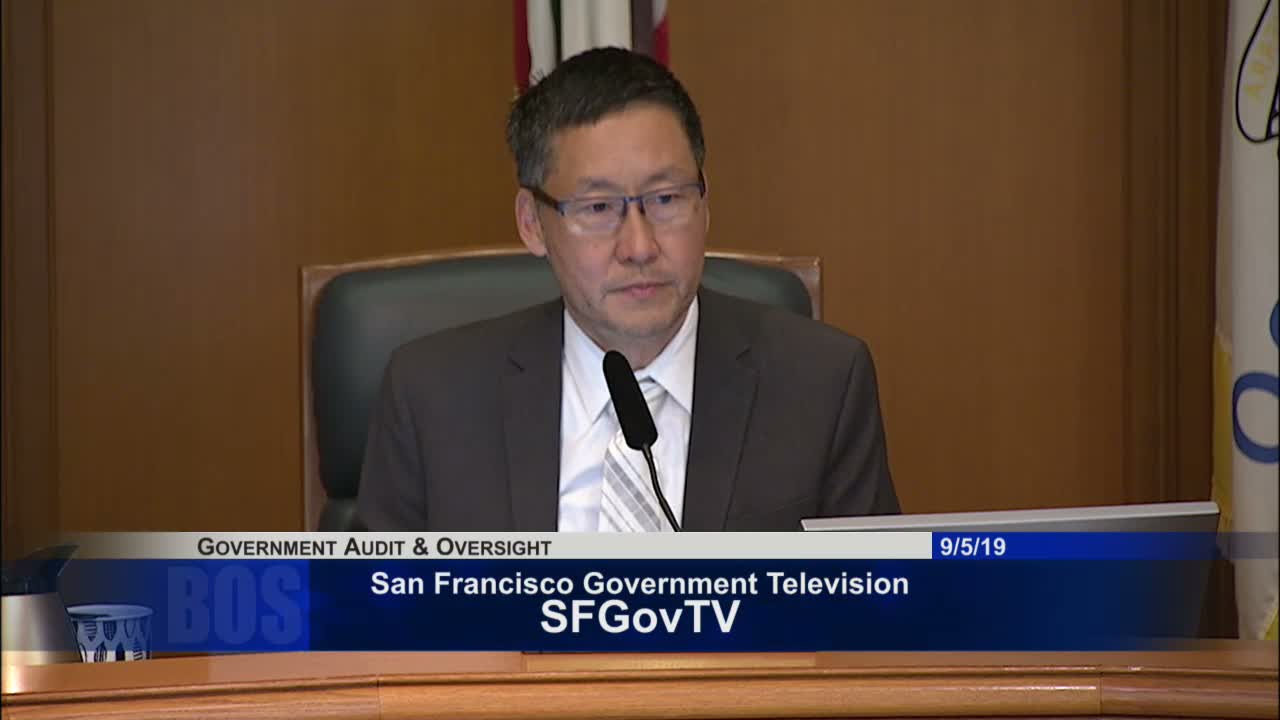
Chair Gordon Marr, sponsor of the ordinance, said the changes are intended to strengthen democratic participation by amplifying small-dollar donors and reducing the relative influence of large, outside spending. "Public financing of elections allows candidates to compete in campaigns increasingly flooded with private funds," Marr said during opening remarks.
Leanne Pelham, executive director of the Ethics Commission, described the proposal as the latest phase in a year-long, stakeholder-driven effort to make the voluntary program more attractive to candidates and voters. Pelham said participation historically has been "roughly half or less of candidates on the ballot," and the goal is to increase that take-up so more candidates rely on public financing.
Fred Brusseau of the Budget and Legislative Analyst—s Office (BLA) provided a detailed fiscal and structural description of the program, noting qualifying thresholds remain unchanged (currently $10,000 for non-incumbents, $15,000 for incumbents) while the ordinance would increase match rates (to 6:1 for non-incumbents) and reduce the matchable contribution amount from $500 to $150. Brusseau explained this combination would amplify the value of smaller donations while narrowing the advantage of large donations for accessing public funds.
The BLA—s analysis estimated that, under the proposal and assuming the same participation as 2018, election campaign fund payouts would rise (an illustrative figure of roughly $6.4 million was presented) against a typical fund balance of about $7.0 million, leaving limited cushion under the report—s assumptions. Brusseau noted potential long-term funding vulnerabilities if participation or candidate counts increase and flagged an inconsistency in the code between a $7 million fund cap and the baseline mayoral funding formula that staff recommended the Board address separately.
Severn Campbell of the BLA summarized the fiscal example for 2018, saying payments to Board of Supervisors candidates would have increased in the illustrative scenario from about $1.5 million to $2.8 million.
Public commenters, including representatives from the ACLU of Northern California and Common Cause, urged support for the ordinance as a tool to empower underrepresented communities and grassroots candidates. John Gollinger, an adjunct professor of election law, and other civic advocates emphasized that other large cities have increased match rates and urged San Francisco to modernize its program.
Deputy City Attorney John Givner advised that voting on the ordinance did not create a conflict of interest for supervisors who might run for office in 2020. Supervisor Asha Safaie asked and received clarification that only the first $150 of a larger contribution would be matched under the proposed rule.
The committee moved the ordinance forward with a positive recommendation to the full Board. The Board will consider the ordinance on its next agenda; the committee record notes an extensive supporting record from the Ethics Commission, BLA and letters from advocacy groups.