Get Full Government Meeting Transcripts, Videos, & Alerts Forever!
Get email alerts on the Central Market Tax Exclusion topic
No spam. Unsubscribe anytime.
Panel review finds mixed economic gains, limited community benefits from Central Market tax exclusion
Summary
A City hearing on the Central Market (mid‑market) payroll tax exclusion found strong business growth and changing industry mix in the area but citizens and community groups told the committee the promised community benefits largely failed to prevent displacement; city staff said confidentiality and program design constrained oversight and promised to compile more quantitative reporting.
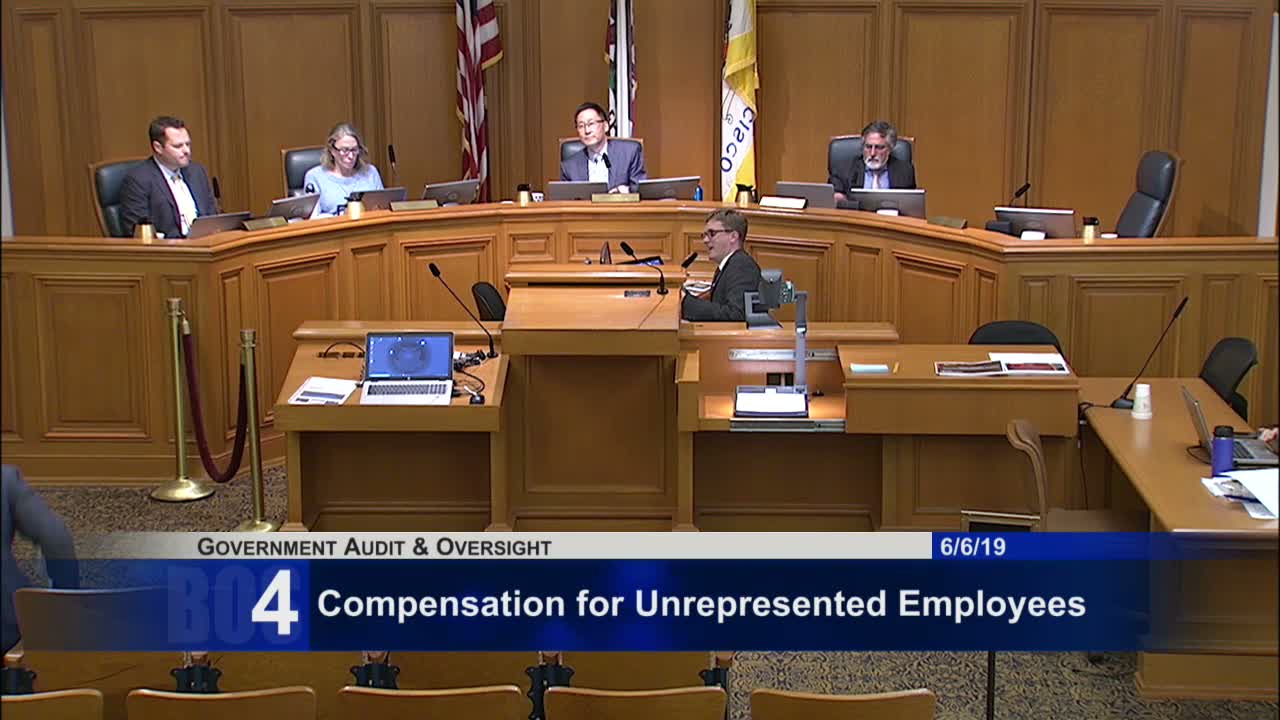
A full‑day hearing on June 6 reviewed the outcomes of the Central Market payroll expense tax exclusion (often called the mid‑market or “Twitter” tax break). The session drew city staff, the Controller’s Office, planning and economic development officials, members of the Citizens Advisory Committee (CAC), and numerous community witnesses.
Ted Egan of the Controller's Office summarized independent economic analysis: the city forewent notable payroll tax revenue in select years (for example, roughly $35 million in 2014 and $16 million in 2015), and an estimated aggregate of about $70 million across the program. Egan's update showed faster growth in business tax receipts in the Central Market area than citywide (more than 600% growth in some measures from 2010–2017 versus roughly 118% citywide), a technology‑led shift in the area's industry mix, faster rent increases in adjacent zip codes, and a simultaneous pattern of socioeconomic change in residents' occupations with much faster growth of high‑wage occupations in census tracts surrounding the exclusion zone.
Bill Barnes (City Administrator's Office) and OEWD staff described the Neighborhood Economic Strategy and implementation of Community Benefit Agreements (CBAs). Barnes noted program achievements—a number of storefront vacancies filled, company philanthropy that in some cases continues after firms no longer qualified for the exclusion (examples include Neighbor Nest and Zendesk's literacy work)—but acknowledged serious program limitations: the tax credit was approved before benefits were definitively enumerated, subsequent changes in the city's tax base (payroll to gross receipts) altered the exclusion's value, and taxpayer confidentiality precluded precise company‑level accounting of foregone taxes and claimed savings. Barnes pledged to compile more quantitative reporting on CBAs for the committee and the public.
Planning and OEWD presenters provided complementary metrics: Planning reported an increase in permit counts and alteration permit investment in the area but a smaller share of new construction compared with citywide trends; OEWD reported sales tax growth in the Central Market and Tenderloin action zones (~30%), noted office availability fell sharply after 2011, and outlined workforce interventions that produced 1,131 hires through community workforce programs and broader placements from training enrollments and referrals.
Members of the Citizens Advisory Committee and neighborhood advocates strongly disagreed with staff characterizations of outcomes. Sam Dennison, CAC co‑chair, said the CAC's charter mission to mitigate displacement had not been achieved and described the CBA program as "an unqualified failure," citing rising notices of eviction, replacement of affordable SRO hotel rooms with tourist lodging, and loss of longtime community leaders forced to leave the city. Community speakers recounted specific local examples (hotels converted to tourist use, restaurant changes) and called for enforceable requirements, stronger local hiring pipelines, better baseline metrics, and clearer accountability tied to any future incentives. One public commenter accused the program of "tax evasion" and vowed to pursue federal complaint processes; that allegation was not substantiated in the hearing record.
Supervisors and staff agreed on follow‑up: OEWD and the City Administrator's Office committed to provide the committee and the public with more complete, quantitative reporting on CBAs and First Source referral/hire outcomes (subject to taxpayer confidentiality constraints), and supervisors signaled intent to develop more robust, enforceable frameworks if similar incentives are considered in the future. The committee filed the hearing record and directed staff to return with requested data.