Get Full Government Meeting Transcripts, Videos, & Alerts Forever!
Get email alerts on the 30 Van Ness Sud topic
No spam. Unsubscribe anytime.
Committee approves amended 30 Van Ness special use district language, including inclusionary reductions and sunset; community MOUs remain unresolved
Summary
The committee forwarded amendments to create a 30 Van Ness Special Use District that would align inclusionary and fee treatment with recent TAC changes and offer a sunset if construction does not commence; the sponsor paid $41 million in impact fees earlier and community agreements remain under negotiation.
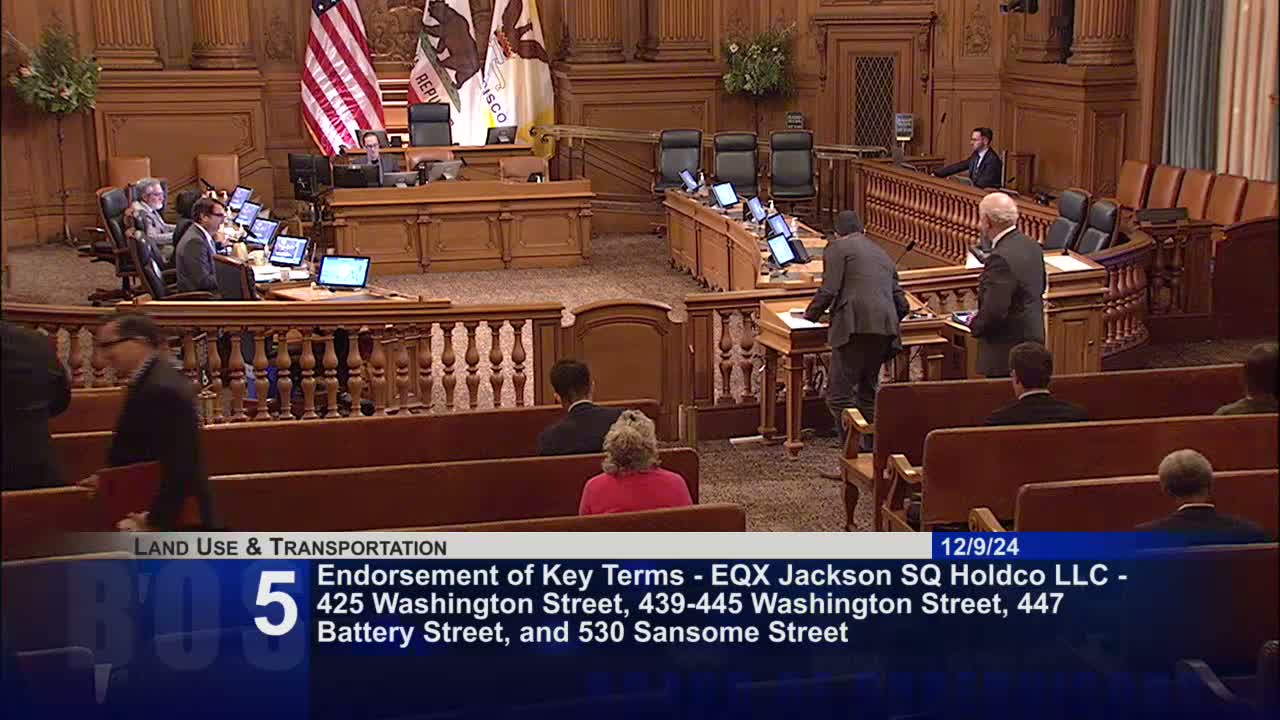
The Land Use and Transportation Committee on Dec. 9 voted 2–1 to forward an amended ordinance establishing a 30 Van Ness Special Use District (SUD) to the full Board. The SUD is intended to make the previously approved 30 Van Ness (Hays Point) project financially comparable to other "pipeline" projects by adjusting inclusionary and fee requirements.
Planning and OEWD staff told the committee the project sponsor paid $41,000,000 in required development impact fees in March 2023 and paused construction in September 2023. OEWD staff said the SUD is intended to create parity with later pipeline projects so the site can return to construction.
Board President Aaron Peskin proposed amendments to the SUD that would modify the recital language, apply Section 4.15 inclusionary requirements with reduced on‑site/off‑site/in‑lieu percentages (discussed in committee as approximately 12.8–12.9% on‑site in parity with TAC reductions) and add a sunset provision that would cause the subsection to expire on May 1, 2029 if construction has not commenced.
Peskin described a proposed contract condition under which the project sponsor would forgo the ability to "claw back" previously paid fees as part of a negotiated package; in committee discussion Lendlease representatives said the SUD as drafted prevents refunds but that a refund request would terminate the SUD and revert the project to baseline code requirements. Peskin said he offered reduced inclusionary percentages as a compromise while seeking to protect the city's fiscal interests.
Public testimony was mixed. Supporters — including the Civic Center Community Benefit District, Intersection for the Arts, and some housing advocates — said the project would activate a key downtown corner, provide public benefits and could restart a stalled site. Opponents raised concerns that lowering on‑site affordable housing would undermine prior community agreements and questioned whether the developer has renegotiated MOUs with local groups. Jim Abrams, land use counsel for the sponsor, said discussions were ongoing with community groups.
The committee adopted Peskin’s amendments on a 2–1 vote (Preston and Peskin aye; Melgar no) and forwarded the ordinance as amended to the full Board with recommendation. The item will return to the Board for final consideration, and staff and the sponsor said they are continuing outreach with community organizations to resolve outstanding MOUs.
What’s next: The amended SUD and the development agreement terms will be considered by the Board; staff told the committee the SUD would sunset if construction is abandoned or after the project completes and that additional contract language and community negotiations remain outstanding.