Get Full Government Meeting Transcripts, Videos, & Alerts Forever!
Get email alerts on the Laboratory Ordinance topic
No spam. Unsubscribe anytime.
Supervisors advance ordinance to ban laboratory uses, add 'biotechnology' to code definition; planning commission had opposed
Summary
The Land Use and Transportation Committee voted 2–1 to forward an ordinance that would expand the definition of 'laboratory' to include biotechnology and prohibit labs in the urban mixed‑use (UMU) district; the Planning Department and life‑science industry urged disapproval, while neighborhood groups supported the change to protect mixed‑use vibrancy.
Supervisor Dean Walton introduced an ordinance the committee forwarded to the full Board on Dec. 9, 2024 that would amend the Planning Code to explicitly include biotechnology in the definition of laboratory uses and make laboratory uses not permitted in the UMU (urban mixed use) zoning district.
The proposal, Walton said, aims to protect mixed‑use neighborhoods such as Dogpatch and Potrero Hill from what he described as daytime‑only 'dead zones' created when laboratory employees leave at 5 p.m. "This lack of nighttime vibrancy can be detrimental to the social and economic fabric of a community," Walton said during his presentation. He also said staff would seek an exemption for projects with pending entitlements such as 700 Indiana.
The Planning Department urged disapproval. Veronica Flores, planning department staff, told the committee the Planning Commission (Aug. 1) recommended disapproval because a broad prohibition in all UMU districts could run counter to the general plan, push laboratory demand into PDR (production, distribution and repair) districts and put some projects that already have entitlements at risk. Flores noted, "In its current form, the proposed ordinance would prohibit the proposed project at 700 Indiana despite getting its entitlement approved."
Industry and economic development witnesses urged the committee to oppose the ordinance. Laurel Arvanitidis of the Office of Economic and Workforce Development said the proposal would remove entry‑level and mid‑skill lab jobs and limit services important to doctors, food businesses and local labs, arguing the city should preserve opportunities to attract and retain businesses. Christie Chirilla of BioCom California said the life‑science sector supports thousands of jobs and generates billions in output for the city.
Neighborhood groups and several local boosters supported the change. Donovan Lacey of the Dogpatch Neighborhood Association said the clarification was necessary to implement the board’s prior repeal of a life‑science special use district and to protect residential character. Lisonbee Heath of the Potrero Boosters said the Eastern Neighborhoods plan intended UMU zoning to "restrict the development of life science or biotech related establishments" in certain places to preserve amenities and housing.
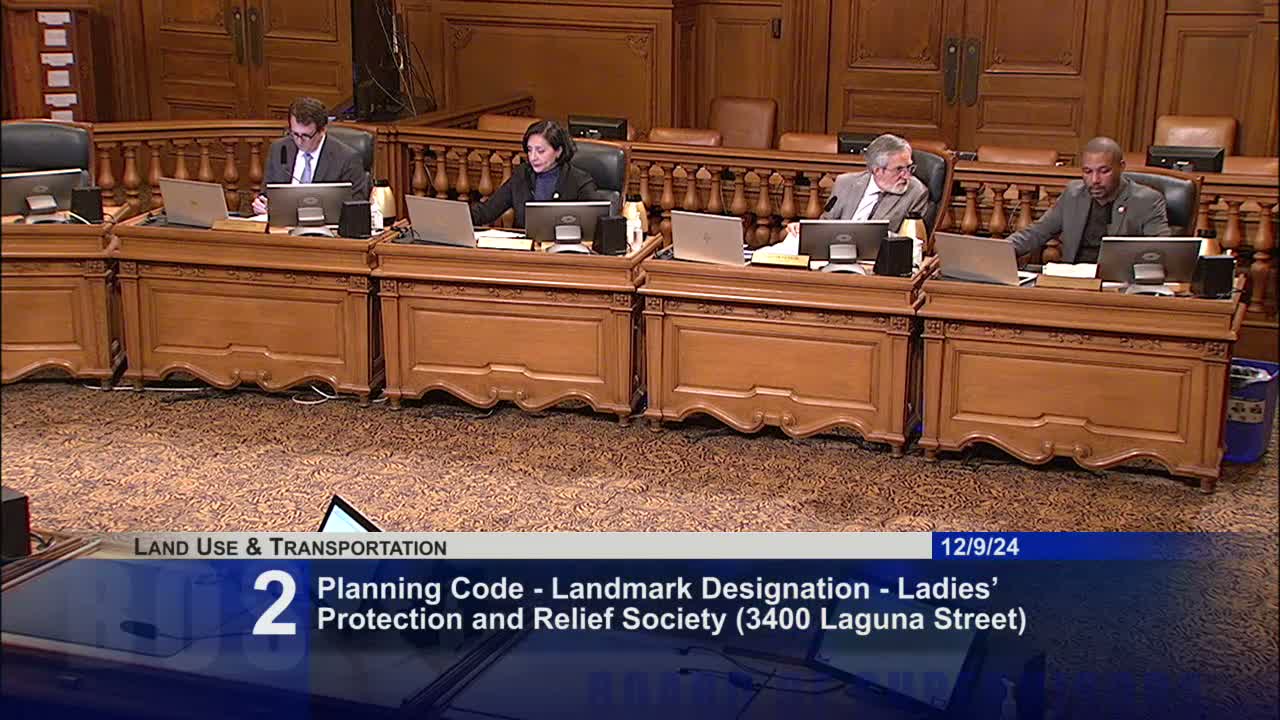
After public comment and member discussion — including Walton’s pledge to propose carve‑outs for projects with active applications — the committee voted to forward the ordinance to the full Board with a recommendation (Preston and Peskin voting aye; Chair Melgar voting no). The Planning Commission had recommended disapproval; passage by the full Board will require making general‑plan consistency findings.
What’s next: The ordinance is scheduled for full Board consideration; if the Board approves it despite the Planning Commission recommendation, it will need an 8‑of‑11 vote to make required general‑plan findings, per the deputy city attorney’s explanation to the committee.