Get Full Government Meeting Transcripts, Videos, & Alerts Forever!
Get email alerts on the Tall Building Safety topic
No spam. Unsubscribe anytime.
Committee continues tall-building safety hearing after engineer of record testifies Millennium Tower remains seismically safe today
Summary
At an eighth hearing prompted by the Millennium Tower—s settling and tilt, the committee heard under-oath testimony from the structural engineer of record that the building is seismically safe today but that geotechnical questions remain; the committee will continue the item and summon geotechnical experts for follow-up.
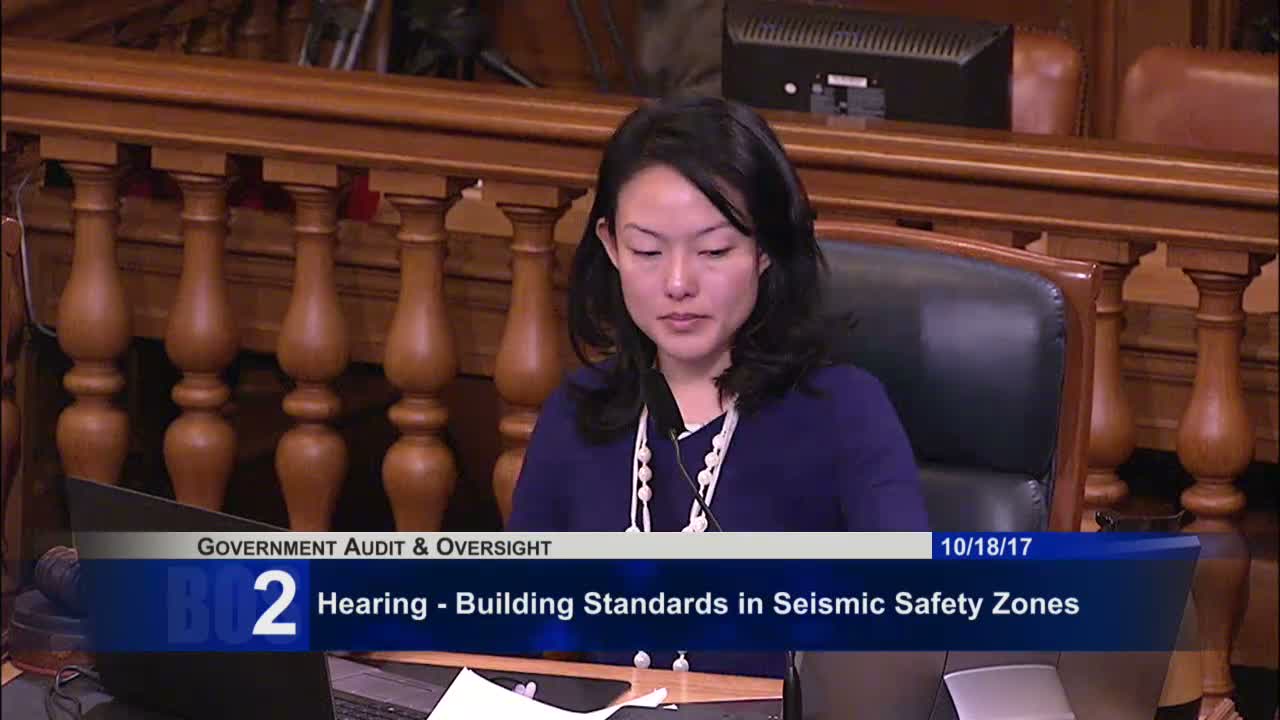
The Government Audit and Oversight Committee held the eighth hearing on tall-building seismic safety on Oct. 18, focusing on the Millennium Tower (301 Mission Street) after the tower—s post-construction differential settlement and lean became publicly scrutinized. The committee subpoenaed and heard under oath Derek Rorta, a structural engineer who served as the project—s structural lead while at DeSimone, and received updates from the Department of Building Inspection (DBI).
Supervisor Aaron Peskin summarized the concern driving the hearings: the Millennium Tower has settled and tilted more than originally projected, which raised questions about peer review, foundation design and whether current permitting practices adequately protect public safety. DBI assistant director Ron Tom told the committee the city—s consulting engineers broadly agreed with Ron Hamburger—s report that the building remains seismically safe for occupancy, and that DBI has requested the homeowners association provide settlement and tilt reports every six months while inspectors visit the building on a six-month schedule.
Under oath, Rorta described the design history of the project and the engineering context. He said the structural system itself was analyzed and, by structural-engineering metrics such as interstory drift, the building—s modeled performance remains within limits used for performance-based designs: "There's no reason to fear for anything to do with the building—s structural safety," he testified. Rorta stressed that structural and geotechnical disciplines have distinct responsibilities: structural engineers design the structure while geotechnical engineers select foundation systems and provide settlement calculations. He told the committee he was not qualified to answer the geotechnical cause(s) of the additional settlement and recommended the committee call geotechnical experts to explain why the building settled more than initially predicted.
Committee members asked Rorta about the peer-review process used during design, whether reviewers were independent and whether the city should change permitting rules to require different or additional peer review. Rorta acknowledged industry practice commonly has peer reviewers paid by the project sponsor, a practice some committee members said raises appearance-of-independence concerns; he also said practices and guidelines have changed since the Millennium Tower was designed.
On procedural outcomes, Supervisor Peskin moved to continue the item to the call of the chair and asked that the next session include geotechnical engineers from firms such as the now-defunct Treadwell & Rollo (and specifically Frank Rollo); the committee approved the continuance without opposition. DBI also reported it has not received any plans from Millennium Partners to "arrest" or correct the sinking and tilting.
The committee did not adopt new code changes at this meeting; members signaled interest in convening additional geotechnical testimony and in reviewing how peer review and foundation review should be structured going forward. The hearing will resume when the chair schedules the follow-up with geotechnical experts.