Get Full Government Meeting Transcripts, Videos, & Alerts Forever!
Get email alerts on the Housing Short Term Rentals topic
No spam. Unsubscribe anytime.
San Francisco supervisors hear update as short‑term rental delisting deadline passes
Summary
The Government Audit & Oversight Committee heard a status report from the Office of Short Term Rentals after the final phase of platform delistings took effect; staff reported more registrations, a surge of late applications and increased enforcement activity, and supervisors asked whether hosts should be allowed to list while applications are pending.
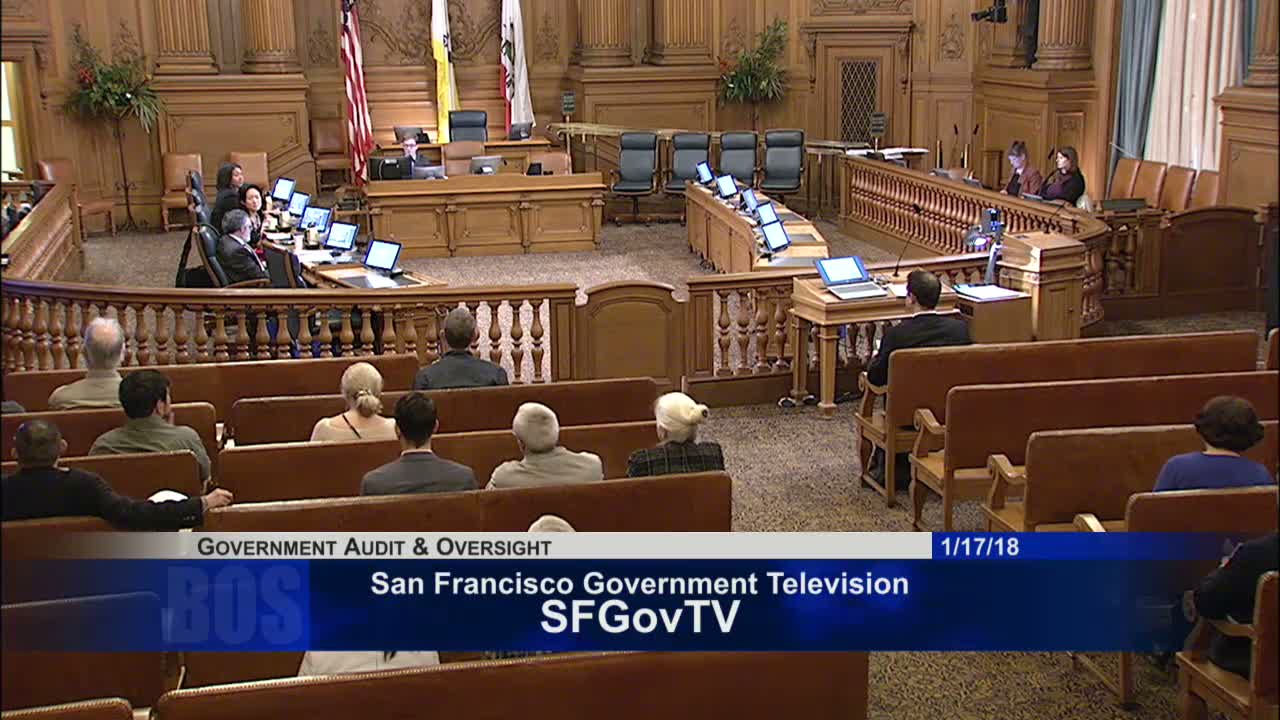
The Government Audit and Oversight Committee on Jan. 17 heard a progress report from the Office of Short Term Rentals after the final phase of a platform delisting process took effect the previous day.
Kevin Guy, director of the Office of Short Term Rentals, told the committee the office has received more than 4,100 applications since the program’s launch in 2015 and currently shows about 2,170 active registered hosts with roughly 1,000 applications under review following a surge of late submissions tied to phased platform deadlines. Guy said the office was seeing daily application spikes of 86 and 88 in the days before the deadline and expects data to stabilize as staff finish processing the backlog.
Why it matters: the 2016 ordinance amendments and the May 2017 settlement with major platforms redirected responsibility for removing unregistered listings to the platforms while giving the city tools to audit and pursue enforcement against individual hosts. Guy described the settlement’s enforcement leverage: "Platforms are obligated to deactivate any ineligible listings and cancel and rebook guests within 6 business days after notification from the Office of Short Term Rentals," a requirement he said improves the city’s ability to quickly stop noncompliant listings.
OSTR described enforcement to date as targeted. Guy said the office has taken formal enforcement actions on 677 units, assessed roughly $1,700,000 in penalties and collected $953,000 so far. He cited an early enforcement case at 973 Market (nine units) in which a $192,000 penalty that had been assessed was settled and collected.
Supervisors pressed staff on program details and policy choices, including whether to allow hosts to list while their applications are pending. Guy said that policy is a discretionary administrative choice, not a legislative mandate, and noted it was adopted historically when the office faced staffing shortages. He said applicants are warned that listing while an application is pending carries a risk of cancellation if the application is later denied, and he acknowledged the Board could change the policy or legislate a prohibition if it wished.
Several supervisors asked about accuracy of host self‑reporting and the office’s verification tools. Guy said OSTR combines web scraping of platform data, quarterly host self‑reports, targeted site visits and, when necessary, administrative subpoenas to obtain booking records from platforms to verify residency and nights hosted. He said primary‑residency disputes (the ordinance uses a 270‑nights standard) account for many application denials; Guy reported recent sample rejection rates around 38 percent, up from earlier levels.
Public testimony largely supported enforcement while urging clarity for compliant hosts. Local host advocates and individual hosts thanked the office for enforcement and registration work but urged that the office provide predictable turnaround times so hosts who comply are not penalized by long delays. Representatives from ShareBetter San Francisco and labor stakeholders urged continued vigilance, arguing the delistings indicate many previously illegal listings were removed and that caps and auditing remain enforcement priorities.
What’s next: Guy told the committee final, refined delisting numbers should be available in a matter of days and that more comprehensive data could be ready in late February to early March. The committee continued the item to the call of the chair for follow‑up reporting.