Get Full Government Meeting Transcripts, Videos, & Alerts Forever!
Get email alerts on the Parks Planning topic
No spam. Unsubscribe anytime.
Rec & Park presents long-range plan and bond progress; supervisors press for clearer equity measures
Summary
San Francisco Recreation & Parks staff summarized updates to strategic, operational and capital plans, reported progress on the 2012 parks bond and new equity metrics, and drew sustained public comment from Tenderloin residents and park partners urging more acquisition, activation and staff capacity in high-need neighborhoods.
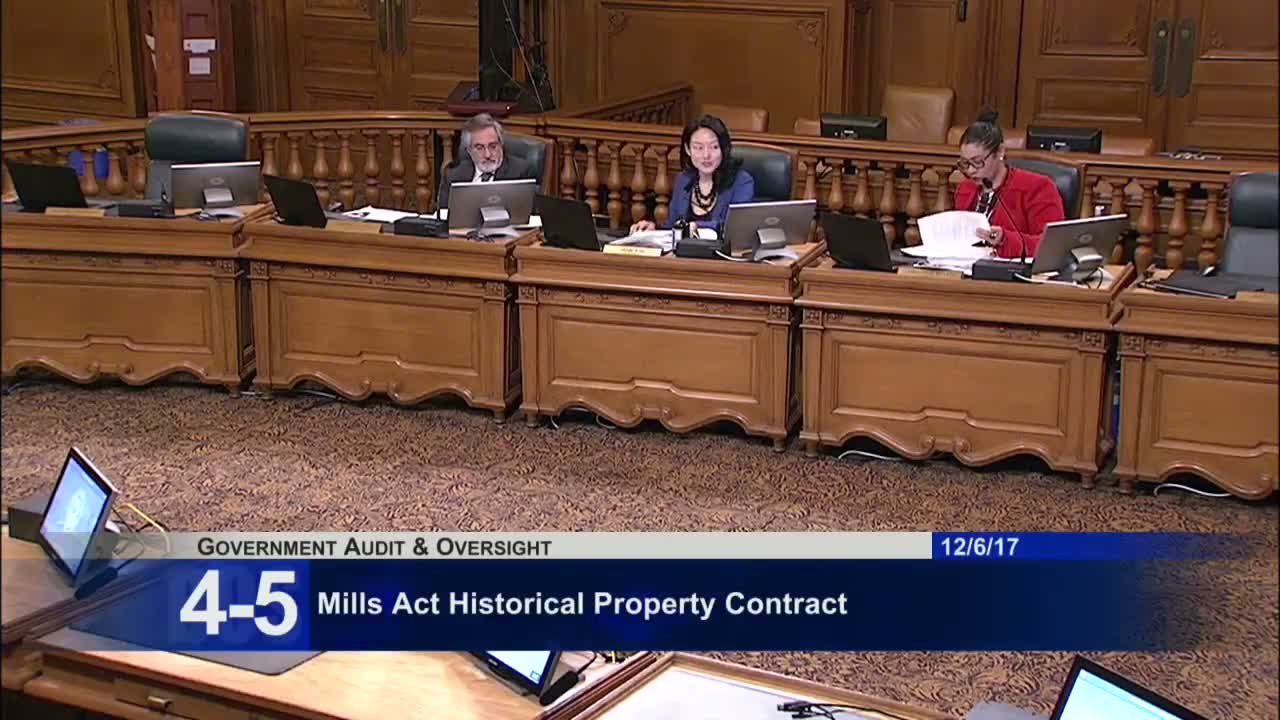
The Government Audit and Oversight Committee on Dec. 6 heard a broad briefing from Recreation & Parks General Manager Phil Ginsburg on the department's strategic, operational and capital plans, including progress on the 2012 parks bond and newly developed equity metrics.
Ginsburg opened by placing the department's work in context: "This year, we are the very top we are the number 1 park system in The United States except for Minneapolis and Saint Paul," he said, and described a multi-year strategic planning process that now guides operations and capital priorities. He told the committee the department has refreshed mission, vision and values, tracks five core strategies (inspire place, play, investment, stewardship, team) and integrates community feedback into a rolling two-year operations and capital plan.
Why it matters: staff said the plan is intended to make park investments more transparent and to direct limited resources to high-need neighborhoods. Ginsburg noted equity zones — census tracts selected to capture the city's most vulnerable populations — account for roughly 20% of the city population but about 40% of parks by number, and receive 53% of capital investment dollars by count.
Facts and figures: Ginsburg highlighted several metrics and program outcomes reported to the committee: the department's scholarship program has grown from about $80,000 to $1,500,000; 100% of residents now live within a 10‑minute walk of a park (a metric developed with Trust for Public Land); park maintenance scores improved year over year; and the department still carries an estimated $1,700,000,000 in deferred maintenance needs. On the 2012 parks bond, staff said roughly 90% of enumerated neighborhood projects are complete, encumbered or in construction, with a final tranche of bond proceeds scheduled to be issued to finish remaining work.
Supervisors' concerns: Supervisors pressed staff on multiple fronts. Supervisor Aaron Peskin and others asked about personnel issues, internal performance evaluations, and the department’s ability to manage many large construction projects simultaneously. Peskin asked pointedly about a handful of big projects and cautioned that the department should guard against approving too many projects into construction at once given local bidding and contractor market pressures.
Equity and access questions dominated the hearing. Supervisor (speaker identified in the transcript as) Feuer questioned whether census-based equity zones capture who the department actually serves, asking for more granular tracking (for example, who uses scholarships and programs by race, age and language access). Ginsburg said the department is expanding data collection, adding race as an equity metric where legally possible and piloting intercept surveys and registration questions to better understand program users. "We are asking, we're trying to collect data on race," he said, noting California limits on some data collection but adding the department is making equity a central operational priority.
Public comment: Community members, park partners and neighborhood groups—especially from District 6 and the Tenderloin—urged the committee to prioritize park acquisition, sustained staffing for program activation, and investment in under-served, high-density neighborhoods. Jane Weil (District 6 resident) described Mid-Market and the Tenderloin as "the densest part of the city" with very limited open space and urged additional acquisition funds. Tenderloin partners described the success of community stewardship at Boeddeker Park and asked that funding be available for activation and maintenance after capital work is completed.
Next steps and outcome: The committee filed the item for the record and Ginsburg committed to follow up on requests to improve cross-referencing of strategic, operations and capital documents and to report back on more precise equity and usage metrics.
Closing note: department staff said many of the remaining capital projects are multi‑year and subject to community process, environmental review and fluctuating construction markets, and they underscored the department's intent to use partnerships and philanthropy to leverage limited public dollars.