Get Full Government Meeting Transcripts, Videos, & Alerts Forever!
Get email alerts on the City Budget topic
No spam. Unsubscribe anytime.
Controller says San Francisco is projecting a $337 million year-end balance, but cautions on transfer-tax volatility and retiree COLA risk
Summary
The ControllerOffice reported a stronger-than-expected nine-month outlook with a projected $337 million year-end balance, driven by higher transfer, business and hotel taxes; the office also set aside $60 million for rainy-day reserves and warned a pending appeals-court ruling on retiree COLAs could raise future pension costs.
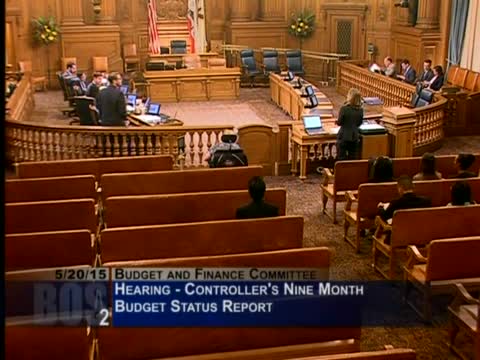
The City Controllerpresented the nine-month budget status report on May 20, saying the city now projects an ending general fund balance of $337,000,000, roughly $81,000,000 higher than the six-month projection. Michelle Ellerzma of the Controller's Office attributed most of the improvement to better-than-expected revenues — notably real property transfer taxes, business taxes and higher daily hotel room rates — and spending savings in several departments, particularly the Department of Public Health.
The Controller's Office reported roughly $186,000,000 in general tax revenue above budget year-to-date, a $90,000,000 improvement since the six-month report. Transfer tax collections are concentrated at the top bracket and are being skewed higher this year by sales of very large properties, producing an approximate 60 percent increase over the prior year's first nine months, the presentation said.
Ellerzma said the city will deposit about $60,000,000 into combined city-and-school rainy-day reserves under the current rules and noted the cityis projecting longer-term economic stabilization reserves at about 6.8 percent of general fund revenues (the target is 10 percent). She cautioned that most additional current-year revenues are already committed by charter or policy: 75 percent of surplus general-fund revenue is routed to the rainy-day reserve and baseline allocations for libraries, education and transit absorb much of the remainder.
The Controller flagged a separate legal risk: an appeals-court decision would require supplemental cost-of-living adjustments to some retirees. Both sides have appealed to the California Supreme Court; the Controllersaid the administration is reserving for likely retroactive payments now but the longer-term effect on employer contribution rates depends on the Supreme Court's decision and the amortization period, which remains unknown.
Supervisors asked detailed questions about the predictability of transfer taxes and whether the current year represents a new peak. The Controller said transfer-tax activity is difficult to forecast because it depends on large institutional deals and interest-rate effects; staff expect this year to be a peak that will step down modestly in the budget year and that the five-year plan already assumes moderation.
After the presentation there was no public comment. Supervisor Katie Tang moved to file the nine-month report; the motion was taken without objection.