Get Full Government Meeting Transcripts, Videos, & Alerts Forever!
Get email alerts on the Workforce Equity topic
No spam. Unsubscribe anytime.
Hundreds testify at committee hearing on racial disparity in city workforce; DHR data show disproportionate negative separations for African American employees
Summary
At a Government Audit & Oversight Committee hearing called by SEIU 1021, Department of Human Resources Director Micky Callanan presented workforce demographics and programs while acknowledging troubling data: African Americans comprise about 15% of city employees but made up a disproportionately high share of 'releases for cause' and probationary releases. Dozens of current and former city employees and union leaders gave testimony alleging systemic discrimination, retaliation and failures of EEO processes; the committee continued the item for further data and follow‑up.
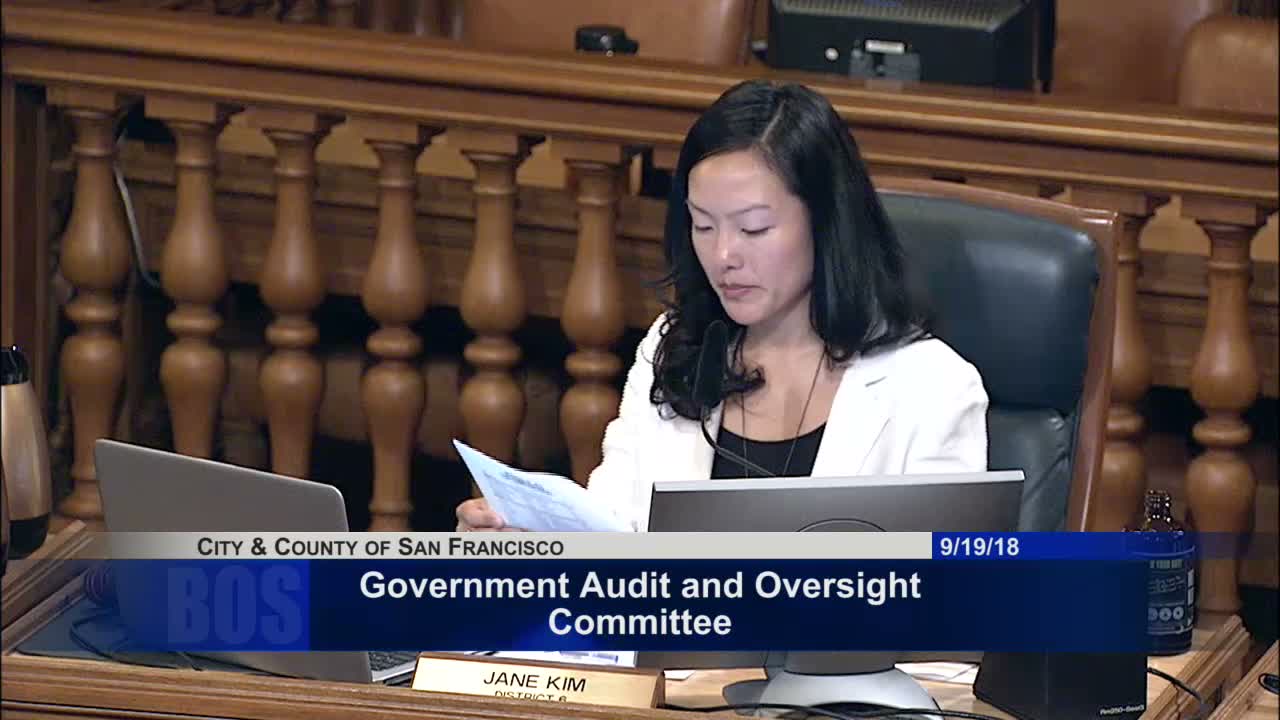
The Government Audit & Oversight Committee on Sept. 19 held a multi‑hour hearing on African American hiring, retention, promotion and complaints tracking across the City and County of San Francisco.
Chair Jane Kim said the hearing was convened at the request of SEIU Local 1021. Department of Human Resources Director Micky Callanan presented an overview of DHR programs and descriptive data. Callanan said the city’s PeopleSoft records show African Americans constitute roughly 15% of the city workforce and account for 19% of new hires and 14% of promotions in recent reporting — figures DHR described as indicators that pipeline and recruitment programs have had some success. At the same time, Callanan told the committee that African Americans constituted a disproportionately large share of negative separations: roughly 36% of releases for cause and nearly 25% of probation releases in the period cited, figures DHR said are cause for concern.
Callanan described existing city initiatives to address bias and retention: continuous testing for certain classifications, apprenticeships and pipeline programs (ApprenticeshipSF, JobsNow, San Francisco Fellows), a nationally recognized conviction‑history hiring program, expanded implicit‑bias and harassment training, and a proposed move to de‑identified candidate review in partnership with the Civil Service Commission. He also said DHR is pursuing funding for an electronic personnel‑file system to improve tracking of discipline, performance improvement plans and other context that PeopleSoft lacks.
The public‑comment period produced extended testimony from SEIU leadership, labor council delegates, NAACP representatives and dozens of current and former city employees across departments — including Public Health, San Francisco General Hospital, Laguna Honda Hospital, the Sheriff’s Department, SFMTA, Fire, Police and the Port — who described individual experiences of racial harassment, retaliatory discipline, denied promotions and delays or dismissals of EEO complaints. Multiple commenters urged structural reforms: stronger investigative capacity for EEO, centralized hiring control to prevent agency‑level favoritism, transparent data on discipline and promotions disaggregated by race, and stronger accountability for managers found responsible for misconduct.
Committee members said the testimony revealed a pattern that required more time and analysis than the hearing allowed. Supervisor Sandra Fewer (cosponsor) said the issue was systemic across many departments and requested a set of data points to enable deeper review. The committee voted to continue the item to the call of the chair and to ask DHR and other departments to provide the requested data and to work in partnership with labor and community groups on targeted interventions. Several supervisors and DHR staff committed to follow‑up meetings and data exchanges under the mayor’s recent executive directive on workforce equity.
The hearing did not produce committee action beyond the agreement to continue the item for follow‑up. Committee members and public speakers said they expect further hearings and may ask the full Board of Supervisors to take up additional oversight measures.