Get Full Government Meeting Transcripts, Videos, & Alerts Forever!
Get email alerts on the Getting To 0 topic
No spam. Unsubscribe anytime.
Supervisors hear Getting to 0 plan: PrEP, rapid ART and retention proposed as DPH warns of grant cuts
Summary
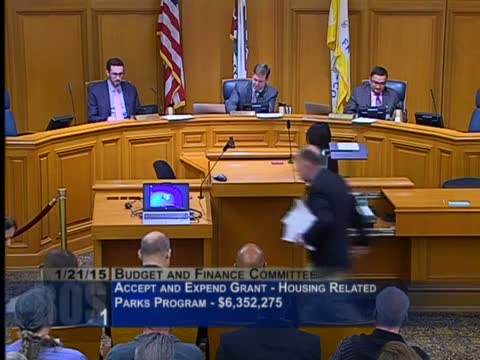
At a Jan. 21 Budget & Finance Committee hearing, Getting to 0 coalition members outlined a plan centered on PrEP, rapid antiretroviral therapy at diagnosis and retention services; Department of Public Health warned of ongoing federal and state grant reductions and said the city may need to backfill lost funds.
San Francisco supervisors on Jan. 21 heard a multi‑agency plan to drive new HIV infections toward zero while grappling with the fiscal challenge of declining federal and state grants. The Getting to 0 Consortium — which includes clinical, public health and community partners — presented three core initiatives: expand access to pre‑exposure prophylaxis (PrEP), offer rapid antiretroviral therapy (ART) at diagnosis and strengthen retention services to prevent treatment interruptions.
"We have a path to ending new HIV infections," said Supervisor Scott Wiener, the hearing sponsor, who called for budget support to scale the initiatives. Jeff Sheehy, a member of the consortium's steering committee, framed the effort around UNAIDS goals of zero new infections, zero AIDS‑related deaths and zero stigma, and said the consortium will target PrEP, rapid ART and a retention strategy that connects people to housing and services.
Presenters cited local data and clinical evidence. Neil Giuliano of the San Francisco AIDS Foundation showed that 359 new diagnoses occurred in 2013 and highlighted progress in pediatric prevention and overall viral suppression; he said roughly 63 percent of people living with HIV in San Francisco are virally suppressed compared with about 25 percent nationally. "When people are virally suppressed... the virus cannot be spread," Giuliano said.
Susan Buckbinder of the Department of Public Health described PrEP (daily Truvada) as a "game changer," citing trials showing greater than 90–95 percent protection when taken daily and noting CDC and WHO guidance endorsing targeted PrEP use. Buckbinder and other presenters emphasized that cost and insurance complexity mean navigators and provider training are essential to equitable access. Diane Havlir of UCSF outlined the rapid ART initiative — offering treatment at or immediately after diagnosis to compress logistical barriers — and a retention program that would include a hotline and bolstered caseworker staffing to prevent gaps in treatment.
Budget concerns dominated the committee's follow‑up. Greg Wagner, Chief Financial Officer for the Department of Public Health, said HIV prevention and health services rely heavily on grants (prevention about 50 percent grant‑funded; health services 39 percent) and that the city has stepped in to backfill reductions in the past. Wagner said the city had backfilled roughly $14.6 million in reduced grants over recent years and that DPH had preliminary notice of about a $150,000 reduction in HIV prevention funding for fiscal year 2015–16. "We are early in our budget cycle," Wagner said, and he urged continued coordination among the department, the Mayor's Office and the Board on leverage and potential local responses.
Supervisor David Campos pressed presenters on equity and scale: he questioned whether DPH's initial $300,000 allocation for PrEP navigators is commensurate with the central role PrEP plays in the Getting to 0 strategy and urged stronger outreach to African American, Latino and transgender communities. Consortium members and providers said they welcomed greater community representation at the table and noted private foundations and pharmaceutical manufacturer assistance (including patient assistance programs) as additional funding paths.
Community members in public comment urged attention to long‑term survivors and to preserving core services. Matt Sharp, a longtime survivor and Getting to 0 participant, asked that veteran survivors not be sidelined as new strategies are implemented. Provider representatives including Bill Hirsch (HIV/AIDS Providers Network) and Stephanie Goss (API Wellness Center) urged the board to protect existing care and housing programs that are necessary complements to prevention and treatment expansions.
The committee voted to file the hearing and directed continuation of budget discussions and coordination with DPH. No budget allocations were approved at the hearing; supervisors said they expect the Getting to 0 proposals to be folded into upcoming budget deliberations and to be discussed further as DPH gets more definitive federal grant information in the spring.
What happens next: DPH expects greater clarity on Ryan White funding in the spring; supervisors and DPH staff said they will work on budget proposals to scale navigator, rapid ART and retention investments and to identify private and foundation partners to leverage city funds.