Get Full Government Meeting Transcripts, Videos, & Alerts Forever!
Get email alerts on the Salary History Ordinance topic
No spam. Unsubscribe anytime.
Committee advances ordinance banning employers from asking salary history
Summary
The Government Audit & Oversight Committee advanced an ordinance that would bar employers from asking applicants about current or past salaries, clarify limits on using salary history to justify pay gaps, and allow complaints to the Office of Labor Standards Enforcement; amendments were adopted and the item was sent to the full Board with recommendation.
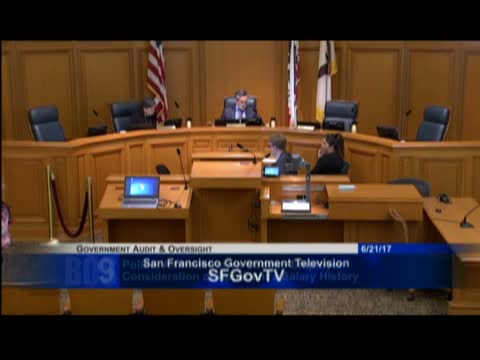
Acting Committee Chair Aaron Peskin said the Government Audit & Oversight Committee advanced an ordinance on June 21 that would prohibit employers from asking job applicants about their current or past salary and would restrict the use and disclosure of employee salary history.
Kanishka Karnarathna, an aide to Supervisor Mark Farrell, told the committee the ordinance “simply bans reliance on salary history in hiring and in setting wages, and specifically bans asking an applicant for their salary history.” Karnarathna summarized A4 amendments before the committee that clarify exclusions and enforcement avenues.
The A4 amendments clarify that salary history does not include objective measures of productivity; state that salary history on its own cannot be used to justify pay disparities (noting alignment with state law); allow individuals affected to file complaints with the Office of Labor Standards Enforcement (OLSE); and narrow the ordinance's scope so certain provisions apply to city contracts only when performed on city property. The ordinance also authorizes OLSE to implement and enforce the provisions and authorizes the city to bring civil actions against employers for violations.
Karnarathna asked the committee to adopt the amendments and send the ordinance with a positive recommendation. With no public comment, Supervisor Sandra Lee Feuer moved to adopt the amendments; the committee approved them without objection and forwarded the item to the full Board with a positive recommendation.
The measure, as amended, now goes to the full Board of Supervisors for further action.