Get Full Government Meeting Transcripts, Videos, & Alerts Forever!
Get email alerts on the Labor And Employment topic
No spam. Unsubscribe anytime.
Budget committee advances predictable-scheduling and retail-worker ordinances, restores small-business threshold
Summary
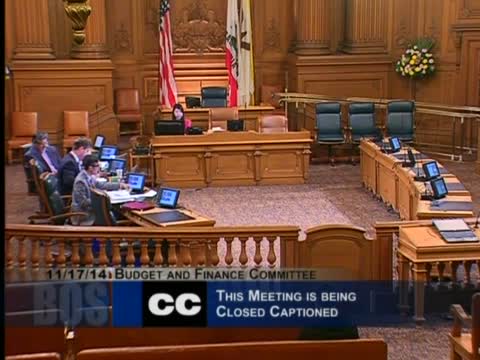
The San Francisco Board of Supervisors budget and finance committee on Nov. 17 advanced two Police Code ordinances governing formula retail scheduling and worker retention. The committee removed a 200-employee retention threshold, restored a 20-employee employer threshold for small franchises and set a six-month operative date without an additional six-month enforcement ramp-up.
The San Francisco Board of Supervisors budget and finance committee on Nov. 17 advanced two ordinances that would regulate scheduling and worker retention for formula retail establishments, voting to remove a newly added 200-employee retention threshold, restore a 20-employee employer threshold for small franchises, and set the ordinances to become operative six months after passage without an additional six-month enforcement delay.
The measures — described by the clerk as amendments to the Police Code that would require employers to offer additional hours to current part-time employees when available, require successor employers to retain employees for 90 days after a change in control, provide two weeks' notice of posted work schedules and compensation for schedule changes with fewer than seven days' notice — are intended to increase schedule predictability and job security for retail and related workers.
Sponsor remarks and coalition support Supervisor Marr, identified in the transcript as the sponsor, framed the package as part of a broader effort to raise standards for low-wage retail workers and said the ordinances would affect roughly 40,000 workers in the city. Marr announced three motions: to remove the 200-employee-or-more retention threshold added at a prior meeting, to restore a 20-employee-or-more threshold in the employer definition, and to eliminate a six-month enforcement ramp-up while keeping a six-month operative date.
Supporters from labor and family-advocacy groups testified in favor. Genia Cassidy of the California Work and Family Coalition said the proposal matters to caregivers and parents who rely on childcare and urged supervisors to "work together to have the best legislation possible so that we can move forward with this." Gordon Mar of Jobs with Justice and other union-affiliated speakers opposed the 200-employee retention threshold and backed a six-month operative date without an additional ramp-up.
Business concerns and scope questions Business groups urged caution. Jim Lazarus of the San Francisco Chamber of Commerce said the package raised "some significant problems" including potential conflicts with recently enacted ordinances such as grocery-store retention rules and visitor-industry regulations. Samantha Higgins of the Golden Gate Restaurant Association said that, while she appreciated the restored 20-employee limit to protect small businesses, provisions on posting available hours and "predictability pay" could harm employers' ability to hire and manage staffing.
Stakeholders also warned the ordinance might inadvertently capture certain hotel employees. A speaker identified in the transcript as Ian Lewis asked the supervisors to clarify that employees directly employed by hotel management companies would not be swept in by the formula-retail definitions. The sponsor said staff and coalition members were working on that issue and committed to trailing legislation to address it rather than delay the whole package.
Legal and timing details Deputy City Attorney John Gibner explained the operative-date language: "There was an amendment made on Wednesday that extended that to 6 months, so the entire ordinance would not become operative until 6 months after passage," and he noted an amendment on enforcement had previously proposed an additional six-month period before fines or penalties could be issued. The sponsor moved to eliminate that second enforcement ramp-up.
Motions and votes The committee adopted three motions offered by the sponsor. The motion to remove the 200-employee-or-more retention threshold passed on a roll call with three ayes. The motion to restore the employer definition threshold to 20 employees passed on a roll call (two ayes, one no, with Marr and Farrell recorded as aye and Avalos recorded as no). The motion to make the ordinances operative in six months and remove the additional six-month enforcement ramp-up passed on a roll call with three ayes.
The sponsor then moved to forward the items to the full Board with a committee recommendation for the Nov. 18 meeting; the transcript records the committee roll call on that recommendation as two ayes and one no. The sponsor said there will be further discussion at the full Board and pledged to work with the city attorney and coalitions on narrower follow-up legislation to address the hotel-employees concern.
What happens next The committee report will go to the full Board for consideration on Nov. 18, 2014. Supporters said the package would improve economic security for thousands of low-wage retail workers in San Francisco; business groups and some supervisors asked for careful coordination to avoid conflicts with existing ordinances and to clarify which subcontracted and hotel-employed workers are covered.
Closing Chair Mark Farrell adjourned the special meeting at its conclusion.