Get Full Government Meeting Transcripts, Videos, & Alerts Forever!
Get email alerts on the Ev Infrastructure topic
No spam. Unsubscribe anytime.
Committee backs resolution urging curbside EV charging feasibility study, requests cost and funding plan
Summary
The committee voted 3–0 to recommend a resolution supporting SFMTA and SF Environment’s curbside EV charging feasibility study and to request a report with site recommendations, cost estimates and funding strategies by the end of 2024. Presenters said the study will identify technical feasibility, community engagement, and an implementation framework.
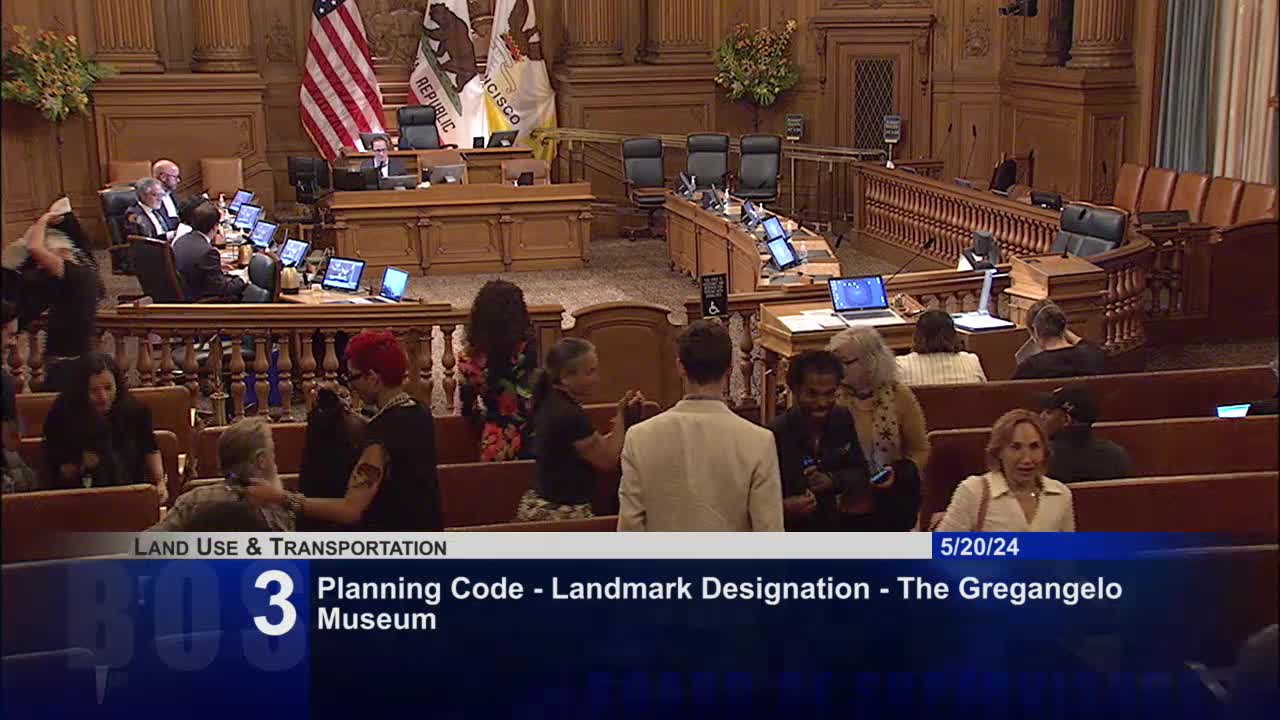
The Land Use and Transportation Committee on May 20 recommended a resolution urging city agencies to advance a curbside electric‑vehicle (EV) charging feasibility study and to deliver a report with recommendations, cost estimates and funding strategies by the end of 2024.
Supervisor Rafael Mandelmann, the sponsor, framed the resolution as supporting ongoing work by SFMTA, SF Environment, Public Works and other partners to develop a scalable, publicly accessible curbside charging program. "Our transportation sector accounts for nearly half of our city's greenhouse gas emissions," Mandelmann said, explaining the study’s role in meeting local and state climate goals.
Hannah Troon, Clean Transportation Program Manager at SF Environment, and Maya Price, SFMTA transportation planner, described the study’s three components: a technical feasibility analysis (grid readiness, permitting, curb management), community engagement to design equitable site selection, and an implementation framework with funding options. Troon said an ICCT charging‑demand analysis suggests the city will need about 1,760 public chargers by 2030 and that the city currently has just under 1,000 chargers. "We need about 1,760 public chargers by 2030 to meet expected demand," Troon said.
Supervisors raised concerns about grid capacity, permitting timelines (encroachment permits ranging from 6 to 18 months), and funding models (city‑owned versus third‑party operators). Staff said they are exploring grant opportunities, public‑private partnerships and potential workarounds such as tapping municipal building power or other commercial arrangements. President Aaron Peskin requested the final staff report include funding strategies; the committee added that language to the report requirement.
Public commenters including labor and climate advocates supported the pilot and urged equity, faster timelines and that curbside chargers remain for public use rather than for private commercial fleets. The committee approved the resolution as amended and forwarded it to the Board with a positive recommendation (3–0).