Get Full Government Meeting Transcripts, Videos, & Alerts Forever!
Get email alerts on the Tenant Right To Counsel topic
No spam. Unsubscribe anytime.
Supervisors hear evidence that San Francisco’s tenant right-to-counsel program saves thousands but needs staffing and sustained funding
Summary
At a committee hearing, MOHCD and provider partners said the city’s Tenant Right to Counsel program is preventing homelessness (MOHCD/EDC reported high success rates and estimated it keeps roughly 1,700 people housed annually) but still faces staffing and capacity constraints; providers urged maintaining or increasing the current $17.7 million funding level.
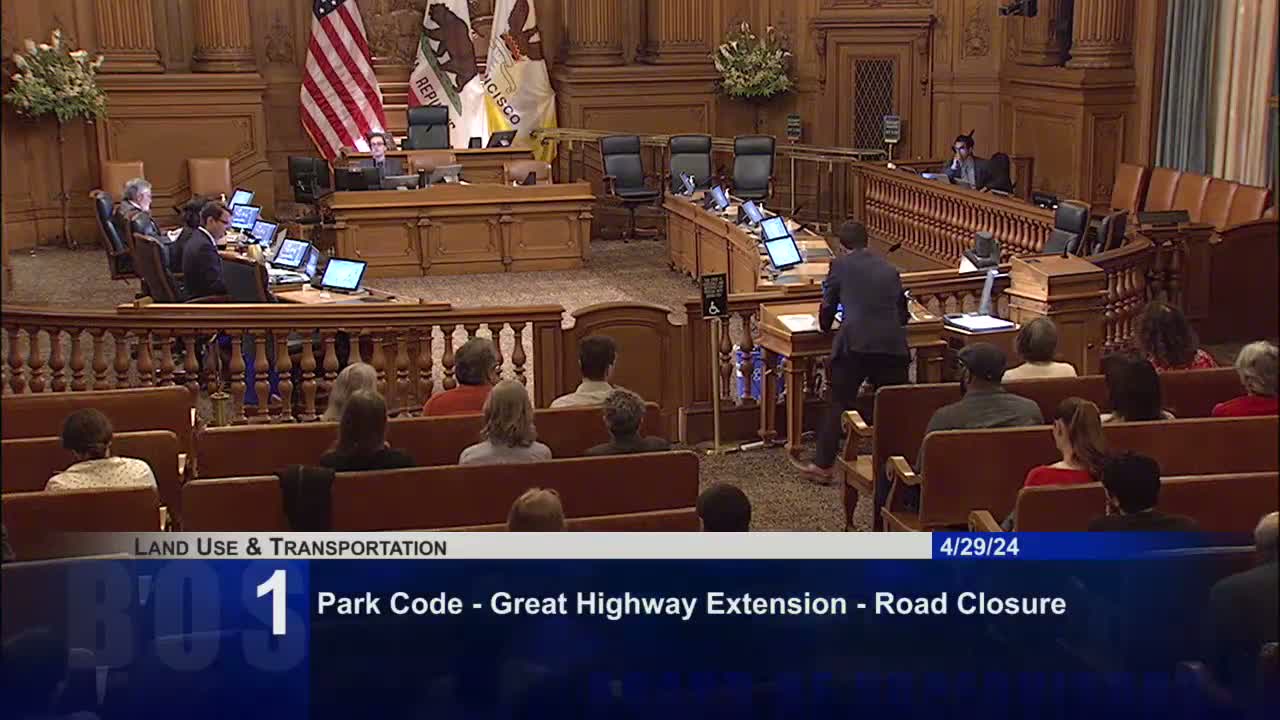
The Land Use & Transportation Committee held a hearing on April 29 to assess San Francisco’s Tenant Right to Counsel (TRC) program, a voter‑approved (Prop F, 2018) effort that guarantees free legal representation to renters facing eviction.
Vice Chair Supervisor Dean Preston opened by noting earlier analyses showing strong outcomes and said the goal of the hearing was to review multi‑year data on program performance, capacity and funding. Helen Hale of the Mayor’s Office of Housing and Community Development (MOHCD) described program structure: centralized intake, partner legal service organizations, a combination of full‑scope and limited‑scope legal help, and complementary prevention services such as tenant counseling and emergency rental assistance.
MOHCD and partner organizations reported multi‑year data. For fiscal year 2022–23 MOHCD reported roughly 1,800 cases handled, with about 84% of clients receiving full‑scope representation and 16% limited scope. MOHCD presented a success metric that roughly 92% of tenants who received representation avoided homelessness, and supervisors and providers repeatedly cited an annual estimate that the program now saves well over 1,000 households — MOHCD put a figure in testimony estimating about 1,700 people per year who are prevented from losing their homes by the program. MOHCD said current TRC funding is $17,700,000 and that the department does not plan reductions for the 2024–25 budget year.
Eviction Defense Collaborative (EDC) representatives, including the litigation director, said the program has not yet achieved Prop F’s universal full‑scope goal because of staffing and capacity constraints across participating organizations. They described active recruitment through law‑school fellowships and pipeline work, noted current vacancies at provider organizations, and explained a vulnerability‑scoring triage used to prioritize full‑scope services for the most at‑risk tenants (factors include age, disability, presence of minor children, language access and type of housing subsidy).
EDC provided a cost estimate: a “fully loaded” attorney team handling about 50 cases translates to roughly $6,300 per case; given the program’s high success rate, EDC compared that to an estimated $70,000 cost for a shelter bed and rehousing, presenting TRC as a cost‑effective prevention investment.
Public comment was extensive. Providers, law fellows, tenants and client advocates delivered firsthand accounts of cases in which full‑scope representation preserved tenancies or produced favorable settlements; staff from Legal Assistance to the Elderly, Bay Area Legal Aid, AIDS Legal Referral Panel and others described high success rates for elderly and extremely low‑income clients and urged the Board to preserve or increase TRC funding and parallel rental assistance programs. Several speakers asked MOHCD and partners to do more targeted outreach to areas with high default rates and to consider post‑judgment vacatur work where feasible.
Committee members praised the program’s outcomes and the voter mandate behind Prop F. Vice Chair Preston moved to file the hearing; the committee voted to file the matter (Preston, Peskin, Melgar — ayes), concluding the review and signaling the Board’s interest in sustaining the program’s funding and staffing pipeline.