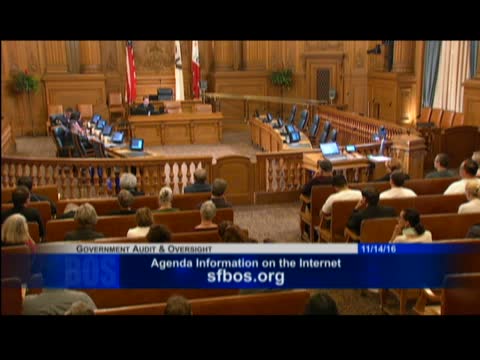
San Francisco committee advances stricter short-term rental rules, sends amendments to full board

Government Audit and Oversight Committee, San Francisco Board of Supervisors · November 14, 2016

Loading...

AI-Generated Content: All content on this page was generated by AI to highlight key points from the meeting. For complete details and context, we recommend watching the full video. so we can fix them.

Summary

The Government Audit and Oversight Committee advanced amendments to the city's short-term rental ordinance on Nov. 14, including a 60-day annual cap, clarified grandfathering for registered hosts and a limited private right of action for housing nonprofits; the item was sent to the full Board without objection.

SAN FRANCISCO — The Government Audit and Oversight Committee on Monday advanced amendments to San Francisco's short-term rental rules aimed at tightening enforcement of unregistered listings and limiting the annual days any residential unit may be offered on short-term platforms.

The committee heard hours of public comment and then moved the item to the full Board of Supervisors with a committee recommendation. President London Breed, who sponsored the legislation, said the measure would place "tougher, more enforceable regulations on short term rentals" and create a 60-night cap for short-term rentals whether the host is present or not, while grandfathering hosts who already registered under earlier rules.

The amendments also would restore a narrowly defined private right of action allowing certain nonprofit housing organizations — not individual neighbors — to sue over alleged violations before the planning director issues a final determination, supporters said. Deputy City Attorney Andrew Shen described the three proposed changes described at the hearing as "minor" and non-substantive clarifications of the draft ordinance.

Supporters of the tighter rules, including ShareBetter SF, the San Francisco Tenants Union and some tenant-rights advocates, urged the supervisors to act to prevent the conversion of long-term housing into de facto hotel rooms. A ShareBetter representative cited enforcement data discussed at a recent oversight hearing and argued the city needed additional tools: "There is no way his office or the good offices of the city attorney are ever going to be able to fully enforce this law," the speaker said, arguing the private right of action would help pursue repeat violators.

Labor groups also backed the changes. Mike Casey of the San Francisco Labor Council said the council "unanimously endorsed" the legislation and asked Airbnb to withdraw its pending lawsuit as a sign of good faith while the city and platforms negotiate.

Opponents — primarily registered hosts and host associations — urged the board to spare small, hosted operators and vulnerable residents who use hosting income to stay in the city. Dozens of hosts described relying on income from hosting to pay mortgages, medical bills and college tuition. "If I'm only able to share my home for 60 days a year, I'll be forced to sell my home of 7 years," said host Lehi Wyatt.

Industry groups took differing positions: the Hotel Council of San Francisco supported the 60-day cap as a way to reduce confusion and improve enforcement, while some landlord and apartment-association representatives urged removing the hosted/unhosted distinction because it is difficult to prove who is sleeping where and therefore hard to enforce.

City staff said enforcement and registration remain challenges. Bill Barnes of the City Administrator's Office told the committee that the Office of Short-Term Rentals had used letters to platforms earlier in the year and that some enforcement actions, including notices and fines, followed; he said moving to a renewal model for permits could help ease grandfathering concerns. Chair Peskin noted the law's registrants number roughly "a little less than 1,700" and said the amendments would make clear that existing registrants who renew keep grandfathered status.

Supervisors stressed the changes were an attempt to balance competing priorities: preserving limited housing stock, protecting neighborhood character and preserving a path for residents who legitimately rely on hosting income. After closing public comment, President Breed moved the non-substantive amendments proposed by Supervisor Aaron Peskin and the committee approved the motion "without objection," sending the item to the full Board with the committee's report and recommendation.

The Board is scheduled to receive the committee's recommendation at its Nov. 29, 2016 meeting unless otherwise noted.

— Reporting by the Government Audit and Oversight Committee hearing record. Direct quotes and claimed numbers drawn from committee testimony at the Nov. 14 hearing.