Get Full Government Meeting Transcripts, Videos, & Alerts Forever!
Get email alerts on the Public Safety Police topic
No spam. Unsubscribe anytime.
Supervisors send ordinance to create neighborhood crime units to full Board after committee amendment
Summary
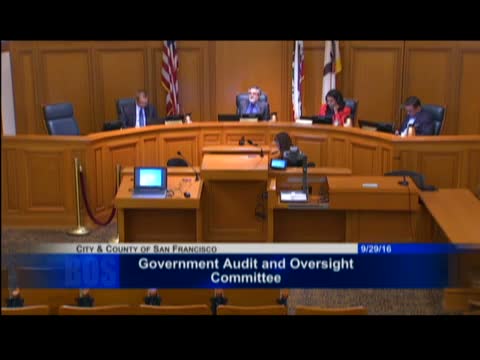
The Government Audit and Oversight Committee sent an ordinance to the full Board to create district-focused neighborhood crime units in the San Francisco Police Department, adopting amendments that emphasize station-level teams and community policing; public comment was none.
San Francisco supervisors on Thursday moved an ordinance to the full Board that would amend the administrative code to create neighborhood crime units in the San Francisco Police Department, to be activated once the controller certifies the department is at the charter-mandated full staffing level.
The ordinance, sponsored by Vice Chair Supervisor Norman Yee, was presented to the Government Audit and Oversight Committee as a "common sense data driven community approach" aimed primarily at reducing property crimes, including vehicle break-ins and burglaries. "This ordinance before us today is really a way to forge a more common sense data driven community approach to combating neighborhood crimes, more specifically property crimes," Yee said.
Why it matters: committee members said the measure is intended to give station commanders more flexibility and personnel to tailor responses to problems unique to their districts while keeping a degree of citywide coordination. Supervisor David Campos cited a March hearing in which a district attorney presentation reported that in 2015 there were more than 25,000 car break-ins in San Francisco and that arrests were made in about 2% of those incidents; Campos said that gap underscored the need for district-specific strategies. "We need to send a message that in San Francisco, we're not gonna tolerate that," Campos said.
Board President London Breed added that the city spends more than $20,000,000 a year addressing graffiti on city property and highlighted tourist-area hotspots for vehicle break-ins, such as Alamo Square and Twin Peaks. Breed said she will propose separate legislation requiring rental companies to notify renters about theft risks and suggested a community ambassador program to provide a visible, friendly presence in high‑risk areas.
The committee debated and then adopted a package of amendments described by Deputy City Attorney John Gibner as responding to the committee's discussion: the changes clarify that the ordinance favors units distributed throughout the city rather than creating a single centralized unit and add language emphasizing community policing. "Essentially, the amendments correspond to the discussion that the committee had today about units throughout the city instead of a centralized unit," Gibner said.
Procedural outcome: after a short procedural sequence in which the committee rescinded a prior procedural action to allow consideration of the amendments, the committee adopted the amendments without objection and agreed to send the item, as amended, to the full Board with a recommendation. The clerk noted that items acted upon today will appear on the Board of Supervisors agenda on October 18 unless otherwise stated. The Chair then adjourned the special meeting. Public comment was solicited and none was offered.
What remains unclear or next steps: the ordinance will be considered by the full Board at a future meeting (noted as October 18 on the clerk's announcement). The committee discussion cited several supporting pieces of evidence (the March hearing and a grand jury report) and recommended station-level staffing, but the exact staffing thresholds and the controller certification process that would trigger activation of the neighborhood crime units were not detailed in the committee discussion and remain to be set by ordinance language and subsequent implementation steps.