Get Full Government Meeting Transcripts, Videos, & Alerts Forever!
Get email alerts on the Homelessness topic
No spam. Unsubscribe anytime.
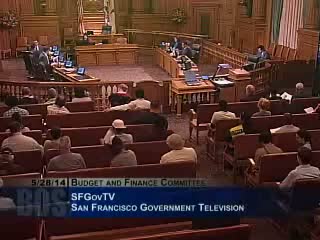
Supervisors hear data, pleas and program plans as San Francisco probes youth and LGBT homelessness
Summary
City officials and dozens of providers, researchers and formerly homeless youth told the Budget & Finance Committee on May 28 that transitional-age and LGBTQ people make up a disproportionate share of San Francisco’s homeless population and called for a continuum of emergency, transitional and permanent housing plus outreach and jobs. (349 characters)
San Francisco’s Budget and Finance Committee on May 28 heard stark data and urgent appeals about homelessness among transitional-age youth (TAY) and LGBTQ residents as city officials and service providers laid out counts, service gaps and program plans.
Chair Mark Farrell opened the hearing by describing the city’s recent youth counts and surveys and said about one in four homeless youth identified as LGBTQ, with many unsheltered and a high share who previously were in foster care. “We found in the count 9 14 unaccompanied children and transitional age youth, which represents close to 10 percent of our overall homeless population,” Farrell said, and he urged the committee to focus on the policies and programs that work locally.
Bevan Dufty of the mayor’s Office of HOPE told supervisors that outreach events and LGBTQ-specific outreach have made needs visible but that shelter capacity is only one part of the solution. “Even when that shelter opens, we’re talking about a very limited number of beds. It is not the answer. It’s a part of the solution,” Dufty said, pointing to an incoming 24-bed designation and to a separately-funded 44-unit building at 374 Fifth Street aimed at chronically homeless youth.
Joyce Crum, director of the Human Services Agency, reviewed the dedicated youth count methodology and program inventories, saying a large majority of identified TAY were unsheltered and that administrative paperwork and eligibility checks often delay move-ins. Crum described existing TAY programs—Larkin Street Youth Services shelters and outreach, Diamond Youth Shelter, and transitional and permanent units funded by HUD and local sources—and said staff are exploring ways to streamline documentation to speed placements.
Margot Antonetti of the Department of Public Health presented health and behavioral-health findings from coordinated databases, noting elevated rates of substance use and mental-health conditions among some subgroups and an undercount risk because sexual orientation and gender identity are not consistently collected in many case-management systems. Antonetti urged improved data collection and cross-departmental coordination to better target services.
Researchers and providers urged a range of next steps during public comment. Dr. Coco Auerswald, a UC Berkeley researcher, recommended completing the city’s 400-unit TAY housing goal and extending supports for former foster youth. Leaders from Larkin Street, AIDS Housing Alliance and Homeless Youth Alliance pressed for more outreach, housing slots targeted to youth and seniors, and stronger eviction-prevention and tenant-protection measures. Multiple youth who had exited homelessness said immediate financial assistance, shorter waiting lists and accessible supportive services were critical to stabilization.
Supervisors took procedural action to file the hearing reports and signaled interest in translating the recommendations into budget changes this season. Several supervisors said they would work with departments and community partners to pursue bridge funding, expand outreach and press for administrative changes that speed placement into housing.
Next steps: the committee recorded testimony for the Board’s June 3 agenda and identified follow-ups with HSA, DPH and the mayor’s housing office about paperwork simplification, TAY pipeline progress (including 374 Fifth Street) and targeted investments for LGBTQ and transitional-age populations.