Get Full Government Meeting Transcripts, Videos, & Alerts Forever!
Get email alerts on the Housing Policy topic
No spam. Unsubscribe anytime.
San Francisco supervisors grill city lobbyists over advocacy on AB 2501 and governor's by-right housing plan
Summary
City-contracted lobbyists told the Government Audit and Oversight Committee they circulated the Board's AB 2501 resolution to Sacramento but stopped short of characterizing current contact with the governor's office as negotiations; public commenters were split between support for the governor's by-right approach and calls for San Francisco-specific exemptions.
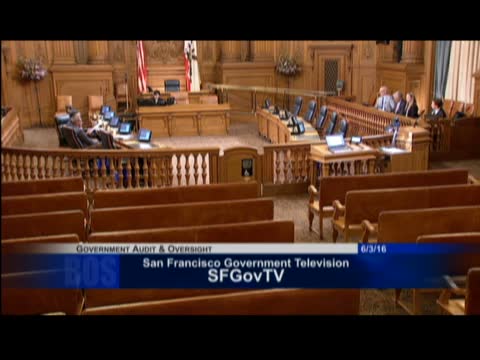
City-contracted lobbyists appeared before the Government Audit and Oversight Committee of the San Francisco Board of Supervisors on Friday to explain how they have been advancing the Board's position on Assembly Bill 2501 and related "trailer" legislation that could insert a statewide by-right housing approval policy into budget negotiations.
Aaron Peskin, chair of the committee, opened the special meeting by asking the lobbyists to introduce themselves and explain their outreach so the public could understand how the Board's positions are being represented in Sacramento. "I wanna thank our city's lobbyists, Shaw Yoder and Antwee ... for coming here on very short notice," Peskin said, noting recent process improvements such as the clerk distributing resolutions directly to lobbyists.
Joshua Shaw and Paul Yoder of the firm Shaw, Yoder & Tweed described the firm's contacts across Sacramento and with the Brown administration's Housing and Community Development offices. Paul Yoder said the firm had circulated the Board's resolution on AB 2501 to the city's legislative delegation, other key legislators and relevant administration staff and that he expects AB 2501 to be heard in the Assembly Housing Committee. "We expect that bill to be heard in the Housing Committee," Yoder said.
On the governor's by-right proposal, Yoder told the committee that governor's staff and legislative leaders have signaled an interest in housing policy changes alongside significant funding proposals. He described a potential package in which policy changes could accompany bonding and other budget items, and noted that statewide labor and environmental groups have registered CEQA-related concerns in letters he said are public record.
Public commenters were divided. Tim Colin of the San Francisco Housing Action Coalition, representing about 300 member organizations, urged the Board to support the governor's proposals as tools to increase housing production, warning that local opposition could jeopardize statewide funding for subsidized housing. "The plain truth is that our housing affordability and displacement crises keep getting worse year after year because we lack the tools at the local level to make any difference," Colin said.
Sonia Traus, founder of the SF Bay Area Renters Federation, described grassroots mobilization in support of the bills, including a postcard campaign that produced roughly 800 postcards in about 24 hours, and urged the city to back streamlined approvals. "We're very excited about this because shortage is a renter's issue, and we think this is a kind of bill that will help ease the shortage," Traus said.
Speakers aligned with the Council of Community Housing Organizations urged caution. A representative the chair addressed as "Mr. Cohen" said some state-level organizations had taken pragmatic stances on the trailer bill that local groups did not join and warned that a by-right preemption could undercut stronger local demolition controls and inclusionary policies. "A by-right approval does not build units. A by-right approval gets you paper," the speaker said, arguing that faster entitlements do not guarantee construction.
The lobbyists told the committee they would share coalition letters and further documentation; Yoder offered to forward letters from labor and environmental groups expressing CEQA-related concerns. The committee did not take a formal vote on any item. Chair Peskin said he would continue the hearing "to the call of the chair" to allow periodic public check-ins and to coordinate further updates with Ms. Elliot and the firm as the budget and trailing bills move through Sacramento.