Get Full Government Meeting Transcripts, Videos, & Alerts Forever!
Get email alerts on the Hsa Budget Supplemental topic
No spam. Unsubscribe anytime.
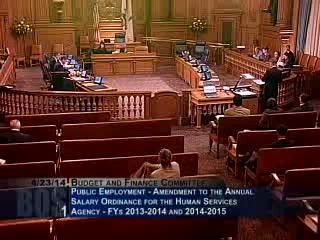
San Francisco subcommittee approves $31.5 million appropriation, delays vote on hiring 68 HSA positions
Summary
The Budget & Finance Subcommittee approved a $31.5 million appropriation for HSA programs (IHSS, CalWORKs, CalFresh and others) but continued consideration of the accompanying salary ordinance adding 68 positions for one week while staff and the budget office reconcile vacancy and temporary‑staffing data.
The San Francisco Board of Supervisors Budget & Finance Subcommittee approved an appropriation of approximately $31,500,000 in state and federal revenue to the Human Services Agency (HSA) to support in‑home supportive services (IHSS), CalWORKs, CalFresh and other program expenditures, but continued action on the associated salary ordinance that would add 68 positions for one week for additional review.
HSA Director Trent Roehr told the committee the supplemental is driven by increased caseloads and state mandates and would fund programmatic and technical needs, including CalWORKs case management, subsidized employment expansion and upgrades to the county’s CalWIN eligibility system. “What we're requesting is spending authority, for increased state and federal revenue that's largely due to growth in caseloads as well as initiatives at the state level,” Roehr said during the presentation.
Roehr outlined program changes tied to recent state legislation and funding: adding 22 CalWORKs positions (social workers, caseworkers and employment specialists) to accelerate enrollment into employment plans, expanding JobsNow subsidized employment slots by about 70–100 private‑sector placements and lengthening public‑sector trainee slots from six months to a year. He also described targeted CalFresh outreach to thousands of Medi‑Cal enrollees who are likely eligible for food benefits and proposed an 11‑person analytics and systems team to implement service integration for Medi‑Cal and related programs.
Budget analyst Mr. Rose recommended modest reductions and questioned whether all requested FTEs were justified. In his report the analyst said the proposed ordinance would appropriate $31,500,000 and originally identified 68 positions (16.85 FTE for FY13–14) but recommended reducing the supplemental by about $134,958 and deleting 22 positions on an annualized basis after workload review. “We always attempt to be conservative,” Rose said, noting the office had identified vacancies and questioned whether some new positions could be filled from existing vacant slots.
A central point of debate was the treatment of temporary staff and year‑end salary savings. HSA told the panel many slots that appear vacant on paper are filled by temporary or exempt employees and that converting those temps into permanent civil‑service appointments requires additional FTE authorization. Roehr said the department has about $10,800,000 in unexpended salary savings and that many positions shown as vacant are actually being covered with temporary staff. “For example, the 2905 permanent civil service position was showing as vacant when in fact that position is filled by a temporary exempt person,” he said.
Controller’s office representative Risa Sandler told the committee her office had not yet reviewed the department’s temp‑to‑perm documentation for this supplemental and offered to follow up.
The committee agreed to continue Item 1 (the salary ordinance) for one week to allow staff, the department and the budget analyst to reconcile vacancy classifications and temporary staffing data. The committee approved the budget analyst’s reduction to Item 2 (the appropriation) and moved the appropriation forward to the full Board with that adjustment.
Next steps: Item 1 will return to the subcommittee after one week of additional staff work; Item 2 proceeds to the full Board as amended.