Get Full Government Meeting Transcripts, Videos, & Alerts Forever!
Get email alerts on the Housing Production topic
No spam. Unsubscribe anytime.
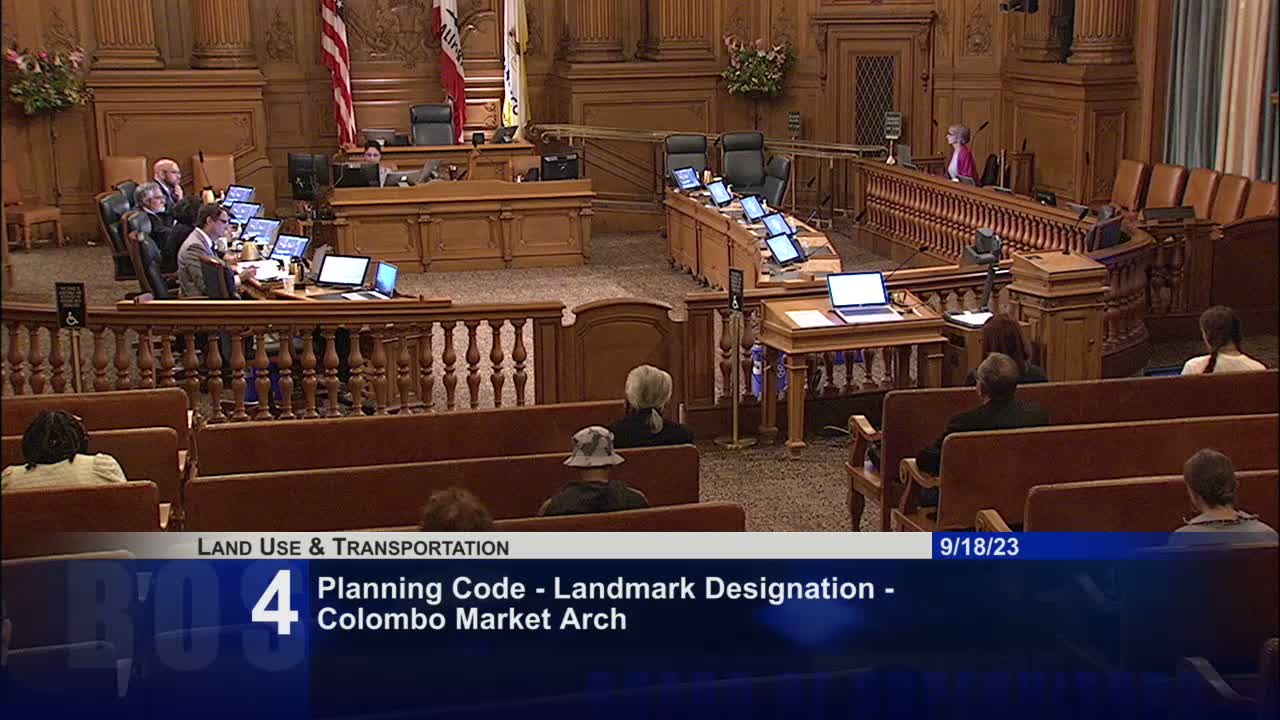
Committee hears marathon debate on mayor’s ‘constraints reduction’ housing ordinance; item continued to Oct. 2
Summary
The Land Use Committee heard a lengthy presentation and heated debate on a sweeping mayoral ordinance to streamline housing approvals across San Francisco. Supporters urged speed to meet state mandates; opponents and tenant groups warned it would enable demolition of rent‑controlled units and silence community input. The committee continued the item to Oct. 2 for further amendments.
Chair Marina Melgaard convened the committee to consider a broad ordinance the mayor has called a ‘constraints reduction’ package, intended to implement parts of the city’s recently adopted housing element by reducing planning‑code requirements that the administration says slow housing production.
Aaron Star, manager of legislative affairs for the Planning Department, presented the ordinance and a bundle of mayoral amendments. He said the measure would create a “priority equity geographies” Special Use District (SUD) where existing controls would remain, while removing some conditional‑use and neighborhood‑notice requirements outside that SUD to speed approvals. Star said the changes also would standardize setbacks and open‑space rules, raise minimum lot sizes consistent with SB 9, and expand HOME SF eligibility and fee waivers for some 100% affordable projects. “This ordinance seeks to implement many of those implementation programs,” Star said, describing the effort as part of the mayor’s “Housing for All” initiative.
Several supervisors pushed back. Supervisor Dean Preston said he remained opposed to cutting inclusionary requirements and worried the measure would primarily benefit property owners rather than produce more affordable homes: “I’m not supportive of the underlying policy here… I remain opposed to decreasing our inclusionary housing requirements,” he said. Supervisor Mandelmann and others repeatedly asked how the ordinance would protect tenants; Mandelmann said removing hearing opportunities risks allowing speculation to displace long‑term residents. President Aaron Peskin and other supervisors said they wanted stronger tenant protections and clearer commitments from the mayor’s office to finance affordable housing.
Many community groups and hundreds of callers weighed in during public comment. Housing‑industry groups and architects argued the city must speed approvals to meet the state‑required RHNA targets and warned San Francisco could lose state funding or face intervention if it fails to show progress. Tenant groups, the Race and Equity in All Planning coalition (REP), neighborhood associations and residents urged the committee to reject or significantly amend the proposal, arguing it would erode public notice, weaken protections for rent‑controlled units and historic resources, and accelerate displacement.
Star and others repeatedly told the committee the ordinance would not exempt projects from environmental review under CEQA, and that demolition controls would include limits: unit demolitions would be restricted (for example, no more than two rent‑controlled units could be removed under the proposed criteria) and sponsors would be required to certify the absence of recent buyouts or evictions. Opponents, however, said those safeguards were insufficient and difficult to verify in practice.
Given the scale of last‑minute amendments, persistent concerns from multiple supervisors and the volume of public comment, the committee did not vote on the ordinance. President Peskin recommended further off‑line negotiations; Chair Melgar moved to continue the item to October 2 so authors and supervisors could prepare substantive amendments. The committee voted 3–0 to continue the item.
Next steps: the authors (mayor’s office and planning) and Board members will draft and exchange amendments prior to the Oct. 2 Land Use Committee meeting, when the ordinance is expected to return for further discussion.