Get Full Government Meeting Transcripts, Videos, & Alerts Forever!
Get email alerts on the Soda Tax topic
No spam. Unsubscribe anytime.
Supervisors hear evidence and heated public comment as San Francisco considers 2¢‑per‑ounce soda tax
Summary
Supervisors held an extensive hearing on a proposed 2¢‑per‑ounce tax on sugar‑sweetened beverage distributors to fund school nutrition, public health and parks programs; health officials, the school district and recreation leaders urged passage while small‑business owners and beverage industry representatives warned of regressivity and administrative burden.
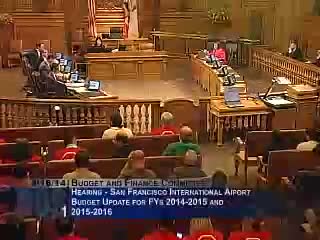
The Board of Supervisors’ Budget & Finance Committee held a broadly attended hearing on a proposed sugar‑sweetened beverage tax that, if approved by voters, would place a 2¢‑per‑ounce assessment on distributors and is projected by sponsors to yield about $30–31 million annually for schools, public health and recreation.
Supervisor Mark Maher, sponsor of the measure, framed it as a public‑health and equity action to reduce sugary‑drink consumption in low‑income neighborhoods and generate funds for nutrition, physical education and park programs. "This is a 2 pennies per ounce assessment on distributors," Maher said while describing research from UCSF and Yale that he said supports a 20–25% reduction in consumption.
Co‑sponsor Supervisor Scott Wiener emphasized the health rationale: high sugary‑drink consumption contributes to rising rates of type‑2 diabetes and other chronic conditions in San Francisco. He and other supervisors repeatedly stressed that the current draft places the administrative obligation with distributors, not retailers, and that the ordinance includes specific earmarks: 40% to San Francisco Unified School District (SFUSD), 25% to the Department of Public Health, 25% to Recreation & Parks, and 10% to community‑based organizations, according to remarks during the hearing.
Public health staff presented evidence and program proposals. Christina Gota (DPH) reviewed surveillance and literature linking sugary beverages to obesity, diabetes and dental decay and cited the Budget & Legislative Analyst’s estimate that costs attributable to sugar‑sweetened beverages ranged from about $48 million to $61 million for residents and $10 million to $28 million for the city/county annually. Paula Jones (DPH Food Systems) outlined food‑security recommendations — including increased CalFresh outreach and a pilot healthy food purchasing supplement — that the DPH and task force say could be supported with new revenue.
Greg Cotto (Treasurer’s Office) described preliminary plans for tax administration: an operative date in a draft of 01/01/2016, monthly remittance by identified taxpayers (primarily distributors), an online filing system, and an expectation that the Treasurer’s Office would require less than three full‑time equivalent staff in the current draft to operate collection, investigations and audits. He warned that implementation costs and IT needs will be folded into future budget processes.
Speakers for SFUSD and Rec & Park explained program needs. Lena Brook (SFUSD Food & Fitness) said 63% of SFUSD students currently qualify for free or reduced‑price meals and that the district has a strategic plan to improve meals and expand fitness if funding is available. Bob Palacio (Rec & Park) outlined demand for recreation programs, scholarships and learn‑to‑swim expansion and provided per‑center and program cost estimates.
Public comment filled the chamber: pediatricians, nurses, parents, school officials, the SF Marin Food Bank, youth commissioners and public‑health coalitions urged the supervisors to put the tax on the ballot and highlighted health and equity benefits. The American Beverage Association’s representative and many small‑business owners countered that the tax is regressive, questioned the evidence that a tax will change consumption or long‑term health outcomes, and warned of administrative burdens and pass‑through costs to consumers.
Supervisors closed the hearing with a pledge to continue deliberations and additional hearings to examine technical details, accountability, and program implementation. No final vote on Item 2 appears in the transcript; the committee continued the matter to the call of the chair.