Get Full Government Meeting Transcripts, Videos, & Alerts Forever!
Get email alerts on the Infrastructure Safety topic
No spam. Unsubscribe anytime.
Haight-Ashbury contractors faulted after five gas-line ruptures and sinkholes; city vows tighter oversight
Summary
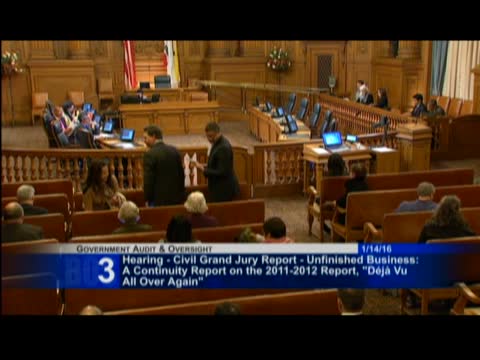
A Jan. 14 Government and Oversight Committee hearing examined five gas-line breaks and two sinkholes tied to Haight Street construction. DPW removed subcontractor Synergy, PG&E and CPUC described procedures and findings, and supervisors pressed for stronger reporting, oversight and merchant relief.
A special meeting of the San Francisco Board of Supervisors’ Government and Oversight Committee on Jan. 14 focused on five gas-line ruptures and two sinkholes that occurred during a city-funded Haight Street construction project, disrupting merchants and residents and prompting calls for stricter oversight.
Supervisor London Bree, who called the hearing, said the incidents “disrupted and endangered the Haight Ashbury community for months” and expressed relief that “no one was seriously hurt.” Community leaders told the committee the sequence of ruptures and repeated work stoppages left businesses closed for days and months, with some merchants reporting revenue losses of 20 percent to 50 percent.
John Thomas, division manager for project management and construction at the Department of Public Works, described the project timeline: notice to proceed was issued April 27 and the first gas-line rupture occurred two days later. Thomas said DPW issued notices and met repeatedly with the prime contractor, Giladi Brothers, and with subcontractor Synergy as incidents accumulated. After a fifth rupture and other safety incidents, DPW directed Giladi to remove Synergy; Synergy appealed and an administrative hearing officer upheld DPW’s removal recommendation.
"The contractor has the ultimate responsibility when excavating in the public right of way," Thomas said, describing his office’s conclusion that excavators did not follow required safety procedures, including hand-digging to expose marked utilities.
Representatives from Pacific Gas & Electric told the committee that PG&E provided locate marks and has invested in damage-prevention programs. A PG&E official said the company has seen a 20 percent reduction in dig-ins from 2014 to 2015 and that its locate teams use GIS tools and direct-locate technology. "In all five instances, these facilities were properly marked," the PG&E representative said, adding that excavators must exercise due care around marked lines.
Ken Bruno, program manager for the California Public Utilities Commission’s gas safety branch, said CPUC investigated the initial reportable incident and concluded the excavator did not hand-dig to daylight the line before using power equipment. Bruno said CPUC’s reporting criteria meant the agency investigated only the incident that met threshold rules but that CPUC recognized the need for stronger local reporting and best practices when repeated incidents occur.
Supervisors pressed both DPW and CPUC on whether state reporting criteria should be changed so the commission would investigate repeated but lower-threshold incidents. Supervisor London Bree and others urged DPW to notify CPUC when any gas leak occurs so CPUC can consider a special investigation.
Residents and merchants called for clearer public notification and site control during incidents. "We don't see any city personnel; I go over to a merchant and he said, 'oh, there's been another gas leak,'" said a neighborhood commenter who described confusing signals to the public when leaks occurred. Merchant testimony outlined substantial economic harms and urged the city to consider mitigation funds or other assistance for businesses affected by long projects.
DPW told the committee it will press for closer on-site supervision, tighter communication with PG&E and proposed contract changes to allow consideration of past performance in procurements. DPW said it intends to keep Giladi Brothers as the prime contractor and require Giladi to propose qualified replacement subcontractors to complete the work.
The committee did not take a final regulatory action at the hearing. Supervisor (speaker 5) moved to continue the item to the call of the chair so departments could return with a concrete plan of action, including notification procedures, options for earlier reporting to CPUC and measures to improve contract oversight; the motion passed with no objections. The committee also requested that the Board of Supervisors’ Budget and Legislative Analyst review contract procedures and recommend potential legislative changes.
Next steps: DPW will present a plan of action on public notification, on-site supervision and contractor prequalification; CPUC said it will provide available investigation reports on request. The committee continued the Haight Street item to the call of the chair for follow-up.