Get Full Government Meeting Transcripts, Videos, & Alerts Forever!
Get email alerts on the Sea Level Rise topic
No spam. Unsubscribe anytime.
Supervisors' committee records that existing city efforts will address grand jury sea-level-rise recommendations
Summary
City planning staff described a new mayoral sea-level-rise coordinating committee and technical subgroups and said the city will use guidance, CEQA and project-level assessments rather than immediate blanket building-code changes; the committee moved to register the board's response as "not implemented" for recommendations 3 and 12B and passed the motion by unanimous consent.
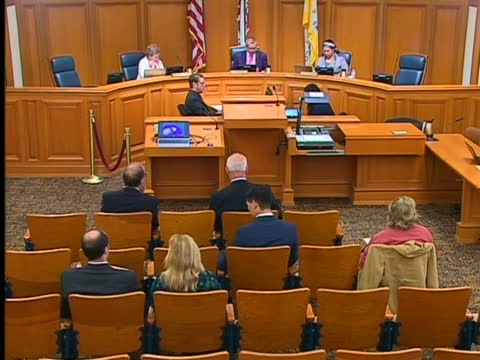
Gil Kelly, director of citywide planning, told a Board of Supervisors committee on May 7 that the mayor has established a sea-level-rise coordinating committee and several subgroups to lead economic risk analysis, vulnerability assessments, policy coordination, community engagement and waterfront adaptation.
"The grand jury report in our view was helpful in terms of elevating the issue of sea level rise and the need for the city to be very aggressive about responding to that," Kelly said, adding that the coordinating committee will provide a comprehensive sea-level-rise strategy later in the year and that technical guidance already adopted will inform capital planning.
Chris Kern of the planning department said a technical committee and a subcommittee are developing recommendations for ordinance and policy language, but that environmental review under the California Environmental Quality Act (CEQA) and FEMA flood-map guidance currently give the city tools to evaluate and control flooding risks for major projects. "Our feeling is that through the environmental review process, the city has sufficient tools to ensure that flooding risks associated with sea level rise are adequately evaluated and addressed," he said.
Marita Piazza of the civil grand jury urged stronger regional coordination and urged the city to consider the results of a SPUR Mission Bay study due Nov. 13 before finalizing waterfront decisions. "We need to have a good, strong regional representation there," Piazza said, citing the risk of piecemeal local solutions around the Bay.
Public commenter Marie Harrison of GreenAction for Health and Environmental Justice told supervisors she was concerned about toxic landfill caps and contaminated sediments that could be mobilized by rising water, and asked for vigorous community involvement. "There is no way set up as of yet to stop anything that's breaking down underneath those caps from rolling right out into our bay," she said.
Following staff presentations and public comment, Supervisor Christensen moved that the board record recommendations 3 (amending building codes) and 12B (creating a local working group) as "not implemented" because the mayor's coordinating committee and the technical committee are already addressing the issues. Deputy City Attorney John Givner advised the committee that it was appropriate to adopt such a motion as the board's response to the grand jury report. With no objection, the committee passed the motion by unanimous consent; no roll-call vote was recorded.
What happens next: city staff said they will continue work through the coordinating and technical committees and bring information and draft policy proposals to the mayor and the supervisors as they become available. The committee sent its motion to the full Board of Supervisors for incorporation as the board's formal response to the grand jury report.