Get Full Government Meeting Transcripts, Videos, & Alerts Forever!
Get email alerts on the Public Safety topic
No spam. Unsubscribe anytime.
Supervisors hear from police and district attorney on spike in auto burglaries and vehicle thefts
Summary
Supervisors pressed the San Francisco Police Department and the District Attorney's Office about a citywide rise in auto burglaries and vehicle thefts, officials cited staffing shortfalls and statewide criminal justice reforms as complicating factors and outlined targeted strategies to identify repeat offenders.
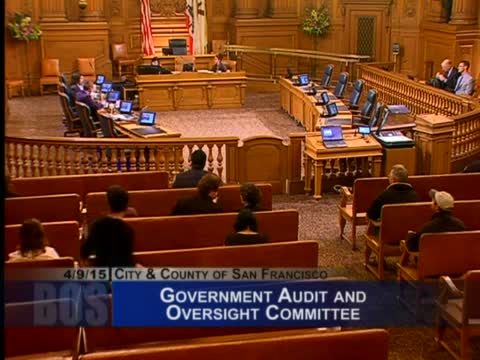
San Francisco supervisors heard detailed briefings April 9 from the Police Department and the District Attorney's Office about a marked increase in property crimes, including auto burglaries and vehicle thefts, and pressed officials for local solutions.
Supervisor Yee opened the hearing, saying neighborhood meetings in District 7 and elsewhere had raised "serious concerns about what seems to be an increase in property crimes and car break ins in District 7 and citywide." The Police Department presentation showed auto burglaries rising from about 10,300 in 2011 to nearly 20,000 in 2014 and a 49 percent increase in auto burglary in the first two months of 2015, according to the department's slides. The department also reported an 18 percent increase in vehicle theft in the first two months of 2015.
Police leadership attributed part of the change in the crime landscape to statewide policy shifts. "In 2011, Assembly Bill 109 passed," the chief said, describing how realignment and changes to parole and probation periods coincided with statewide increases in property crime. He also noted that Proposition 47, which reclassified some theft offenses in November 2014, made year-to-year comparisons more complicated because some offenses previously counted as felonies are now misdemeanors.
A District Attorney's Office representative told the committee the office's preliminary review does not show the same pattern in other large California jurisdictions and cautioned against attributing the city's trend solely to Prop 47. "It appears, at least from what we're looking at, that that is not what we're dealing with here in San Francisco," the DA's representative said, and described a crime strategies unit the office created to identify and prioritize "high crime drivers."
Both offices described operational responses. The DA's office described an "arrest alert" system to notify prosecutors as soon as fingerprints are taken, allowing earlier case review. The Police Department said staffing fell by about 300 officers after a deferred-retirement option plan sunseted and that an aggressive multi-class hiring program is under way; officials said returning roughly 300 officers will free beat assignments and problem-specific details focused on auto burglary.
Supervisors asked whether cumulative low-dollar thefts across separate incidents can be aggregated to reach felony thresholds. The DA's office said state law treats each incident as a separate crime and does not allow adding values across incidents for charging decisions; prosecutors instead said they pursue strategies that "bundle" multiple incidents into stronger cases where the evidence allows.
Public commenters described local impacts and response gaps. A homeowner identified himself as Pearson Borkan and said the theft of sentimental items had prompted neighborhood safety efforts; another speaker, Bridget Chernan of Balboa Terrace, described a home invasion caught on tape and said the neighborhood police station had not yet followed up. Several residents urged clearer guidance on when to call 911 and recommended beat officers or targeted patrols in recurring hot spots.
The committee did not adopt new legislation at the hearing. Chair Yee thanked the police and DA representatives and said supervisors would continue to pursue staffing increases and targeted enforcement measures.