Get Full Government Meeting Transcripts, Videos, & Alerts Forever!
Get email alerts on the Transparency topic
No spam. Unsubscribe anytime.
Grand jury finds uneven commission website transparency; city offices pledge fixes and a consolidated list
Summary
The civil grand jury surveyed commission websites and found many lacked easy‑to‑find annual reports, attendance records and disability/language‑access notices. The Mayor’s Office, City Attorney and disability and immigrant‑affairs offices described follow‑up work including technical assistance, posting notices on 35 of 39 sites and creating a consolidated list of decision‑making bodies.
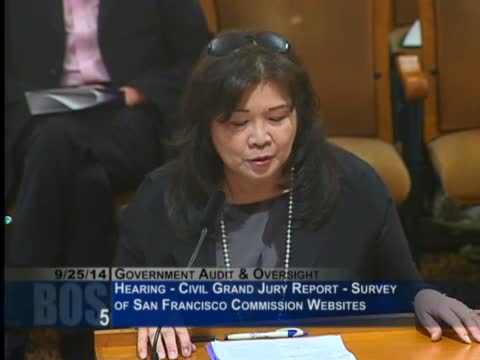
The Government Audit and Oversight Committee heard the civil grand jury’s Survey of San Francisco Commission Websites and discussed gaps in how commissions publish minutes, annual reports, attendance records and notices about disability and language accommodations.
"When people have questions about government services, one of the first places they turn to is the internet," Michael Scahill said in summarizing the survey, which examined how commissions represent themselves online and how accessible meeting and participation information is for the public.
The grand jury found open‑meeting practices generally in place but noted that fewer than half of commissions posted annual reports and that attendance records were difficult for the public to locate or aggregate.
Antonio Guerrera of the Mayor’s Office said the city charter requires commissions to prepare annual reports and that the mayor’s office will send a letter encouraging posting and linking to the public library; he said the mayor's appointments page already posts attendance information for mayoral appointees and that the office will work on user‑friendliness.
Deputy City Attorney John Givner told the committee there is no single user‑friendly public list of all boards and commissions; the City Attorney’s Office committed to producing an alphabetized decision‑making‑bodies list within about 90 days. Carla Johnson (Mayor’s Office on Disability) said her office reviewed 39 charter‑created commissions and, after outreach, 35 of 39 now feature a prominent accessibility notice on their website or agenda materials; the remaining four agendas include notices and two sites are in the process of updating their web pages.
Adrianne Pan of the Office of Civic Engagement and Immigrant Affairs reviewed Language Access Ordinance requirements and explained the city’s process for determining which non‑English languages reach service thresholds (Chinese, Spanish and Tagalog were cited as meeting current thresholds).
Grand jurors and supervisors emphasized that easier public access to attendance and appointment data would help oversight and reappointment decisions. The committee tabled the hearing to allow departments time to follow up on commitments and adjourned.