Get Full Government Meeting Transcripts, Videos, & Alerts Forever!
Get email alerts on the Seawall Lot 351 topic
No spam. Unsubscribe anytime.
Supervisors hear discovery of 1970s PUD that may affect height limits at 8 Washington site
Summary
Supervisors held a hearing after neighborhood researchers unearthed a 1977 planned unit development (PUD) and related EIRs that neighborhood advocates say require recreation protections and lower heights at the Seawall Lot/8 Washington site; Port and Planning described an active ENA and explained underlying zoning reverted to 275 feet when a redevelopment plan expired.
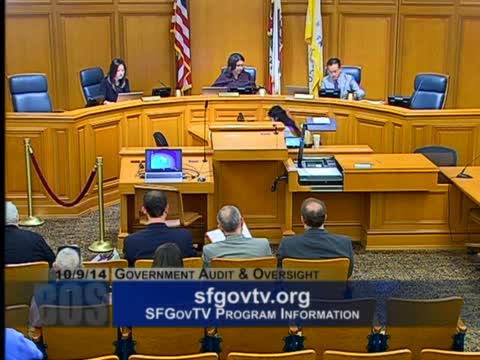
President Hsu convened a committee hearing to clarify the status of the Seawall Lot commonly called the 8 Washington site after neighbors and ballot voters questioned what development options remain.
"I have asked both the port and the planning department to give us a general update," President Hsu said, noting public confusion after voters rejected a prior project. The hearing drew presentations from Port and Planning staff and extended public comment after attorneys and neighborhood groups reported newly found records.
Jonathan Stern of the Port of San Francisco said an exclusive negotiating agreement (ENA) with the project sponsor remains in force but is paused under a force-majeure provision tied to litigation and permitting. "The force majeure periods in total are limited...48 months," Stern said, and he described litigation and permitting delays as the basis for the pause. Stern also said the Port—s portion of the site (parcel 3.51) is roughly 29,000 square feet, about 20 percent of the broader project site, and that the Port—s priorities include public access and open space.
Planning Director John Ram told the committee a PUD is an approval that can supersede prior approvals and explained how the expiration of a redevelopment plan changed the legal landscape. "When a redevelopment plan expires...the underlying zoning then becomes the document that controls the land use on that site," Ram said, and he confirmed the underlying zoning currently lists a 275-foot height limit.
That account clashed with testimony from public interest attorney Sue Hester and several neighborhood speakers, who said they had located 1972-77 EIRs and a 1977 PUD that, in their reading, conditioned parts of the Golden Gateway Commons development on preserved open space and reduced heights. "The plans that were approved as a condition of the approval of Golden Gateway Commons included the Tennis and Swim Club," Hester said during public comment, and she urged the supervisors to review subdivision and PUD exhibits.
Neighbors and advocates warned the newly surfaced documents could undercut assumptions that led to earlier approvals, and several speakers urged the board to pursue downzoning to match existing building massing and protect recreation space. Planning and Port staff said they would continue to review records and coordinate with the city attorney, and Stern said the developer has not submitted a new proposal but has discussed timing and affordability elements with the Port.
The committee did not make a final determination. President Hsu thanked staff and community researchers and asked for continued transparency; Supervisor Katie Tang moved to keep the item open at the call of the chair, and the motion was entered without objection. The supervisors said their offices will continue to review the legal implications of the 1970s documents and monitor pending litigation.