Get Full Government Meeting Transcripts, Videos, & Alerts Forever!
Get email alerts on the Public Health Sugary Beverages topic
No spam. Unsubscribe anytime.
Health experts and community speakers push for action on sugary drinks; committee continues hearing for follow-up
Summary
A public hearing featured Department of Public Health and UCSF experts linking sugar-sweetened beverage consumption to obesity, diabetes and dental decay—especially in Latino, African American and low-income neighborhoods. Presenters outlined science and modeling of taxes; hundreds of public commenters urged a soda tax and policy package. The committee continued the hearing to the call of the chair.
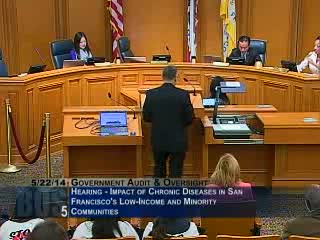
Supervisor Cohen convened a hearing to examine how sugar‑sweetened beverages (SSBs) contribute to chronic disease in San Francisco—s low‑income and minority communities and to gather evidence to inform possible policy responses.
Dr. Tomas Aragon, San Francisco—s Health Officer, summarized epidemiology showing SSBs are a major source of added sugars and contributors to metabolic dysfunction, obesity and type 2 diabetes; he emphasized disparities by race/ethnicity and neighborhood and noted Asians may develop diabetes at lower body weight.
Jody Stuckey (DPH) presented kindergarten oral‑health screening data showing high caries rates concentrated in Chinatown and southeast neighborhoods, and said caries prevalence mirrored SSB exposure and correlated with school‑level overweight rates. Akshay Govind (UCSF) summarized cohort evidence linking consumption to diabetes and dental disease and urged education plus policy levers (price, advertising restrictions and zoning). Carolyn Brown (San Francisco Community Clinic Consortium) described the local dental safety net—s high unmet need for restorative care in low‑income neighborhoods.
Dr. Kristen Bivens Domingo (UCSF) presented modeling showing a penny‑per‑ounce excise tax on SSBs could reduce diabetes incidence, lower population blood pressure and cut downstream cardiovascular events, with larger relative gains projected among African American, Mexican American and low‑income populations; the panel noted health‐care cost savings could exceed revenue collected under conservative assumptions.
More than 30 community members, clinicians, union representatives and nonprofit leaders gave public comment favoring policy action (taxes, education, improved retail availability of healthy options, and restrictions on marketing near schools). Commenters described family experiences with diabetes and urged the Board to act to reduce exposure in vulnerable communities.
The committee closed public comment and, by unanimous consent, continued the hearing to the call of the chair to permit further work and follow-up.