Get Full Government Meeting Transcripts, Videos, & Alerts Forever!
Get email alerts on the Schlage Lock Project topic
No spam. Unsubscribe anytime.
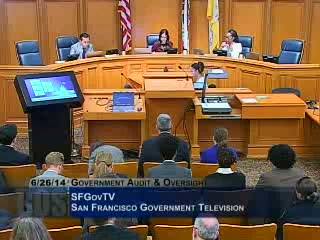
Board committee forwards Schlage Lock development agreement for Visitation Valley to full Board
Summary
The Government Audit & Oversight Committee voted to forward a development agreement permitting up to 1,679 housing units and nearly 50,000 sq ft of retail on the Schlage Lock site; the agreement includes 15% permanently affordable units, two parks, a full‑service grocery, and roughly $10M net fee obligation after $8M in in‑kind credits.
Supervisor Malia Cohen presented the ordinance approving a development agreement with Visitation Development LLC for the Schlage Lock site in Visitation Valley and asked the committee to move the item to the full Board of Supervisors.
Cohen said the proposal “has been informed by an extensive community process,” recounting more than a decade of neighborhood engagement and 18 public meetings. She described the package as a mix of housing, infrastructure, parks and retail aimed at revitalizing a longtime brownfield in a historically underserved neighborhood.
City staff from the Office of Economic and Workforce Development explained the financing approach needed after the 2012 dissolution of the redevelopment agency. Ken Rich said the administration used three levers — increased development density, a prioritized public‑benefits package and replacement public subsidies — to preserve enough return for a private sponsor while maintaining community benefits.
Emily Less of OEWD detailed the development agreement’s key commitments: a maximum build of 1,679 housing units with 15% permanently affordable units; nearly 50,000 square feet of retail anchored by a required full‑service grocery in phase one at Bayshore Boulevard and Leland Avenue; two parks (each slightly under one acre) that the Recreation and Park Department will acquire at a below‑market price with the developer covering development and the first 22 years of maintenance; and rehabilitation of an 18,000‑square‑foot historic office building with at least 25% community space. Less said the city’s direct contributions include $2.0 million in Proposition K funds, $1.5 million from SFMTA, and $4.5 million payable when the city purchases the parks. She added that $8.0 million in in‑kind credits for transportation improvements, parks development and community space would reduce the project’s transportation and community‑facilities fees from roughly $18.0 million to about $10.0 million.
The Budget and Legislative Analyst reported the fiscal effects: estimated one‑time revenues of about $24.4 million and ongoing tax revenues that help produce a projected net one‑time benefit and ongoing net revenue to the city (BLA tables cited in the presentation). City Economist Ted Egan summarized economic modeling that projected roughly $637 million in construction spending and modeled small downward pressure on citywide housing prices and rents once the project completes.
During public comment, multiple neighborhood leaders and residents endorsed the project, citing long community engagement, the need for parks and neighborhood services and the desire to spur revitalization. One commenter urged the city to require 20% inclusionary housing rather than the 15% required in the agreement and asked for more specificity in any community‑benefits agreement.
After questions and discussion, committee members made a motion to forward the ordinance to the full Board of Supervisors with a positive recommendation; the motion passed without objection.
The committee’s referral means the Board will consider the development agreement and the associated planning code and general‑plan amendments (scheduled separately before the Land Use Committee) at the next legislative stages. The development agreement term is 15 years; amendments will generally require Planning Commission and Board approval.