Get Full Government Meeting Transcripts, Videos, & Alerts Forever!
Get email alerts on the Fire Department Ems topic
No spam. Unsubscribe anytime.
Audit finds San Francisco Fire Department short on EMS capacity; recommends three ambulance shifts and system changes
Summary
A Budget and Legislative Analyst audit found the San Francisco Fire Department fell below an 80% Exclusive Operating Area (EOA) threshold and recommended three additional ambulance shifts (16 EMS positions), vehicle replacements and systemwide coordination including AVL tracking and a reconvened 911 provider committee.
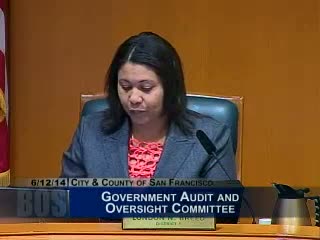
A Budget and Legislative Analyst (BLA) performance audit presented to the Government Audit and Oversight Committee found the San Francisco Fire Department (SFFD) is out of compliance with the city’s Exclusive Operating Area (EOA) requirement to respond to at least 80% of ambulance calls and recommended staffing and system changes to restore capacity.
The audit, presented by the BLA during the committee’s hearing, said medical calls made up about 77% of the department’s emergency responses in 2013 and that the department’s ambulance transport share dropped to about 73% that year, below the 80% target the EOA requires. The BLA concluded that adding three ambulance shifts — estimated to require 16 EMS positions — would move the department toward the 80% threshold. “We found that between 06:30 a.m. and 06:30 p.m. on average, the fire department needs 3 more ambulance shifts,” the analysts reported.
Beyond staffing, the audit recommended several operational changes: increase overtime allocations to prevent scheduled ambulances from being taken out of service when employees call in sick; shift logistical stocking and cleaning tasks away from EMS clinicians to civilian storekeepers; restore supervisory field rescue positions to improve oversight; accelerate purchase of replacement ambulances (the city approved replacement of 16 ambulances since FY2012 but, according to the audit, none had been purchased as of the report); and implement an automated vehicle locator (AVL) system citywide.
SFFD Chief Joanne Hayes White told the committee the department concurs with most findings and is already seeking additional resources. “The mission is to protect lives and property,” the chief said, describing SFFD as a dual mission department where fire and EMS are both priorities. She told supervisors the department requested roughly $10 million for EMS equipment and staffing in this budget cycle but expected to receive about $3 million, plus 16 new employees and three ambulances. The department and the Mayor’s Budget Office agreed to form a work group including the Department of Emergency Management (DEM), the Controller’s Office and the Medical Director to evaluate the staffing infusion’s impact.
Supervisors pressed officials on numbers and timelines. Committee Chair Supervisor London Breed highlighted the public-safety risk of frequent “medic-to-follow” periods — when no ambulances are available — noting the audit reported 2,475 such incidents in the first 10 months of 2013 (about eight per day). Chief Hayes White and SFFD Chief Financial Officer Mark Corso said procurement delays and ambulance redesign specifications had slowed vehicle deliveries; Corso said the department expects about 10 vehicles by the end of the year and nine the following year once contracts conclude.
Officials also discussed legal and labor constraints. The audit noted the city’s administrative code requires four static ambulances stationed at firehouses and four field rescue captains, but SFFD has moved to dynamic deployment from Station 49 and therefore is in technical violation of those provisions. Chief Hayes White said revising the administrative code would require meeting-and-conferring with the bargaining unit; Supervisor Breed said her office could introduce legislation to amend the code but urged that the department be brought into compliance beforehand.
The committee asked DEM deputy director Rob Dudgeon about reconvening a 911 provider committee to align private ambulance providers with city dispatch practices and about incentives or grants to help private vendors adopt AVL equipment. Dudgeon said reconvening the committee was feasible now that the city is committing resources and predicted the committee would begin meeting in the summer.
The committee closed public comment with no speaker and, after discussion, continued the item to the call of the chair for follow-up reporting and monitoring as additional staff and vehicles enter service.