Get Full Government Meeting Transcripts, Videos, & Alerts Forever!
Get email alerts on the Healthcare Rates topic
No spam. Unsubscribe anytime.
Board committee delays vote on Health Service System 2014 package after intense public outcry over Kaiser increase
Summary
The subcommittee continued the Health Service System 2014 rates package after hours of testimony calling for Kaiser to disclose its rate methodology; staff warned rejecting the package could disrupt open enrollment and coverage for tens of thousands, and asked for authorizing the package as a whole or sending it back for a new actuarial package.
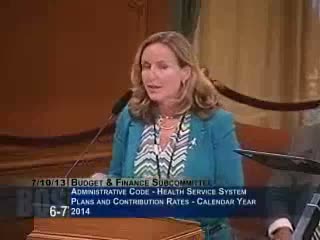
The Budget & Finance Subcommittee spent the second half of its July 10 meeting on the Health Service System (HSS) 2014 rates and benefits package, a contentious agenda item driven by a proposed Kaiser rate increase. Acting HSS Director Lisa Gautbe and HSS actuaries presented a 2014 package with an aggregate premium increase of 2.43% across four participating employers; she said the Affordable Care Act fees and taxes accounted for roughly $16.6 million of the total increase. Kaiser’s commercial rate was reported as a 5.22% increase while Blue Shield showed a modest aggregate increase and the city’s self‑insured City Plan showed a decline.
HSS staff and the city attorney explained the package must be accepted as an actuarially supported whole or returned to the HSS board for rework; returning the package would delay the open‑enrollment processes and could eliminate Kaiser from the 2014 offerings if adequate time to rebuild actuarial assumptions is unavailable. City Attorney Eric Rapoport cautioned that altering the package would require a new actuarial report under the city charter and could create legal and logistical risk for open enrollment.
Public testimony was extensive and sharply critical of Kaiser for refusing to disclose detailed expense and trend assumptions the company labeled "proprietary." Labor unions (including SEIU Local 1021), nonprofit providers, retirees and health‑care advocates characterized the requested increase (roughly $15–16 million citywide attributed to Kaiser by staff) as unjustified, called for transparency legislation and urged the Board to reject or withhold approval until Kaiser provided full supporting data. Speakers used strong language — calling the demand 'extortion' or 'gouging' — and urged using leverage (including escrow, partial holdback, or longer-term bargaining options) rather than simply approving the increase.
Kaiser representatives told the committee they understood members’ concerns and said their stated objective was to avoid disrupting care; they offered to continue discussions with HSS staff and to answer actuarial questions. Health Service System board members and long‑time commissioners urged caution, noting the consequence of failing to approve a full package would be major disruption for the tens of thousands of members who select Kaiser for continuity of care.
After deliberation, supervisors sought more information and time. Supervisor Eric Marr moved — and the committee approved — a continuance to the call of the chair (the committee calendared a one‑week window) to give HSS and Kaiser additional time to provide data and to continue negotiations. Staff and the Controller reminded the committee the city could not lawfully pay a vendor without a contract and that contingency plans (such as moving large numbers of members into City Plan or Blue Shield) would require extensive actuarial work and careful planning.
The committee’s action paused a package that affects more than 100,000 covered lives across agencies and about 40,000 Kaiser enrollees within the HSS membership, while directing HSS and Kaiser to pursue rapid follow‑up and additional transparency.