Get Full Government Meeting Transcripts, Videos, & Alerts Forever!
Get email alerts on the Public Safety topic
No spam. Unsubscribe anytime.
Supervisors advance broad graffiti ordinance after departments, arts and businesses urge stronger enforcement
Summary
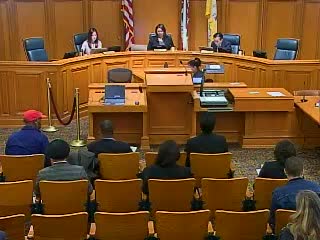
The Government Audit and Oversight Committee voted without objection to adopt clerical amendments and move a comprehensive graffiti ordinance to the full Board after city departments and community groups described high cleanup costs and supported civil and administrative tools to target repeat offenders.
Supervisor London Breed introduced an ordinance to tighten San Franciscograffiti controls, saying the city spends nearly $20,000,000 annually on graffiti abatement and that new civil and administrative tools could preserve public art and free up resources for other services.
Breed said the proposal would centralize evidence collection (DPW and MTA staff photographing offenses and submitting reports via 311), allow the City Attorney to pursue civil damages or community-service remedies against repeat offenders, ban possession of graffiti or etching tools in parks and on Muni by recently convicted graffiti offenders, and revise relevant codes (Public Works Code Section 1,300 and park and police code provisions) to clarify enforcement authority.
The measure drew support from multiple city departments and stakeholder groups. Phil Ginsberg, general manager of Recreation and Parks, told the committee his department spent nearly $300,000 last year removing graffiti from parks and assets and said that funding could otherwise pay for arborists, park patrol officers or swim instructors.
San Francisco Municipal Transportation Agency representatives described an estimated $15,000,000 in direct cleanup costs for transit vehicles and said upgraded onboard cameras, expanded mobile cleaning crews and a new 0-tolerance holding practice for vehicles with graffiti will support enforcement. The SFMTA presentation also noted a multiyear $1,000,000,000 investment in rolling stock that officials said strengthened the case for stronger vandalism protections.
Arts Commission, San Francisco Beautiful and the Chamber of Commerce all said maintenance and private-property burdens justify additional enforcement tools. Allison Cummings of the Arts Commission said the departmentspends its maintenance budget addressing vandalism to the citycollection and supports civil prosecution to hold vandals financially responsible.
Deputy City Attorney John Gibner presented clerical revisions to the ordinance title and minor language clarifications. The committee adopted a motion to amend the ordinance "without objection," and later moved the item to the full Board for consideration "without objection."
The committee record shows broad cross-agency participation in developing the proposal (City Attorney, SFPD graffiti unit, DPW, MTA, Arts Commission, Graffiti Advisory Board), and officials emphasized evidence centralization via 311 and photographic records to underpin civil cases targeting serial taggers rather than single acts prosecuted criminally.
Whatnext: The ordinance and the clerical amendments will be scheduled for the full Board of Supervisors. Committee members asked staff to provide implementation details and cost estimates as the measure moves forward.