Board committee debates rezoning RH1 to RH2 and optional local fourplex pathway; supervisors seek anti‑speculation safeguards
Loading...
Summary
Supervisors debated converting single‑family RH1 lots to RH2 and creating a local density exception to allow up to four units (six on corners) with exemptions tied to affordability, unit size, rent control and owner occupancy. The committee adopted amendments and continued the items to April 25 for further work on anti‑speculation and feasibility.
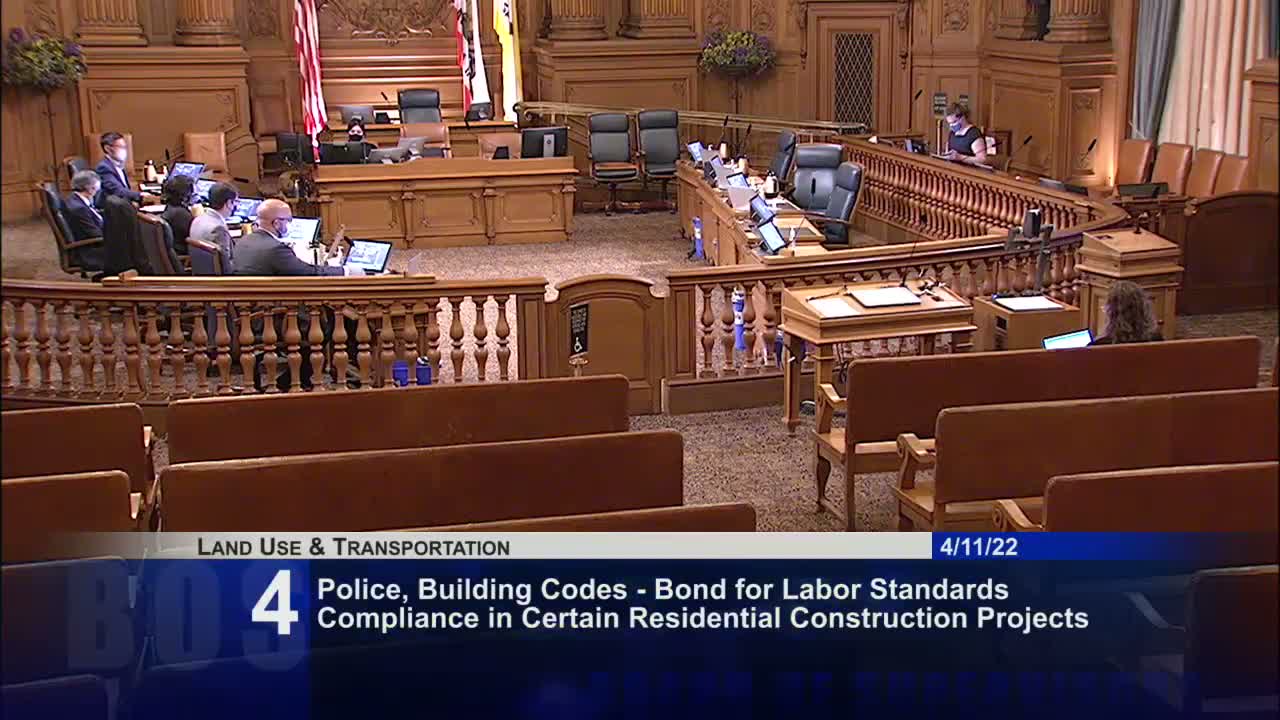
The Land Use and Transportation Committee on April 11 considered companion zoning proposals to increase small‑scale housing production across RH (residential house) districts. Proposals discussed included converting RH1 single‑family zoning to RH2 and a local density‑exception pathway allowing up to four dwelling units per lot (and up to six on corner lots) that would preserve local design review and rear‑yard/open‑space protections.
Supervisors Rafael Mandelmann and Gordon Mar presented complementary approaches: Mandelmann emphasized protecting mid‑block open space and limiting impacts on historic resources, while Mar proposed a bonus approach that would condition additional units on affordability guarantees (for example, requiring bonus units to be affordable at roughly 100% AMI and to include two‑bedroom layouts to serve middle‑income families). Both proposals included measures to make new units rent‑controlled and to require replacement or protections where low‑income tenants are displaced.
Committee members debated anti‑speculation safeguards, including a look‑back ownership period, a look‑forward owner‑occupancy affidavit (an owner must intend to live in the property), a hold period before condo conversion, unit‑size minimums, and fee waivers and incentive funding to support owner‑occupiers and nonprofit partners. Supervisors and outside speakers repeatedly asked for an independent feasibility/value‑recapture analysis to determine what subsidies would be needed to produce affordable bonus units at scale; some members said a subsidy on the order of $230,000 per bonus unit had been included in preliminary pro forma figures presented to the committee.
Public commenters were split: housing‑production advocates urged upzoning and suggested inclusionary or price‑cap rules for small buildings; tenant advocates and equity organizations urged five‑year look‑back and look‑forward protections, relocation assistance for displaced tenants, unit‑size and affordability guarantees, and stronger enforcement language. The committee adopted a set of amendments (owner‑occupancy affidavit and limited condo conversion unless owner lives on site three years, historic resource determination fee waiver for owner‑occupiers who commit to occupancy, and a unit‑size/bedroom threshold), and continued both items to April 25 to allow the city attorney and the planning department to draft enforceable language and to consider feasibility analysis and funding mechanisms.
What to watch: supervisors signaled strong interest in promoting incremental housing while protecting tenants and limiting speculative demolition. The outcome depends on follow‑up technical work: independent feasibility analysis, legal language for enforceability and an incentives/subsidy plan to support owner‑occupiers and affordability.