Get Full Government Meeting Transcripts, Videos, & Alerts Forever!
Get email alerts on the Bathhouse Repeal topic
No spam. Unsubscribe anytime.
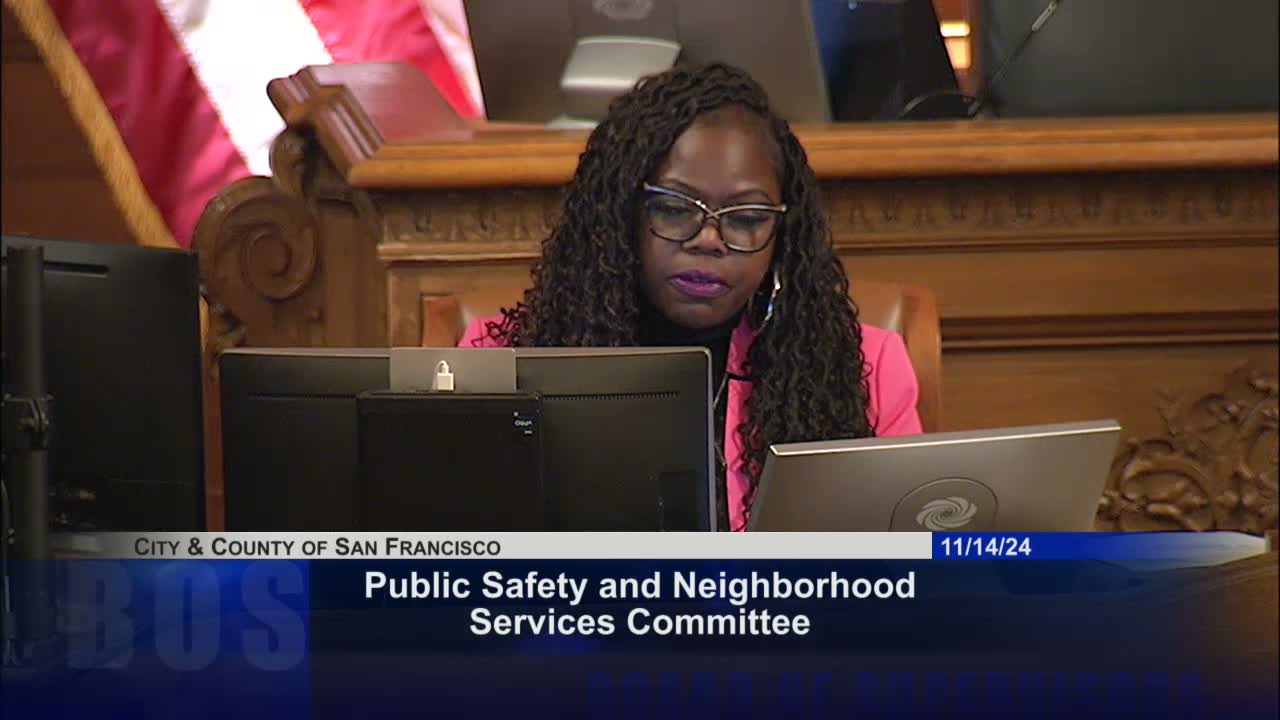
Committee advances repeal of 1970s police-code rules that restrict bathhouses
Summary
A City committee voted to send to the full Board an ordinance repealing Police Code Article 26, which committee members and public-health advocates said conflicts with modern health and planning rules and deters LGBTQ-oriented businesses; SFPD told the committee it supports full repeal so permitting moves to standard planning and health-review processes.
The Public Safety and Neighborhood Services Committee voted to forward to the full Board an ordinance to repeal Police Code Article 26, the decades-old police regulations governing public bathhouses. Supervisor Mandelmann, who sponsored the ordinance, said the measure removes language that conflicts with more recent health- and planning-code updates and will allow review to shift to standard planning, building and health permitting.
"We don't think we do need this section," Supervisor Mandelmann said, describing legacy prohibitions — including a daily register of patrons and bans on locked doors — as out of step with public-health guidance adopted since the 1980s. Carl Necedah, the San Francisco Police Department's principal legislative liaison, told the committee the SFPD supports a full repeal so that the department is no longer responsible for permitting bathhouses while remaining available to investigate criminal complaints.
Public commenters urged the committee to advance the repeal. David Hyman, representing the Leather and LGBTQ Cultural District, called Article 26 "archaic, it's ambiguous, and it's insulting," and said enforcing it would waste police resources and could be unconstitutional. Harry Breaux, who described himself as a longtime San Francisco resident, and representatives from the San Francisco AIDS Foundation said modern HIV prevention and harm-reduction tools mean the city can regulate these venues through health and planning authorities rather than police-code restrictions.
Supporters said removing the police-code barriers could allow entrepreneurs to open new venues and provide public-health outreach in community-oriented settings. Mandelmann and colleagues thanked city staff and community organizations who helped craft prior health- and planning-code changes and said the repeal completes that work.
The committee's motion to forward the ordinance as a committee report with a positive recommendation passed on a voice vote recorded as two ayes; Chair Stephanie was excused. The ordinance is scheduled to be considered by the full Board of Supervisors at the committee's next indicated meeting date.