Get Full Government Meeting Transcripts, Videos, & Alerts Forever!
Get email alerts on the Housing Trust Fund topic
No spam. Unsubscribe anytime.
Mayor and housing office outline first‑year plan for new $20M housing trust fund
Summary
Following voter approval of Proposition C, the mayor’s office and the city’s housing agency detailed Year‑1 allocations from a $20 million set‑aside and a 30‑year housing trust fund, prioritizing down‑payment assistance, housing stabilization and program design work for neighborhood infrastructure grants.
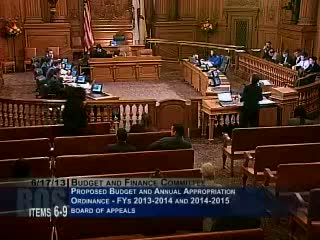
The mayor’s office and the Mayor’s Office of Housing and Community Development outlined plans on June 17 for the new Housing Trust Fund created by Proposition C, proposing a $20 million initial allocation for the fund in fiscal 2013‑14 and a multi‑year build‑out of resources for affordable housing and homeownership supports.
Deputy Director Gigi Whitley said the first year’s priorities are rapid deployment of funds to programs that can move quickly — including existing down‑payment assistance and housing stabilization programs — while designing the neighborhood infrastructure grant program that will begin grantmaking in Year 2. “We want to get funds out the door quickly, expanding existing infrastructure such as existing down‑payment programs and single‑family rehab,” Whitley said.
The mayor’s office proposed reserving an initial $2 million for down‑payment assistance, supplemented by repayments and other sources to create roughly $4.6 million available the first year for purchase assistance. Officials also said they plan additional early investments in housing stabilization (to prevent homelessness and displacement) and seed money for a small‑sites acquisition and rehab program targeted to properties of up to about 20‑25 units.
Supervisors pressed staff on program details. Supervisor David Chiu and others urged limits on program eligibility and price thresholds so subsidies do not flow to high‑priced “luxury” purchases; multiple supervisors said they expected program income limits (area‑median income, AMI) to be set well below 250% AMI for most down‑payment assistance. The housing office said program design remains under development and that first‑year allocations and eligibility would be refined in consultation with the Board.
The mayor’s budget director, Kate Howard, and housing staff noted that the trust fund is intended to be a 30‑year funding source that scales with general‑fund growth and includes programmatic constraints set by the ballot measure — for example, specified minimum funding for down‑payment assistance and housing‑stabilization programs in the first five years, and a cap on neighborhood infrastructure grants equal to a percentage of annual allocations.
Next steps: housing staff will return with detailed program rules and eligibility thresholds. The committee accepted the budget analyst’s technical recommendations and deferred finer policy choices on program allocation and income limits for the Board’s later review.