Get Full Government Meeting Transcripts, Videos, & Alerts Forever!
Get email alerts on the Participatory Budgeting topic
No spam. Unsubscribe anytime.
Supervisors hear District 3 participatory budgeting pilot and Vallejo's citywide model
Summary
A hearing on participatory budgeting highlighted District 3's short pilot (nearly 500 voters) and Vallejo's larger citywide experiment (nearly 4,000 voters); presenters urged deeper outreach, explicit equity criteria and modest staffing/funding to scale PB citywide.
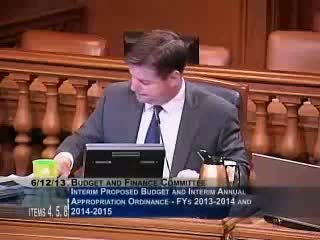
The Budget & Finance Committee held a wide-ranging hearing on participatory budgeting (PB), a process giving residents direct say over local discretionary spending. Supervisor David Chu (President Chu) summarized District 3's pilot, which used a $100,000 discretionary pot and engaged residents through community sessions, delegate work and a neighborhood vote that produced 14 ballot ideas and about 500 voters.
"Participatory budgeting ... is a civic engagement process that gives residents the power to set budget priorities and to directly make decisions on the types of local neighborhood projects the government should fund," Supervisor Chu explained in his presentation to the committee.
Ginny Brown of the Participatory Budgeting Project described Vallejo's citywide model: a $3.2 million pot drawn from sales-tax revenue, roughly 800 original ideas narrowed through delegate committees and about 3,200,000 available for projects; nearly 4,000 residents voted citywide. Brown emphasized two design choices that increase equity: (1) designing the rules with underserved communities, and (2) allocating resources to outreach and translation. Vallejo opened voting to residents age 16+ and allowed non-citizen residents to participate according to the steering committee's rules.
Community partners and advocates who assisted District 3 (Coleman Advocates, Chinese for Affirmative Action, tech partners and local CBOs) described outcomes and lessons learned: a short four-month timetable limited deeper resident education; interpreters and targeted outreach were essential; nonprofit and staff support consumed significant unpaid pro-bono capacity; and a modest fraction of funds (around 10'15%) should be allocated to outreach and implementation support if the city scales PB.
Supporters in the audience credited PB with mobilizing residents who often do not participate in traditional budget hearings, producing project ideas that supervisors may not have prioritized and strengthening civic engagement. Critics and skeptical supervisors asked whether small pilot pots are sufficiently consequential to motivate broad participation and whether the voting pools were representative; multiple speakers, including Ginny Brown, said careful design, steering committees and dedicated outreach can improve representativeness.
President Chu said the mayor offered a $500,000 pot if the Board matches that amount; supervisors discussed scale, staffing and cost-per-district. The committee ultimately filed (tabled) the item for further work so staff can produce cost options, equity criteria, potential staffing models and legal/administrative steps for a citywide or district-by-district expansion.
Next steps: Supervisor Chu and staff will return with implementation options, cost estimates and suggested safeguards (conflict-of-interest rules for outreach organizations, delegated oversight and transparent vote data) for further committee consideration.