Get Full Government Meeting Transcripts, Videos, & Alerts Forever!
Get email alerts on the Zoning Massage topic
No spam. Unsubscribe anytime.
Supervisors weigh fix to massage zoning to allow therapists inside health‑service offices
Summary
The Land Use & Transportation Committee reviewed a trailing ordinance to allow massage establishments as an accessory use in health‑service offices and to correct a drafting omission in the NC2 zoning table. Planning staff recommended the change, public commenters warned of safety risks, and supervisors continued the item for a substantive amendment.
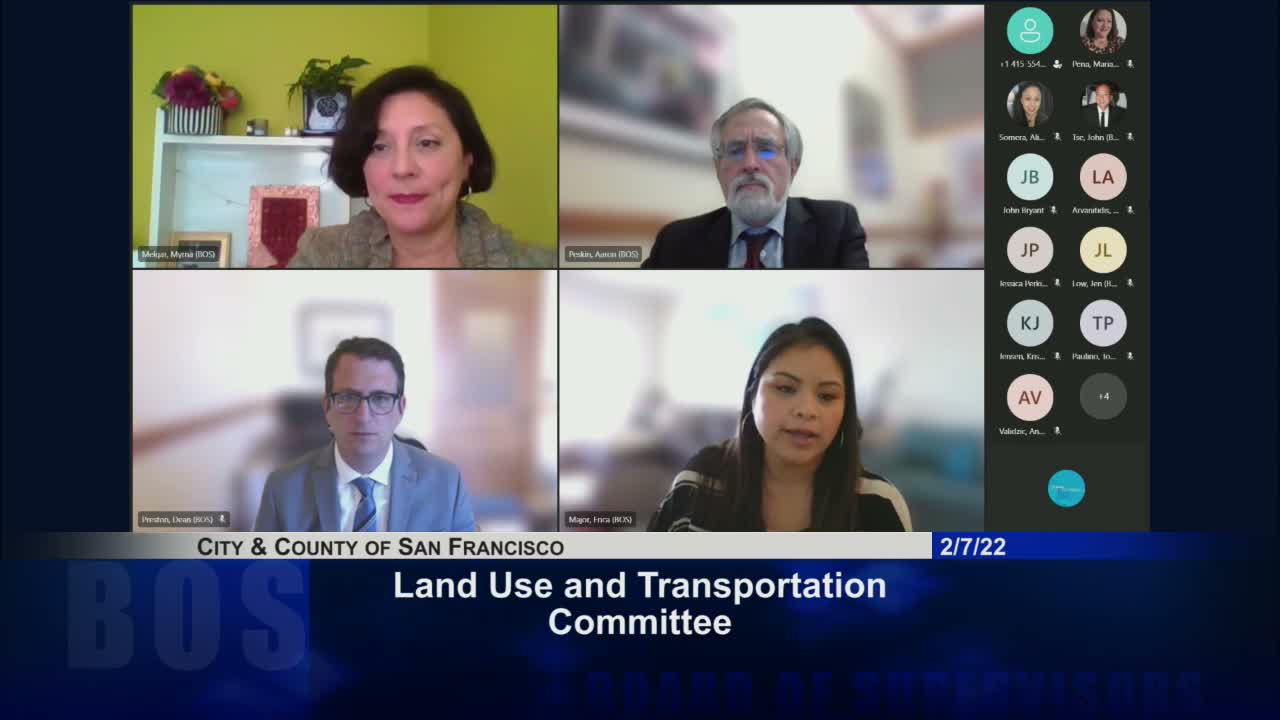
The San Francisco Board of Supervisors’ Land Use and Transportation Committee on Feb. 7 reviewed a trailing ordinance to the Planning Code that would allow massage establishments to operate as an accessory use within health‑service offices such as chiropractic and acupuncture clinics and correct a drafting omission affecting the NC2 zoning district.
Jacob Bitliff, staff for Supervisor Mandelmann, told the committee the ordinance duplicates changes approved last December and “massage establishment is okay, principally permitted as an accessory use in a health service like a chiropractor or acupuncture office,” and described a Planning Commission recommendation to update the NC2 table and carry over an existing footnote for a targeted geographic carve‑out.
Planning staff Veronica Flores said the Planning Commission unanimously recommended approval on Feb. 3 with modifications to ensure the NC2 district matches the original board intent. Flores said staff would clean up the zoning tables and related footnotes to remove unintended conditional‑use requirements for accessory massage services.
During public comment Linda Chapman said loosening conditional‑use rules could have “unintended consequences,” citing a neighborhood cluster of foot‑massage and reflexology businesses and concerns about late‑night operations and public safety. Chapman told the committee she feared that removing conditional‑use review for certain chair and foot massage operations could make it harder to address neighborhood problems.
Committee members voted to adopt the circulated amendments in principle but staff and members agreed the Planning Commission change was substantive and requires additional review. The committee voted to continue the item to the following week so staff can return with the substantive amendment. Recorded votes on the procedural actions were 3–0 (Peskin, Preston, Melgar).