Get Full Government Meeting Transcripts, Videos, & Alerts Forever!
Get email alerts on the Sfpd Staffing topic
No spam. Unsubscribe anytime.
SFPD outlines hiring and process changes as department seeks to rebuild staffing
Summary
SFPD and the Department of Human Resources briefed supervisors on May 9 about recruitment, hiring and retention. The department reported about 769 full‑duty officers in patrol stations, outlined pipeline drop‑offs from application through background and academy, and described efforts to speed processing using SmartRecruiter, medical vendors and targeted outreach including lateral hiring and college partnerships.
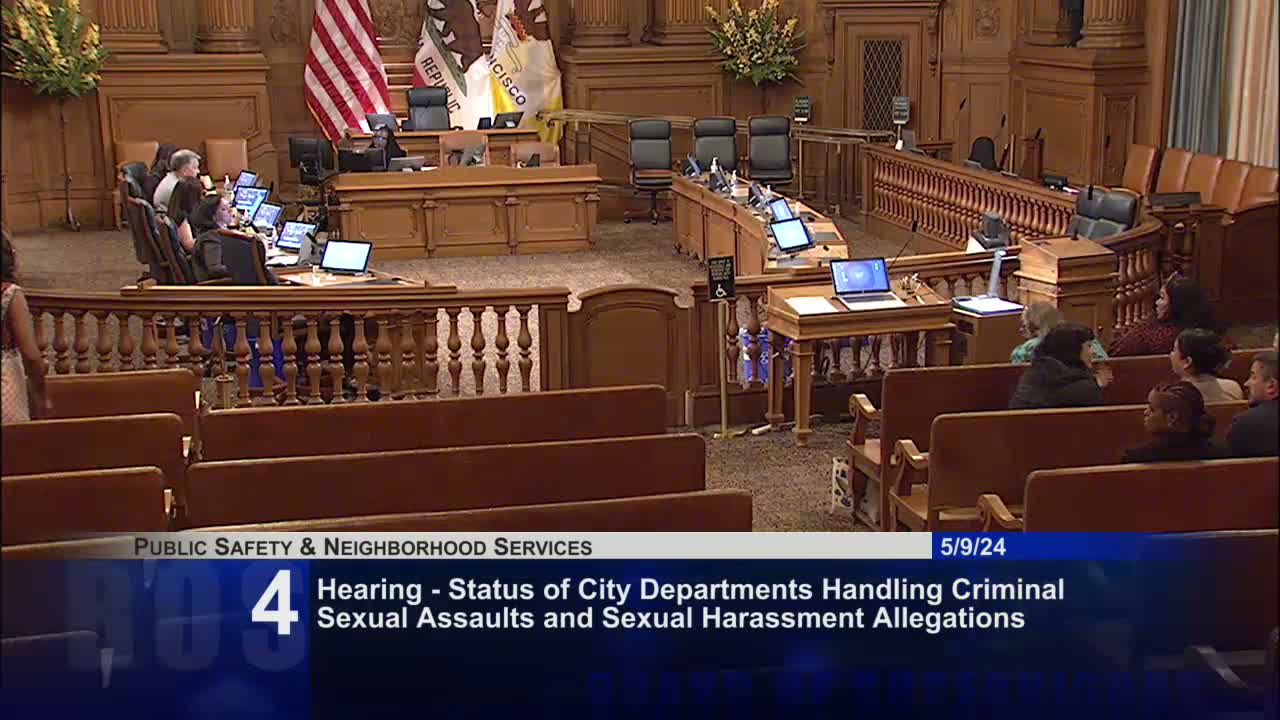
The Public Safety and Neighborhood Services Committee on May 9 addressed the San Francisco Police Department’s staffing shortfall and plans to accelerate recruitment and hiring.
Deputy Chief Peter Walsh presented historical staffing charts and said the department’s full‑duty patrol presence in the city’s 10 district stations is currently about 769 officers. He and DHR described a long hiring pipeline — application, written exam, background investigation, medical clearances and academy training — and emphasized that each step produces attrition. Walsh noted that pandemic‑era dynamics and earlier separations contributed to the deficit the department now seeks to reduce.
Interventions described included: a targeted marketing and source‑tracking campaign with Allstar to boost recruitment; a SmartRecruiter implementation to automate candidate communications and create a custom police hiring funnel; contracting city‑wide medical vendors (Concentra) to speed medical clearances; expanded background capacity through third‑party vendors and trained field‑training officers reviewing packets; and targeted lateral recruitment and part‑time recruiter networks to bring experienced officers on quicker. Lieutenant Pat McCormick explained lateral onboarding: laterals undergo an administrative orientation week and a truncated academy/orientation before field training officers evaluate them — a process that can move a lateral into FTO in about a month, much faster than the eight‑ to nine‑month timeline for basic recruits.
DHR’s David Heapner said automation and vendor partnerships will improve transparency and reduce the perceived “black box” in backgrounds and medicals; he also described a separate candidate funnel for laterals in SmartRecruiter. Supervisors asked about gender and demographic patterns at drop‑off points; SFPD said it has been moving toward blind demographic collection at early stages but intends to monitor and report demographic performance as the new systems are deployed. Deputies described pilot civilianization efforts (crime‑scene non‑sworn staff and PSAs to handle cold calls) intended to free sworn officers for patrol.
Chair Stephanie moved to continue the recruitment item to the call of the chair for follow‑up. The committee approved the continuation and closed the meeting.