Get Full Government Meeting Transcripts, Videos, & Alerts Forever!
Get email alerts on the New Markets Tax Credit topic
No spam. Unsubscribe anytime.
City moves New Markets Tax Credit program to community investment fund to continue redevelopment subsidies
Summary
The committee approved transferring administration of the New Markets Tax Credit program from the dissolved redevelopment agency to the city-run San Francisco Community Investment Fund, so previously committed projects (College Track, SF Jazz, etc.) can close and additional allocations be pursued.
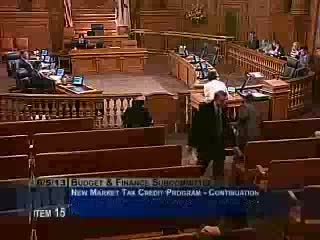
The Budget and Finance Subcommittee approved a resolution to continue the New Markets Tax Credit program under the San Francisco Community Investment Fund (SIF) following dissolution of the redevelopment agency.
Brian Strong of the City Administrator's Office explained that the tax-credit allocations are federal New Markets Tax Credits administered through community development entities and that moving the program to the city allows existing commitments (College Track, SF Jazz) to proceed and the city to apply for additional allocation. Strong said the program reduces capital costs for qualifying projects and typically includes seven-year compliance and monitoring obligations to ensure community benefits are delivered.
Strong summarized projects already closed or committed: College Track (credit allocation that resulted in roughly $2 million in project savings), SF Jazz (approximately $15 million in credits toward a $52 million project), and additional committed projects including Boys & Girls Club, the Strand Theatre and others. He said the SIF is not a city financial guarantor; the city's role is as an authorizing oversight entity and certifier of compliance during the credit compliance period.
Supervisors asked about the project selection process; Strong described an application process, an advisory board that vets projects, and criteria focused on serving low-income areas or target populations. Committee members expressed broad support and approved continuation of the program without opposition.