Get Full Government Meeting Transcripts, Videos, & Alerts Forever!
Get email alerts on the Bicycle Safety topic
No spam. Unsubscribe anytime.
Committee backs civil grand jury finding on bicycle enforcement, orders further analysis on a citywide safety plan
Summary
After presentations from the civil grand jury, Mayor's Office, SFMTA, SFPD and Bicycle Advisory Committee, the GAO Committee agreed with a finding that SFPD needs support to enforce roadway laws, approved one recommendation, and required further analysis on creating a bicycle safety enforcement agreement with a six‑month deadline for a plan.
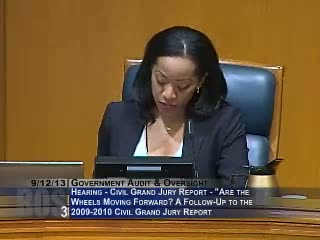
San Francisco — The Government Audit and Oversight Committee on Monday took up a civil grand jury follow‑up report titled "Are the Wheels Moving Forward?" and directed agencies to work toward clearer coordination on bicycle safety.
Martha Mangold, the civil grand jury foreperson, presented the jury’s recommendations, including an aspirational target of zero bicycle fatalities and a 50% annual reduction in bicycle collisions; the jury also urged a bicycle safety enforcement agreement to align city agencies on enforcement priorities, expanded officer bicycle training and more robust education for motorists and cyclists.
Jillian Gillette, Director of Transportation Policy in the Mayor’s Office, said the mayor’s office and partner agencies support the goal of safer streets but believe the grand jury’s specific targets "require further analysis." She proposed reconvening the Pedestrian Safety Steering Committee to review recent bicycle collision reports and identify targeted enforcement locations. Neil Patel of the San Francisco Municipal Transportation Agency described recent and planned education and encouragement programs, including multilingual bike safety guides, bike lights giveaways and a "Commute by Bike" pilot aiming to engage about 75 companies (7,500 employees).
Commander Nikaya Ali of the San Francisco Police Department said recruits receive approximately 16 hours of traffic enforcement instruction in the academy, with one hour focused on bicycle enforcement; officers also receive 40 hours of collision investigation training. The department said it updated citation forms in January 2013 to include bicycle infraction categories and plans a series of training videos for officers.
The Bicycle Advisory Committee chair urged stronger coordination and better data sharing, highlighted limits to a citation diversion program under state fine structures, and presented an analysis of local collision types and fatalities; the BAC noted a multiyear average of about 1.4 bicyclist fatalities per year and said the city has already seen an uptick this year.
Leah Shayam of the San Francisco Bicycle Coalition urged the Board to endorse the zero‑fatality and 50% reduction goals and called for more concrete, timely action from the mayor’s office and agencies. She also told the committee that residents have reported being denied police reports after being hit by cars — a concern she said signals bias in SFPD’s handling of some collisions.
After discussion, the committee agreed with grand jury finding 4 (that SFPD needs the support of city leaders to enforce roadway laws), agreed to recommendation 4.1 and instructed staff to undertake further analysis on recommendation 4.2. The committee set a six‑month timeframe for agencies to develop a plan describing the scope of further analysis and to return with proposed next steps. A proposed change to the draft resolution language (changing "should reconvene in six months" to "will reconvene") was discussed and then withdrawn; the committee passed the resolution as amended and continued oversight and follow‑up.
What’s next: The committee required agencies to provide a description of the planned analysis and a timeline within six months. The Mayor’s Office, SFMTA and SFPD are the primary responsible agencies for response and follow‑up.