Get Full Government Meeting Transcripts, Videos, & Alerts Forever!
Get email alerts on the Bicycle Safety topic
No spam. Unsubscribe anytime.
Grand jury urges "zero fatalities" goal; supervisors require further analysis and a six‑month timeline
Summary
A civil grand jury follow‑up urged San Francisco to adopt a 0 bicycle fatalities target, a 50% annual reduction in collisions and a bicycle safety enforcement agreement. City agencies described existing and planned programs; the committee agreed with a finding supporting police enforcement, asked for further analysis on a dedicated enforcement campaign, and strengthened language to reconvene the Pedestrian Safety Steering Committee within six months.
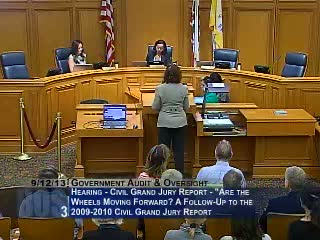
A civil grand jury gave the San Francisco Government Audit & Oversight Committee a follow‑up report on bicycle safety on Sept. 3, urging the city to adopt a goal of zero bicycle fatalities and a 50% annual reduction in bicycle collisions and to develop a bicycle safety enforcement agreement that would coordinate SFPD, SFMTA and other agencies.
The mayor's office (Jillian Gillette) and SFMTA (Neil Patel) welcomed the recommendations but described them as requiring further analysis. Gillette said the mayor's office, SFMTA and SFPD support the goals in principle and proposed reconvening the Pedestrian Safety Steering Committee to review recent collision data and recommended locations for targeted enforcement. SFMTA outlined education and encouragement programs including new printed bike guides in English, Spanish and Chinese, training for taxi and Muni operators, a Commute by Bike pilot aimed at 75 companies (7,500 employees) and promotional campaigns pending funding.
Commander Ali of SFPD described existing training and enforcement work: recruits receive roughly 16 hours of traffic enforcement instruction with one hour currently focused on bicycle enforcement, and the department provides a 40‑hour collision investigation course; SFPD said it implemented a bicycle category in citation forms (effective January 2013) and is producing a series of bicycle safety videos "hoping to have that completed by January 2014." The Commander noted the challenge of creating a citation diversion program for bicyclists because state law and court processes limit the financial incentives that work for motor‑vehicle diversion programs.
The Bicycle Advisory Committee urged bicycle‑specific, urban‑oriented training and better standardized collision classifications to pinpoint causes and prioritize engineering and enforcement. The BAC said some collision cause codes (for example, "unsafe speed") may be used as default entries and urged more precise data to drive countermeasures.
Public comment included Leah Shahum of the San Francisco Bicycle Coalition, who commended the report and supported the 0‑fatality goal and a 50% reduction; she also said the coalition sees recurring problems around police follow‑up and access to police reports after collisions.
After departmental presentations and public comment, supervisors agreed with the grand jury's finding that the SFPD needs support from city leadership to enforce roadway laws (finding 4). The committee agreed to recommendation 4.1 but said recommendation 4.2 (a specific enforcement safety campaign) requires further analysis. The committee set a six‑month timeframe for that analysis and amended the draft response language to strengthen the timeline (changing "should consider reconvening in six months" to language committing to reconvene the Pedestrian Safety Steering Committee within six months). The amended resolution passed unanimously and will go to the full Board.
Next steps: city departments will collaborate on the defined analysis and return with a plan and time frame within six months; SFPD will continue to develop the training video and data collection tools noted in their response.