Get Full Government Meeting Transcripts, Videos, & Alerts Forever!
Get email alerts on the Rapid Rehousing topic
No spam. Unsubscribe anytime.
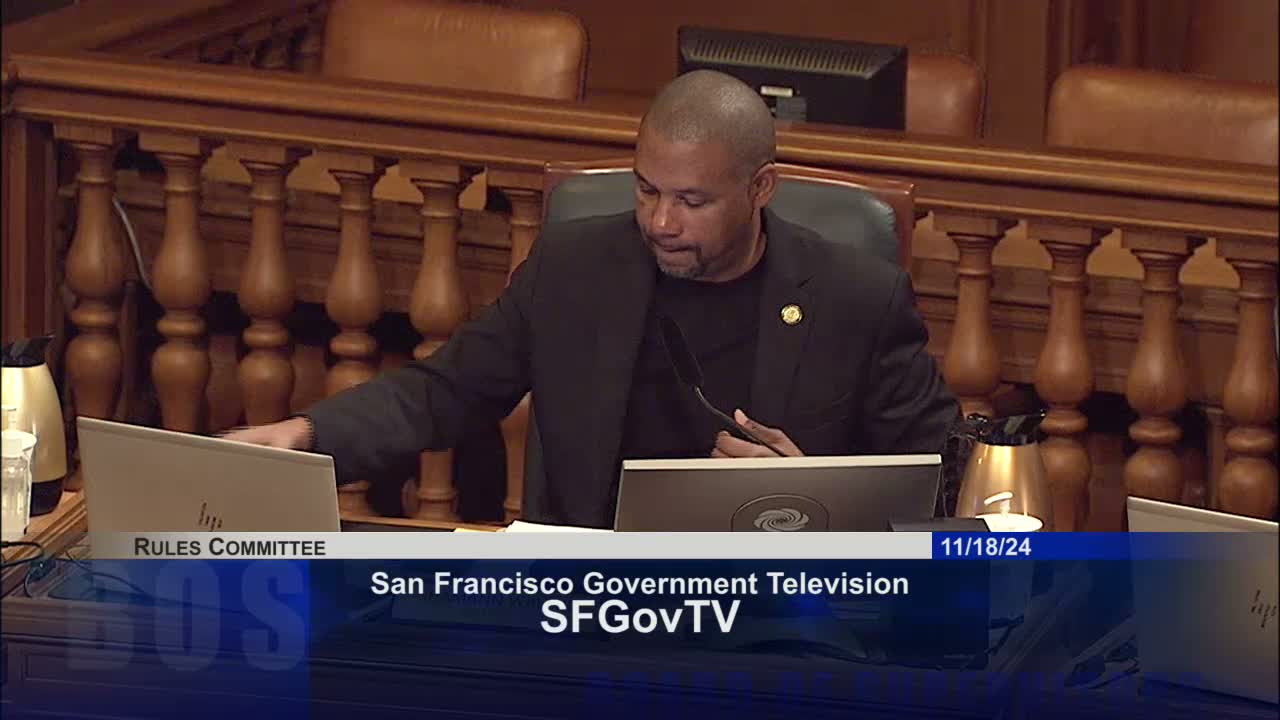
Rules Committee backs forwarding ordinance to allow up to five years of family rapid rehousing
Summary
The Rules Committee voted to forward an ordinance that would make City policy allowing eligible families to access rapid rehousing subsidies for up to five years when shorter assistance would risk a return to homelessness, after presentations from HSH and wide public support from service providers and residents.
The San Francisco Board of Supervisors Rules Committee on Nov. 18 voted to forward to the full Board an ordinance that establishes city policy permitting eligible households to receive up to five years of rapid rehousing assistance when a shorter subsidy would leave them at risk of returning to homelessness.
Supervisor Shamann Walton (chairing) and Supervisor Matt Haney (note: supervisors are named in the transcript as Ronan and Walton; for clarity the ordinance sponsor was Supervisor Ronan) introduced the measure and offered technical clarifications; the Department of Homelessness and Supportive Housing (HSH) and the Human Services Agency (HSA) provided a joint presentation. Emily Cohen, deputy director for communications and legislative affairs at HSH, told the committee HSH operates more than 1,500 rapid rehousing slots citywide, including 470 specifically for families with children, and described a 70% program success rate for those exiting to permanent housing. She said 52% of HSH rapid rehousing funding is federal and therefore capped at two years, so any extensions beyond that would require alternative funding sources.
Cohen said HSH estimated the maximum annual cost to the city if all eligible families took the full five years could be "approximately $32,000,000," and that some individual cases could require additional years of subsidy at an estimated "$47,000 per year" for up to three additional years. Cohen characterized those numbers as an upper-bound estimate intended to help planning rather than an immediate funding request.
Several supervisors pressed the department for clearer forecasting. One committee member described the $32 million figure presented by staff as "incendiary" and urged the department to produce more sophisticated, data-driven cost projections; HSH responded that the figure was a conservative estimate from its budget team intended to show an upper bound and not an ask.
The public-comment period included more than two dozen speakers: service providers (Compass Family Services, Glide, Hamilton Families, Homeless Prenatal Program and others) and people with lived experience urged the committee to adopt the policy. Commenters repeatedly cited internal program data and longitudinal figures: multiple speakers noted higher stability rates for families on subsidies of roughly 25 months or longer (one repeated figure of 86% stability after 25+ months), and described the harms caused when families exhaust short-term subsidies and return to shelters. Advocates argued that longer subsidy terms increase landlord willingness to participate and reduce churn in the family shelter wait list, which several speakers said exceeds 500 families.
Supervisor Ronan requested a motion to accept non-substantive clarifying amendments; Deputy City Attorney Brad Rusty advised the amendments were not substantive. The committee accepted the amendments and then voted to forward the ordinance to the full Board with a positive recommendation. The clerk recorded aye votes from Vice Chair Safae, Member Peskin and Chair Walton; the motions passed "without objection." The ordinance will next be considered by the full Board of Supervisors.
What happens next: the committee’s action sends the ordinance to the full Board with the committee’s positive recommendation; the Board will consider funding implications, potential sources (federal, state, Prop C/local funds, or general fund), and any fiscal analyses required before adoption or budget allocation.