Get Full Government Meeting Transcripts, Videos, & Alerts Forever!
Get email alerts on the Workforce Development topic
No spam. Unsubscribe anytime.
Supervisors press Tech SF partners on outreach and placements as city rolls out federal grants
Summary
At a Government Audit and Oversight Committee hearing, OEWD and nonprofit partners reviewed Tech SF enrollment, funding and early placements; supervisors pressed for deeper neighborhood outreach, a clearer employer hiring breakdown and steps to sustain outcomes beyond grant funding.
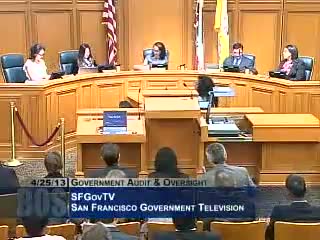
San Francisco — City officials and nonprofit partners briefed the Board of Supervisors’ Government Audit and Oversight Committee on Tech SF, a federal grant-funded workforce initiative aimed at training disadvantaged San Franciscans for jobs in the technology sector.
Chair Malia Cohen convened the hearing, which was sponsored by Supervisors London Breed and Jane Kim, to take a mid-course look at recruitment, training alignment with employer needs, employer partnerships and ways the city can support stronger outcomes. "Tech SF began this past summer/fall, and it's just begun," Supervisor Jane Kim said, framing the session as a check-in rather than a program review.
At the outset, Todd Rufo of the Office of Economic and Workforce Development cited labor-market context: "Last week, the state released the latest unemployment report... San Francisco had an unemployment rate of 6%." He said the city’s job-growth rate was higher than the national average and that workforce initiatives like Tech SF are tools to connect residents to those jobs.
Rhonda Simmons, the city’s workforce-development director, outlined grant funding and targets. She said a $5,000,000 H-1B Department of Labor award was written in partnership with WestEd, with the city receiving about $3,000,000 and WestEd $2,000,000 for incumbent-worker training, and that a Workforce Innovation Fund allocation provides roughly $2,400,000 to the city (with $600,000 to partners). "We are responsible for 500 placements over the next 4 years," she said, and reported the first cohort currently enrolls 150 students, with 25 confirmed hard placements and an average reported placement wage of about $29 per hour.
Nonprofit partners described how training and placement work in practice. Carol Varney of the Bay Area Video Coalition (BAVAC) said the program combines orientations, technical training, soft-skills coaching, portfolio development and networking events ("Nerd Undergrounds") that connect participants directly with recruiters and engineering staff. Employer partners provided on-the-ground examples: Tiffany Apchinski of Zendesk described company commitments to curriculum feedback, mentorship and hiring; a Jawbone representative recounted converting a Summer Jobs Plus intern into a full-time employee.
Supervisors used the hearing to press for more detailed evidence of outcomes and deeper, neighborhood-focused outreach. Supervisor David Campos urged clarity on what the tech sector is delivering in return for city investments, noting broader concerns about displacement and rising rents in neighborhoods such as the Mission. Multiple supervisors — including Jane Kim and London Breed — asked for granular data: which employers hired the program’s graduates, how many hires came from SF City member companies, and ZIP-code breakdowns of participants.
Simmons and partners said they track hires and can provide district-level data; she later named several companies (Google, Adobe, eBay, Academy of Art) among employers who each took one Tech SF hire from the initial placement pool. Simmons also acknowledged gaps in services — notably English-language learner (ESL/ELL) supports — and said the program is adapting outreach and case management partnerships to reach harder-to-engage neighborhoods and younger cohorts.
Students and interns who have participated in Tech SF and partner programs described tangible benefits. "BayCat has offered me not only technical training, but they also have offered me professional training," said Jessica Flores, a BayCat intern, who described gaining portfolio pieces and paid work. BayCat and other partners reported strong placement histories among their youth programs and warned that sustaining these pathways requires ongoing private and public funding and attention to the digital divide.
The committee requested follow-up information, including a breakdown of the 25–26 early placements by employer and the number of hires directly attributable to SF City member companies. The hearing closed with a procedural motion to file the item by Supervisor David Campos, seconded by Supervisor Katie Tang; the transcript records the motion and second but does not include a roll-call vote tally.
On next steps, Simmons pledged to return with additional district-by-district hiring data and to work with supervisors on targeted outreach strategies and supports (including ESL services and high-school bridge components). Partners asked supervisors for help coordinating outreach, leveraging city relationships and identifying additional resources to sustain the program beyond the life of the federal grants.