Get Full Government Meeting Transcripts, Videos, & Alerts Forever!
Get email alerts on the Parks And Recreation topic
No spam. Unsubscribe anytime.
Rec & Park outlines revenue‑first budget to avoid park closures while flagging staffing shortfalls
Summary
Rec & Park told the Board of Supervisors’ Budget & Finance Committee it plans to balance FY2013–15 with increased earned revenue — parking, special events and a renegotiated Outside Lands lease — but warned of staffing reductions that leave gardens and park patrols thin and noted possible job losses if nonresident fees at the Botanical Garden are removed.
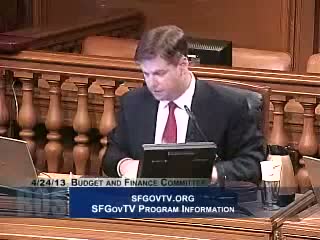
Supervisor Mark Farrell and the Budget and Finance Committee heard a detailed budget briefing from Recreation and Park Department (Rec & Park) on April 24. Department Director Mr. Ginsburg said the department’s 2012–13 operating budget was $128,100,000 and its capital budget $10,500,000, and he stressed that capital funding varies year to year because of grants and bond sales. "Our operating budget was $128,100,000 and our capital budget in this current fiscal year is $10,500,000," Ginsburg said.
Ginsburg told the committee Rec & Park breaks revenue into three components: general‑fund subsidy, Open Space Fund receipts and earned revenue (fees, concessions, facility rentals and golf). He said a growing share of the department’s budget is now earned revenue and described a two‑year outlook that includes a $260,000 reduction in reimbursement from the Zoological Society and expected lower golf revenues during Harding Park’s renovation. He said the department faces a base budget challenge of approximately $3.4 million that grows to about $6.6 million in 2014–15, in part because of lost stadium revenue tied to the 49ers leaving Candlestick.
To close budget gaps, Rec & Park plans revenue growth from several areas: parking garages that have rebounded, increased field and facility rentals, higher permit revenue for special events and a renegotiated lease with concert promoter Another Planet for Outside Lands. Ginsburg estimated roughly $300,000 a year from the renegotiated Outside Lands lease and additional gains from special‑event permits and stadium rental activity, noting the department plans to spread one‑time playoff receipts across two years.
Supervisors focused on operations and equity. Supervisor Scott Wiener asked about gardeners and park patrol staffing; Ginsburg estimated roughly 140–150 gardening staff (including apprentices) and said park patrol operates with about 22–23 officers total, usually leaving two to three on duty at any one time and often only one dedicated to a large park such as Candlestick.
The Botanical Garden’s nonresident admission fee received particular attention. In response to questions from Supervisor Mark Farrell, Ginsburg said gross nonresident revenue is “well over $500,000” and that losing the nonresident fee would leave about a $250,000 hole in the department budget — a shortfall that could translate into three to four full‑time equivalent positions when accounting for overhead. “If we lose the nonresident fee, that will have a real impact on our budget,” Ginsburg said.
On programs and access, the department reported growth in its scholarship program — from roughly $80,000 to more than $800,000 in four years — and described pilot funding for transportation to improve access to recreation offerings in underserved neighborhoods. Ginsburg said Rec & Park works with the San Francisco Housing Authority on free program participation and highlighted investments in Districts 10 and 11 from community‑driven bond choices.
The committee thanked Rec & Park for the briefing and asked for more detailed budget breakdowns (botanical garden operating costs, ZIP‑code and demographic participation data) at a later hearing. Chair Farrell moved to continue the item to the call of the chair; the committee agreed without opposition.
The department provided the committee with program and revenue details it said are intended to protect park access and services, while warning that continued reliance on earned revenue and constrained staffing will force difficult tradeoffs on maintenance and patrol coverage.